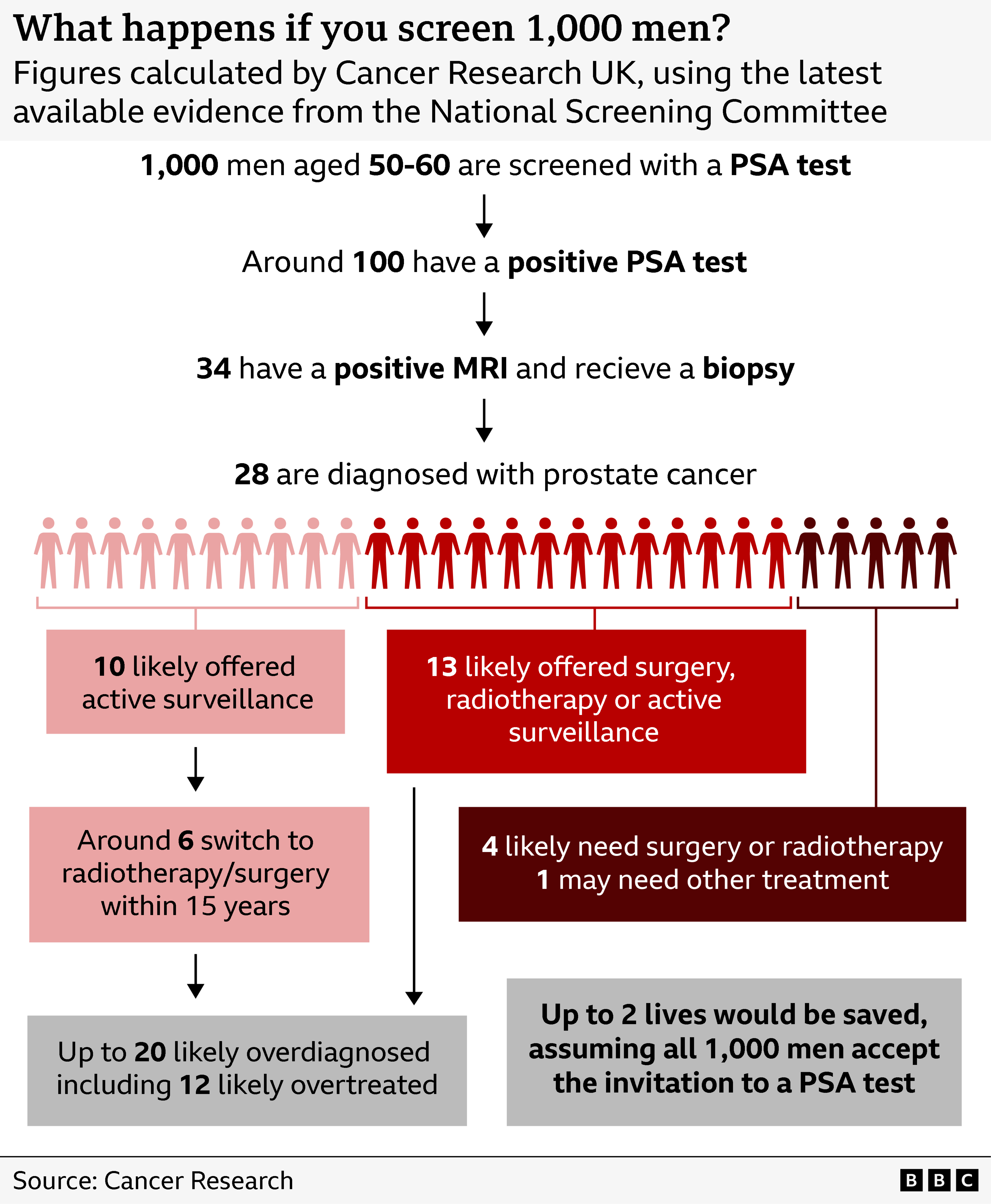
A systematic review and meta-analysis published Monday in Annals of Internal Medicine found that repeated PSA-based screening every two to four years for men aged 55 to 69 may reduce prostate cancer mortality, while a single invitation to screening does not appear to offer meaningful benefit, Science Media Centre reported.
The analysis, led by Jennifer Pillay and colleagues at the Alberta Research Centre for Health Evidence at the University of Alberta, pooled data from 13 randomized trials involving more than 790,000 men, according to the journal.
The review concluded that more frequent screening is not necessarily better and that benefits outside the 55-to-69 age range remain less certain.
“The findings suggest that a single invitation to PSA screening does not appear to offer meaningful benefit, whereas repeated screening every 2–4 years in men aged 55–69 may reduce prostate cancer mortality, albeit with an increased risk of overdiagnosis and overtreatment,” said Prabhakar Rajan, a professor at Barts Cancer Institute, Queen Mary University of London, in comments to Science Media Centre.
Prabhakar Rajan cautioned that the study populations were either unreported or predominantly European, limiting generalizability to Black men, who face higher prostate cancer risk. He also noted the trials do not reflect contemporary advances such as MRI-led diagnostic pathways and focal therapy, which may improve detection of clinically significant disease while reducing treatment harms. “Consequently, the benefit–harm balance of screening may differ in the context of modern prostate cancer care,” he said.
“This is a large and carefully conducted systematic review of randomised trials, which is an important strength because randomisation reduces many of the biases we worry about in observational studies of cancer screening,” said Mieke van Hemelrijck, a professor at King’s College London, speaking to Science Media Centre. She emphasized that the evidence predates widespread use of multiparametric MRI and modern risk-stratification approaches that help determine who needs a biopsy.
“So the review gives us good evidence about the benefits and harms of PSA screening as it was practised in these trials, but cannot directly tell us what the balance would look like in a contemporary MRI-based diagnostic pathway.”
Both experts pointed to ongoing trials such as TRANSFORM and IMProVE as needed evaluations in diverse populations using current diagnostic methods. Prabhakar Rajan declared consultancy and advisory roles with several medical technology companies; Mieke van Hemelrijck declared no conflicts of interest.
Related reading

International Students Didn’t Cause Australia’s University Crisis – Funding Failures Did
Shadow Home Affairs Minister Jonathon Duniam recently criticised the high number of international students in Australian universities, declaring...

Delayed Transcatheter Valve Migration Treated With Valve-in-Valve Implantation
A 77-year-old man with severe aortic stenosis developed life-threatening complications 12 days after an apparently successful transcatheter aortic...

Man Beaten and Bundled into Car on Deysbrook Lane, West Derby
A major road in West Derby was closed on Saturday evening after a man was beaten and forced...

TGL, Full Swing Launch Custom Holes on Simulators Nationwide
Golfers can now play the same custom holes the pros face on TGL's indoor league, with the 2026...