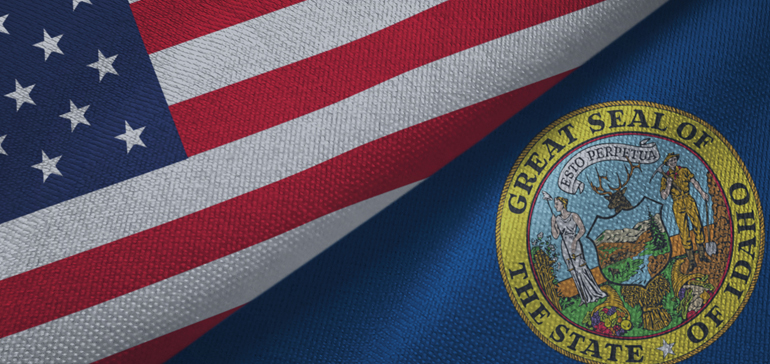
On November 3, 2026, Idaho voters delivered a stark counterpoint to the national “blue wave,” reelecting every Republican incumbent from governor to state controller and returning all GOP members of Congress while rejecting a ballot measure to restore abortion rights, Sandpoint Reader reported.
The results cement Idaho’s status as a deep-red outlier in an election that saw Democrats make sweeping gains across the country. While the party picked up six seats in the Idaho Legislature, Republicans retained supermajority control of both chambers and all seven statewide constitutional offices, according to unofficial results published by the Secretary of State’s Office and reported by Yahoo.
The Wave That Stopped at the Gem State
In a state where the national tide ran strongly against the GOP, Idaho bucked the trend at the top of the ticket. Sandpoint Reader noted that voters kept every incumbent Republican in the highest constitutional offices, returned all Republican U.S. Congress members, and defeated Proposition 1, the citizens’ ballot initiative that would have restored abortion rights. Voters also amended the Idaho Constitution to establish English as the official state language—a status it already held by statute—and approved a measure designating the Winchester Model 1873, dubbed the “Gun that Won the West,” as the official state gun, with 161,298 votes backing the designation.
One Republican-backed measure did fail: House Joint Resolution 4, which Sandpoint Reader described as a “Trojan Horse” that would have allowed the Legislature to sidestep the ballot initiative process under the guise of keeping drugs out of Idaho, did not succeed.
Six Seats for Democrats, Supermajority Intact
Despite the statewide shutout, Democrats made measurable gains in the Legislature. Yahoo reported that Democrats flipped six seats—one in the Senate and five in the House—boosting their presence from 15 members to 21 in the 105-member body. The pickups came in the state’s few competitive districts: west Boise’s Legislative District 15, the Magic Valley’s District 26, and Pocatello in eastern Idaho.

In District 15, Democrat Jae Etchart defeated incumbent Rep. Dori Healey with 53.3% of the vote, while former Boise School District Trustee Nancy Gregory beat Republican Desi Burbank to win the district’s Senate seat vacated by Republican Sen. Codi Galloway. Incumbent Democratic Rep. Steve Berch held his seat against Republican challenger Steve Keyser with nearly 58.3% of the vote. In District 26, Democrat Anita Janis unseated incumbent Rep. Mike Pohanka with 51% of the vote, and Democrat Kevin Marsh won the House Seat B race vacated by retiring Rep. Jack Nelsen with nearly 59% against Republican Lyle Johnstone. Incumbent Democratic Sen. Ron Taylor won reelection in the district with about 56.5% of the vote against Republican Bryan Hyde and independent Shaila Tate.
Even with those gains, Republicans maintain supermajority control of both chambers, and Yahoo reported that the party also holds all four of the state’s congressional seats.
North Idaho Stays Familiar
Locally in the Sandpoint area, the results mirrored the statewide pattern. Sandpoint Reader reported that voters sent Scott Herndon back to the Idaho Senate for his second non-consecutive term (after losing in the last cycle to outgoing-Republican Sen. Jim Woodward), while Cornel Rasor won another term representing District 1B in the Idaho House and Jane Sauter headed to Boise for a first term as the District 1A House member. The paper noted that a preferable outcome for its opinion writers would have been the election of Independents Steve Johnson and Kathryn Larson along with Democrat Karen Matthee, but that did not happen.
Buttigieg Warns Idaho Democrats to Focus Priorities
The results remain unofficial until the Idaho State Board of Canvassers certifies them on November 24. Former Transportation Secretary and onetime presidential candidate Pete Buttigieg, cited by Sandpoint Reader, urged Democrats to temper their national enthusiasm, pointing out that voters were motivated less by love of the Democratic Party than by a desire to escape the economic pain of President Donald Trump’s policies. For Idaho Democrats, the challenge is converting six new legislative seats into influence within a Legislature where Republicans still hold supermajority control of both chambers.
Idaho’s resistance to the national wave leaves the state politically isolated from the broader shift toward Democrats that swept the November 3 midterms, a divergence that will shape state policy until at least the next election cycle.
Related reading

Maryland Voters Approve Redistricting Amendment and Prince George’s County Council Changes
Maryland Redistricting Powers Shift After Voter Approval Maryland voters have cleared a path for a major overhaul of...

Police Seek Cyclist Who Allegedly Attacked Pedestrian in South End
Boston Police Seek Public Assistance in South End Assault Investigation Boston police are working to identify a cyclist...

Nicole Lea Purcell, 38, Known for Her Joyful Spirit and Resilience
Remembering Nicole Lea Purcell: A Life of Resilience and Joy in Louisville The Louisville community is mourning the...

Maine voters set record turnout amid rising costs and corruption concerns
Maine Voters Head to Polls in Record Numbers Amid Economic and Ethical Strain Mainers are on track to...