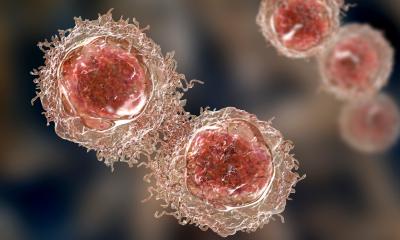
Metastasis is driving cancer-related deaths in children by exploiting the natural flexibility of young, developing cells, according to a research review reported by healthcare-in-europe.com.
Scientists have long struggled to explain why pediatric cancers spread aggressively despite carrying relatively few genetic mutations. That pattern is the direct opposite of what researchers observe in adult cancers.
Many childhood cancers arise from cells closely linked to developmental programs used during early life.
Lead researcher Dr. Darrell Green, from the University of East Anglia’s Norwich Medical School, explained the mechanism in the findings reported by healthcare-in-europe.com.
The research team reviewed evidence from a wide range of childhood cancers. The evaluated conditions included neuroblastoma, Ewing sarcoma, osteosarcoma, medulloblastoma, and rhabdomyosarcoma.
The researchers propose that genetic changes determine which cellular identities cancer cells can adopt. Meanwhile, reversible changes in gene activity dictate whether those cells become aggressive, resistant to treatment, or capable of forming metastatic tumors.
Dr. Green noted that childhood cancer cells may already possess the ability to become metastatic without needing to acquire new mutations first.
This challenges the long-held assumption that cancers must acquire new mutations before they can metastasise.”
Future therapies might aim to stop cancer cells from entering the states that make them dangerous in the first place, rather than focusing solely on killing tumor cells or targeting mutated genes.
Doctors could eventually predict when cancers are preparing to spread using emerging technologies. These tools include single-cell analysis, monitoring of circulating tumor cells, and advanced computer modelling to help track changes within tumors.
The researchers stress that the work does not represent a new treatment and that more research is needed. The research was led by the University of East Anglia in collaboration with Liverpool John Moores University.

By-Election Looming in KZN After MK Party Candidate Wins Two Wards – EWN
We did engage the IEC to say look, there is a duplication, said MK Party KwaZulu-Natal spokesperson Mkhuseli...
Xbox to Add Over 10 New Titles to Game Pass for 25th Anniversary
Microsoft is rolling out over 10 brand-new additions to Xbox Game Pass alongside a promotional bundle of 25...

Switch 2 and Switch Consoles Updated to Version 23.5.0 as Nintendo Quietly Re-Introduces eShop Gifting
Just in time for the holidays, a new feature will let family group members gift digital games to...

Guidelines Urge Prompt Aciclovir for Suspected Encephalitis – Medical Independent
Fresh European guidelines on infectious encephalitis in adults advise administering intravenous aciclovir immediately upon suspecting the illness, ideally...