
Rhode Island lawmakers let the deepest transit cuts in RIPTA history take effect in September 2025 while a survey this month showed most residents want stronger bus service.
Service cuts to 45 of 63 routes have driven ridership down about 12%, and only 21 routes now run more often than once an hour, ecoRI News reported. The reductions eliminated 113,684 annual hours of transit service.
“You can’t get theyah from heah,” the column wrote, echoing the old New England line that R.E.M. sang 13 times in 1985.
Rep. Brian Patrick Kennedy, D-Hopkinton, the House’s longest-serving member, sponsored last year’s law legalizing kratom after the state banned it in 2017. The Boston Globe reported he took multiple all-expense-paid trips to Indonesia with kratom lobbyists and failed to disclose two of them on required ethics filings. Kennedy has not been the primary sponsor on a RIPTA-support bill in 38 years, and his legislative webpage does not mention public transit, ecoRI News reported.
“Talk is cheap. Solutions take effort,” the column said.
Riders and advocates packed a dozen public hearings before the cuts, with 645 people speaking more than 11 hours combined and 589 additional comments submitted opposing the reductions, according to a 14-page Save RIPTA impact report published in January. An efficiency study demanded by state officials again found RIPTA operates efficiently.
“Held for further study is the go-to tactic for visionless state officials,” the report said.
Unlike Democratic leaders in New York, Illinois, Massachusetts and Pennsylvania, Rhode Island’s governor and legislature did not intervene to fund the agency.
Gov. Dan McKee backed a “budgetary framework” relying on nonexistent advertising revenue and borrowing against RIPTA’s capital budget.
“Public transit delivers a strong return on investment — $5 in economic output for every $1 invested,” the column said, citing the American Public Transportation Association.
Question 3 on this year’s ballot, which would have authorized $100 million for defense, data analytics and cybersecurity infrastructure, was rejected with 52.3% voting no.
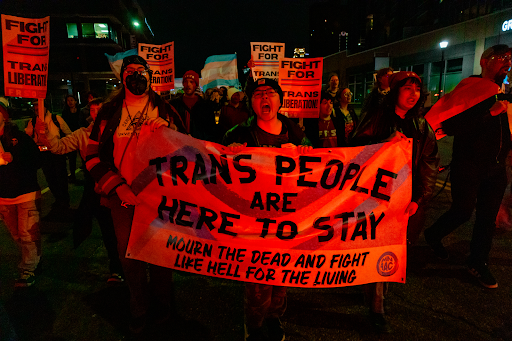
Over 100 Rally, March in Minneapolis Demanding State Fund Trans Healthcare
Over 100 people rallied in Chute Square Park and marched through Northeast Minneapolis on Friday, November 20, to...

Bleacher Report Analyst Projects Jaguars Could Trade Brian Thomas Jr. to 49ers in 2027 Offseason
Jacksonville Jaguars wide receiver Brian Thomas Jr. remains a candidate to be traded in the 2027 offseason, with...

Prosecutors Seek Carver Trial Delay, Citing Defense Attorney Conflicts
East Baton Rouge prosecutors asked Judge Gail Horne Ray on Monday to postpone Casen Carver’s Nov. 30 bench...

Massachusetts Golfers Post 2.8 Million Scores in 2026; Captains, Vesper, Long Meadow Lead Facility Rankings
Massachusetts golfers posted more than 2.8 million scores in 2026, up from roughly 2.7 million a year earlier,...