Rising costs are squeezing West Virginia family farms and the rural businesses that depend on them, with average production expenses climbing 25% in five years while farm numbers fell 4%.
West Virginia had 22,787 farms in 2022, down from 2017, and the average operation spent about $35,450 to produce, according to the USDA Census of Agriculture. At the same time, the average West Virginia farm reported net cash income of $8,805 — roughly one-ninth the national average of $79,790.
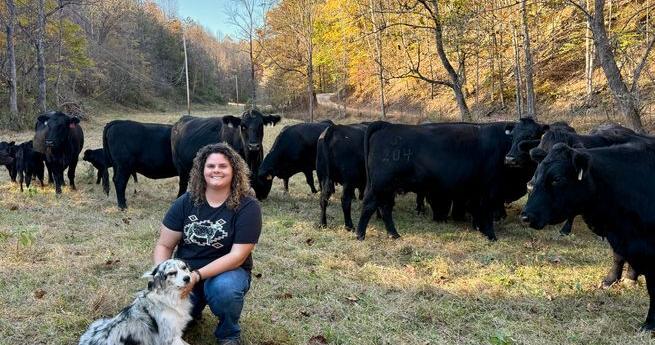
“Farming isn’t a thing to make a lot of money on. It’s, more or less, you got to enjoy it,” said Shawna Shamblin, who raises nearly 100 head of registered Angus and commercial cattle with her husband Jason in Looneyville. Both work full-time jobs off the farm to cover expenses and health insurance.
Geography limits scale
The state’s mountainous terrain caps the land available for large-scale production. The average West Virginia farm covers 156 acres, compared with about 463 acres nationally, the USDA census shows. Smaller operations lack the purchasing power of larger farms, making it harder to absorb rising prices for feed, fertilizer, equipment and fencing.
“Our geography, we can’t do anything about it. "So it limits what we can produce and it significantly limits our scale," said Doolarie "Dee" Singh-Knights, a WVU Extension professor of agribusiness economics and management.
Transportation costs and limited access to livestock processing facilities add further expense. Drought in recent years has reduced hay and corn yields, forcing farmers to buy supplemental feed. During one dry spell, the Shamblins needed the fire department to haul water to a pond for their cattle.
To manage fertilizer costs, the family now uses soil samples to apply nutrients only where needed. Breeding registered Angus cattle also brings added veterinary and reproductive-service bills.”
Ripple effects on local businesses
When farmers spend less, the impact reaches equipment dealers, feed stores and veterinarians. At Shamblin Brothers Farm Supply in Looneyville, owner Benjamin Shamblin — Jason’s cousin — said customers have grown more cautious.
“They’re more conservative, they buy less, they’re doing a little more repairs on their older stuff than buying new,” he said.
A 75-horsepower tractor with a cab that sold for about $39,000 a decade ago now costs around $59,000, he said.
Round baler prices have risen roughly $10,000 in two years. The shop now performs more repair work than new-equipment sales.
“What makes our business thrive is the local farmers,” Benjamin Shamblin said.
West Virginia Deputy Commissioner of Agriculture Amie Minor-Richard said that relationship underpins rural economies. “When we’re talking about keeping our small farms viable and strong, we’re talking about keeping that rural community viable in the future,” she said.
Processing investment aims to ease bottleneck
A federal grant announced November 3 aims to expand local meat-processing capacity. The USDA awarded $464,500 to two West Virginia processors through the Meat and Poultry Processing Expansion Program, part of $57 million distributed across 40 states, the agency said.
Lost River Meat Company in Hardy County will receive $250,000 for high-capacity processing and packaging equipment to increase cattle throughput and custom processing for local ranchers.
Zimmerman Gajewski in Greenbrier County will receive $214,500 for a carcass-splitting band saw, automated vacuum portioner, smokehouse, rotary composter, biochar kiln and backup generator to reduce bottlenecks and add value-added products.
“Expanding local processing capacity is critical to building a resilient food supply chain and keeping more economic value in our rural communities,” said John Reisenweber, USDA Rural Development State Director for West Virginia.

Next generation uncertain
High land, equipment and livestock costs make entry difficult for those without inherited farmland. “Unless we can make these farms profitable, they’re not going to be attractive for the next generation,” Singh-Knights said. Even inheritors often find value tied up in illiquid assets rather than cash for daily expenses.
Benjamin Shamblin said some older farmers are selling herds or leaving the industry, while fewer young people show interest in taking over.
“It’s going to be a lost art if we don’t watch what we do and keep supporting the younger generation to get into it,” he said.
WVU Extension offers beginning-farmer education, business planning and succession resources. The state agriculture department provides business development assistance and programs connecting producers with customers.
USDA agencies also offer support.
Shawna Shamblin hopes her daughter will stay involved through livestock shows and time on the farm. “Family farms are important. That way you can teach the younger generation and maybe kids around you,” she said.
Worth a look

Dennison Christkindlmarket Draws Crowds for Shopping, Sheep Spinning and Ice Skating
Dennison's annual Christkindlmarket drew crowds for holiday shopping, sheep spinning demonstrations and ice skating on Saturday. The event,...

Mamdani Reaffirms Trump ‘Fascist’ Label at DealBook Summit
"Yes," Mamdani told Andrew Ross Sorkin at the DealBook Summit on Wednesday when asked if he still considers...
Salt Lake Valley Winter Pest Control: Seal Gaps, Remove Food, and Trap Mice Before They Nest Indoors
Cold weather pushes Salt Lake Valley pests indoors through gaps as small as a quarter inch, turning homes...

Iowa Activates Emergency Center; Army Indicates Detonation Plan Despite Court Pause
Iowa Gov. Kim Reynolds activated the State Emergency Operations Center on Friday as state agencies brace for the...