Federal Lawsuit Challenges Miami-Dade Canvassing Board Over Recount Process
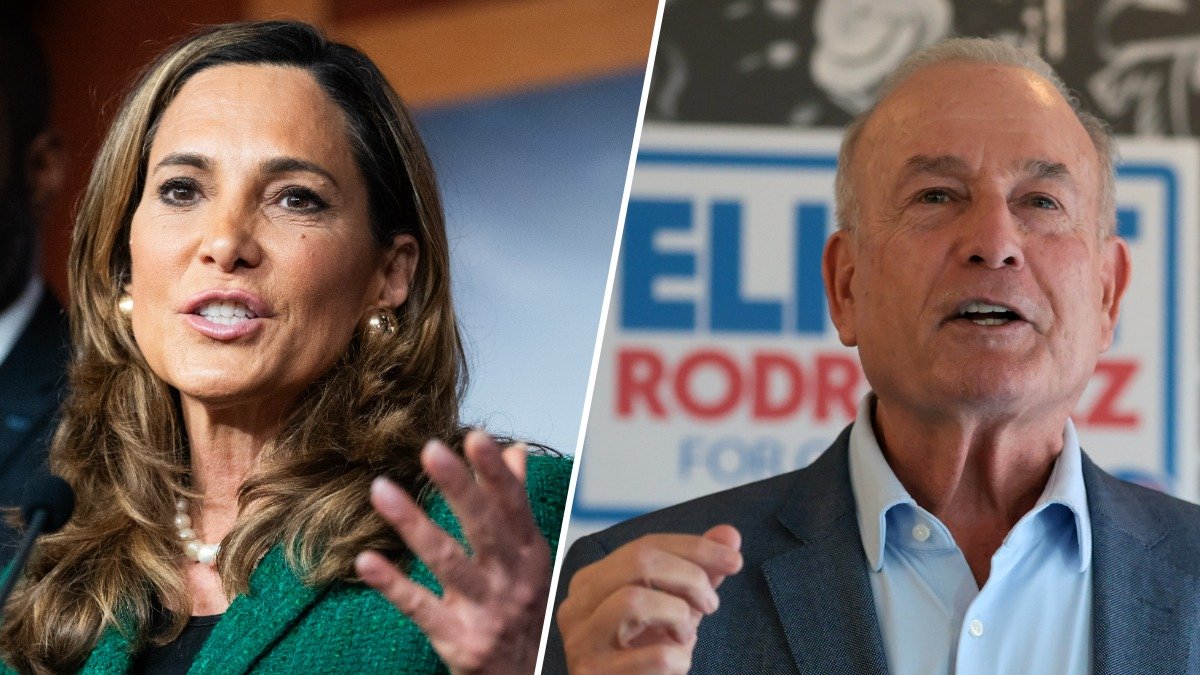
The race for Florida’s District 27 is barreling toward a recount, but the legal battle over who oversees the tally has shifted to federal court. As of Friday morning, the Miami-Dade Canvassing Board confirmed a lead of 1,090 votes for incumbent Maria Elvira Salazar over challenger Eliott Rodriguez. With the margin sitting within the threshold that triggers a mandatory recount under Florida law, the state’s secretary of state is expected to order the process as early as Monday or Tuesday morning.

The path to that recount, however, is now obstructed by a federal lawsuit filed by the Rodriguez campaign. The suit demands that Miami-Dade Supervisor of Elections Alina Garcia recuse herself from the canvassing board, alleging clear conflicts of interest that undermine the impartiality required for such a high-stakes count.
“Voters deserve impartiality in how their votes are counted, and that’s why the decision was made to go to federal court,” said JC Planas, an attorney representing the Rodriguez campaign. Central to the complaint is the assertion that Garcia’s personal and professional ties to the incumbent create a bias that could influence the board’s decisions regarding disputed ballots.
The Conflict of Interest Allegations
The legal complaint points to a series of connections between Garcia and Salazar that the Rodriguez campaign argues are disqualifying. Among the primary claims is that Garcia’s son-in-law, Robert Fernandez Rodriguez, is serving as a lawyer representing Salazar in the recount matter. Furthermore, the lawsuit highlights public social media posts where Garcia described Salazar as a “dear friend of many years,” alongside photographs of the two together.
The Rodriguez campaign also cites a statement Garcia allegedly made to the press on Tuesday, suggesting that a recount was unnecessary because Salazar was “going to win anyway.” According to Planas, this preemptive assessment by an official responsible for supervising the count is evidence of a lack of objectivity.

“The canvassing board will determine for whom the mark is made. This is something that requires the utmost objectivity and the utmost lack of partisanship,” Planas stated regarding the necessity of a neutral board during a recount.
In response to these allegations, Supervisor Alina Garcia has remained firm, stating that she will not recuse herself. “Statutorily there is no reason why I need for me to recuse myself, so I’m not going to,” Garcia told NBC6. She further characterized the push for her removal as an attempt to inject partisan division into the administrative process, adding, “There’s nothing to be concerned about. Unfortunately, because it’s a partisan issue, some people like to divide instead of unite.”
Salazar Responds to Recount Push
Maria Elvira Salazar has pushed back against the lawsuit, describing the legal challenge as an attempt to manipulate the electoral process. She accused the Rodriguez campaign of “behaving like an election denier, attempting to turn the process into a political circus,” while maintaining that she welcomes the recount as a standard procedure.
Her legal representative, Robert Fernandez, argued that the canvassing process remains transparent regardless of the ongoing dispute. “It is completely transparent. There are uniform guidelines to determine voter intent. Everybody is here to watch it, so watch for yourselves and make a determination,” Fernandez said.
Under Florida law, a recount is mandated when the final margin between candidates is one-half of one percent or less. As the clock ticks toward the start of the recount, the federal court’s handling of the recusal request will determine whether the current board remains intact or if a new structure must be established to oversee the final tabulation.
The outcome of this race now rests not only on the physical ballots but on the legal definitions of impartiality and the extent to which personal affiliations can be separated from the oversight of public elections.
Worth a look

Driver Injured in Car-Train Collision Near North 33rd Street
Driver Hospitalized After Collision with Train in North Lincoln A driver was hospitalized with minor injuries Friday night...
Mississippi voters face inactive status in Senate race between Colom and Hyde-Smith
The Cost of Inactive Status in a Tight Senate Race As election officials in Mississippi continue to tally...

Obituary: Barbara Ruth Schlaerth Biglan, PhD (1944-2026)
A Life of Intellect and Artistry: Remembering Dr. Barbara Schlaerth Biglan Dr. Barbara Ruth Schlaerth Biglan, a dedicated...

Michigan vs. Michigan State Roundtable: Rutgers Takeaways and Bold Predictions
Michigan and Michigan State Prepare for High-Stakes Rivalry Clash The Michigan Wolverines return to The Big House this...