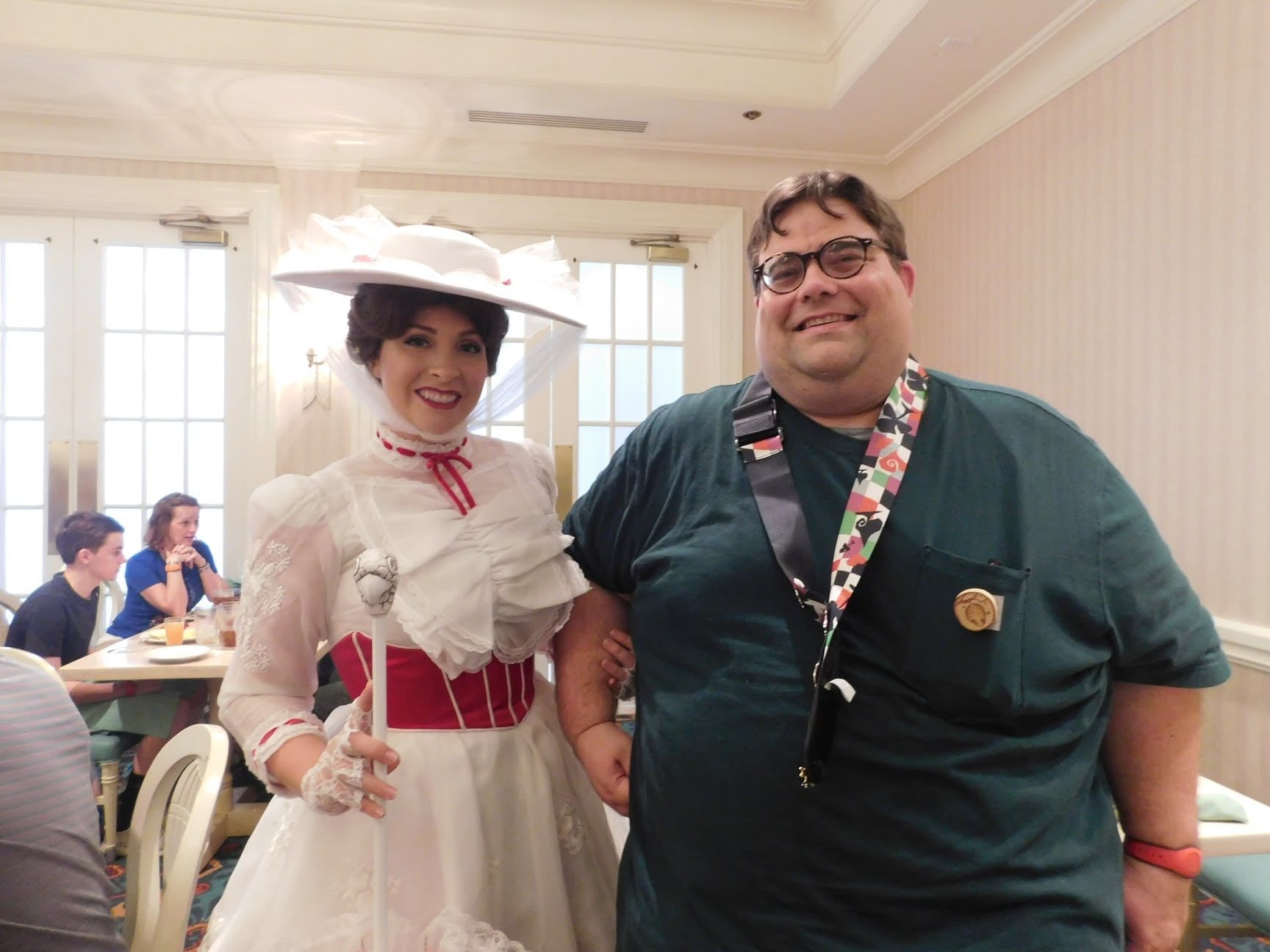
Veteran journalist Ron Baxley Jr. argues that the enduring cultural presence of Mary Poppins serves as a profound mirror for personal evolution and the complexities of family dynamics, according to a column in Augusta Good News.
Writing about the character’s pervasive influence, Baxley notes that the “practically perfect” nanny continues to resurface in modern media, from Marvel films to Guardians of the Galaxy, maintaining a relevance that transcends her original era.
The discussion comes as the Miller Theater prepares to host a Mary Poppins event on Sunday, Nov. 15, at 2 p.m., where patrons are encouraged to dress as chimney sweeps or other characters.
Baxley says his relationship with the film has changed through different life stages. As a child watching the movie on The Disney Channel, he says he identified with the children’s plight regarding an absentee father.
He describes his own father as a workaholic who spent days at&T and nights installing satellite dishes. Baxley recalls that assisting his father with these installations was one of the few ways they could spend time together.
While he once pitied the children in the film for their father’s absence, Baxley writes that his perspective changed after he experienced the struggle of working multiple jobs to make ends meet. As an adult, he says he began to see Mr. Banks as a man focused on adult responsibilities.
Despite this shift in understanding, Baxley maintains that he still empathizes with the children’s longing for their father’s presence.
The column also explores the friction between the original creator, P.L. Travers, and Walt Disney. Baxley notes that while Disney’s version blended animation and live action with music by the Sherman Brothers, Travers reportedly did not care for how her masterpiece was adapted.
Drawing on the film Saving Mr. Banks, Baxley highlights a central epiphany regarding the character’s purpose. He points to a moment where Disney realizes that Travers did not create Mary Poppins to save the children, but rather to save her own father.
Baxley connects this to his own experience as an author, noting how artists often attempt to work through complicated parental relationships within their fiction. He observes that Travers’ father struggled with alcoholism and instability, which deeply influenced her work.
“Disney does not get it right at that point but does have a later discussions with Travers about his own workaholic father,” Baxley writes, noting the character’s connection to the creator’s personal history.
Baxley suggests that the “Disney-fied” version of the character, characterized by Julie Andrews’ charismatic performance, may be the reason the songs and imagery remain so ubiquitous in the collective memory.
The author reflects on his time as a part-time travel agent, noting that meeting the Mary Poppins character at Disney World triggered an emotional reaction. He writes that despite knowing the character was not real, the encounter made him feel like an eight-year-old again, wishing for an escape from harsh circumstances.
Ultimately, Baxley finds a sense of closure in his reflections. He notes that while his father was often absent due to work, the money earned from that labor provided experiences, such as trips to Florida, that became special to him.
He concludes that the magical nanny was as essential to her creator as those shared family moments were to his own sense of connection.
Keep reading

Chiefs Roster Faces Scrutiny Over Receiver Depth and Special Teams
The Kansas City Chiefs' Week 9 victory over the New York Jets has ignited a debate among fans...

St. Paul Honors Ebro Ahmed for Stopping Runaway School Bus
“Anything to make Minnesota look better,” Ebro Ahmed said during a ceremony Monday, noting that he hopes his...

Michigan Launches New MIUI Unemployment System After Shutdown
Michigan's unemployment benefits are once again accessible following a week-long system shutdown. The Michigan Unemployment Insurance Agency (UIA)...
McIntosh Gains 865 Vote Lead in Baltimore County 5th District Race
McIntosh takes lead in District 5 race Democrat Shawn McIntosh has overtaken Republican Councilman Nino Mangione in the...