The 50th Anniversary Brings a Reckoning for New York City Marathon Entry
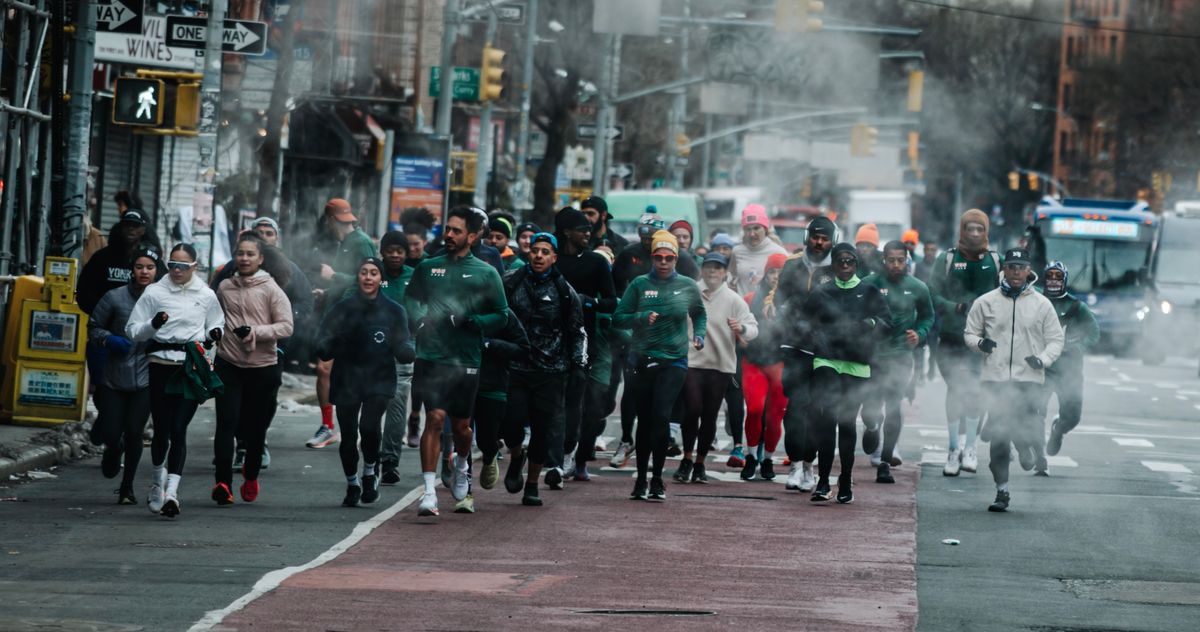
This August, marathon hopefuls across New York City opened their email inboxes to an unpleasant surprise, as race fees climbed and the popular 9+1 selection process—which long guaranteed entry to anyone who ran nine races and volunteered at another—was overhauled to feature a new lottery system, alongside thousands of program slots being cut. The resulting anger rippled quickly through local run clubs and digital forums, fixing a familiar and glaring target squarely on the New York Road Runners. Held annually on the first Sunday in November, the marathon marks its milestone 50th anniversary for the populist five-borough course this year, yet its parent organization faces a mounting wave of public resentment over who actually gets to run.
As the administrative force behind the event, NYRR carries the delicate task of deciding entry allocations amid an unprecedented worldwide running boom. Record numbers of people applied for the marathon this year, and a record number faced rejection, fueling deep-seated anxieties not just about the selection process itself, but about the growing financial barriers to entry. Stephanie Fidis, a 33-year-old publishing worker who has raced with NYRR since 2018, noted the mounting frustration. Between scrambling to secure race slots before they sell out and absorbing climbing entry fees, she explained that participation increasingly feels out of reach for regular runners.
Balancing Nonprofit Accessibility Against Soaring Global Demand
Sitting inside his fifth-floor office near Carnegie Hall, NYRR CEO Rob Simmelkjaer acknowledges the heavy griping, though he bristles at the characterization of his organization as a cold-blooded revenue machine. Simmelkjaer pointed out that if NYRR operated strictly as a for-profit entity focused on maximizing bottom-line returns, entry fees could easily double while still selling out instantly. Instead, he maintains that accessibility remains a central pillar of the nonprofit’s mission.
The skyrocketing demand is far from a localized New York phenomenon. Applications for the London Marathon surged by 35 percent between 2025 and 2026, pushing acceptance rates down to 1.5 percent. Meanwhile, New York’s applicant pool climbed from a 2020 high of 185,000 to more than 240,000 this year. Simmelkjaer defended the dismantling of the historic 9+1 framework—which had prioritized local runners for roughly four decades—arguing that unchecked growth would ultimately threaten other vital components of the event.
“If it was allowed to grow in an unlimited way, it really starts to threaten other important groups in the marathon, most notably the charity program,” he says, referring to the thousands of marathoners who gain entry by pledging to raise money for philanthropic groups.
Critics, however, remain unconvinced by that rationale. Leaders of grassroots running communities argue that the shift penalizes everyday athletes in favor of more affluent participants and high-yield charity entries. Maria Solis Belizaire, founder of Latinas Run, criticized the allocation strategy directly, stating that the organization can secure larger financial returns through charity bibs while simultaneously polishing its public image.
Corporate Sponsorships Fund Civic Programs and School Running
Generating an estimated $800 million in economic activity for the city, the marathon functions much like the U.S. Open: a glamorous, high-revenue spectacle that funds lower-key civic programs year-round. NYRR funnels millions into free school-based running programs, public track construction, and neighborhood playgrounds. Because the organization cannot sell spectator tickets for its main competition, it relies heavily on corporate sponsorships and membership dues. Current backers range from major entities like Tata Consultancy Services, New Balance, and Citizens Bank to niche corporate partners.

That heavy corporate footprint has occasionally rubbed independent running communities the wrong way. Recent regulations banning cheer-zone banners featuring unapproved brand names sparked swift backlash across local clubs, highlighting the friction between a well-funded institution and the scrappy neighborhood crews defining New York’s running culture. Parmila Philips, leader of the Manhattan-based New York Flyers, went so far as to accuse NYRR of cannibalizing sponsorship dollars that might otherwise support smaller nonprofits.
Simmelkjaer pushed back against that assessment, emphasizing the vibrant, independent ecosystem thriving on the streets and paths of Central Park and the West Side Highway without direct NYRR backing. Financial disclosures show the organization pulled in a record $133 million in revenue, plowing 87 percent of those funds straight back into program services. Yet competitive pressures on the ground are mounting. Steve Lastoe, founder of the for-profit race organizer NYCRuns—which previously settled a trademark dispute with NYRR over the Brooklyn Half Marathon name—revealed he is currently in discussions with city officials regarding plans to launch a brand-new multi-borough marathon within the next several years.
Leadership Turmoil and the Push for Inclusivity
The current administrative battles arrive on the heels of a turbulent era for NYRR. Michael Capiraso led the organization through rapid growth until the COVID-19 pandemic ground operations to a halt in 2020, triggering massive staff layoffs and intense public scrutiny over workplace culture. Following an interim tenure by Kerin Hempel, Simmelkjaer stepped into the top role in 2022. He has since overseen structural shifts, including a brand overhaul that replaced the organization’s 15-year-old logo—featuring the letters NY, then a runner’s silhouette, then the letters RR—with an abstract torch and flame inspired by the Statue of Liberty.
As the golden anniversary of the five-borough race arrives, the organization founded by Ted Corbitt to champion civil rights and integration finds itself weighing its historic populist roots against the realities of a booming, hyper-commercialized running economy. For thousands of runners locked out of the starting corrals, the primary question remains whether accessibility can survive the modern surge.
How to Fix Errors on Your Pennsylvania Mail Ballot by County
If you made a mistake on your mail ballot in Pennsylvania, you don't necessarily have to sit on...

Salem Township Approves Data Center Overlay District Expansion
BERWICK — The data center overlay district in Salem Township has more than doubled in size, following approval...

Chickasaw Nation to get over $7 million for tribal energy projects
More than $7 million is headed to the Chickasaw Nation as part of a federal push to expand...

The Vile Politics of the Vivek Ramaswamy Ohio Governor Ad
When you stand with vile, you reveal yourself. That is the stark reality facing the Ohio Republican establishment...