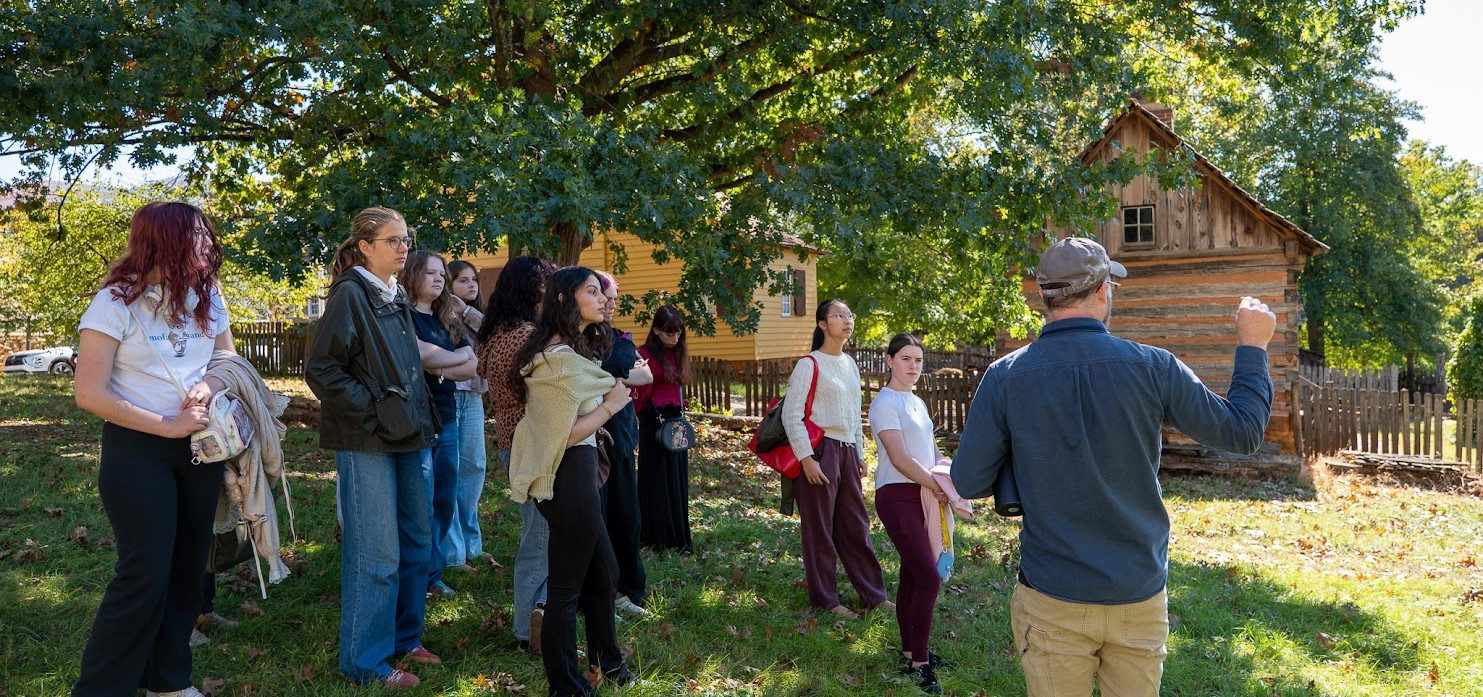
Salem Academy students connect classroom lessons to local industry
Students at Salem Academy recently moved beyond their traditional desks for two days of hands-on learning during the school’s annual Innovation Days, salemacademy.com reported.
The program allowed students to step into various professional environments to explore fields ranging from healthcare and technology to the arts and public service. By engaging directly with local professionals, the Academy aims to bridge the gap between theoretical textbook instruction and the practical demands of the modern workforce.
The initiative serves a specific developmental purpose for the student body. Rather than just reading about career paths, students participate in active workshops that allow them to test interests in real-time.
Hands-on discovery in the arts and sciences
Students interested in the performing arts spent time at the University of North Carolina School of the Arts (UNCSA). Others pursued technical craftsmanship at Carolina Wind and Brass Repair, where they observed the intricate work required to maintain musical instruments.
The curriculum also touched on the intersection of creativity and mental health through an art therapy session designed to demonstrate how artistic expression supports well-being.
In the natural sciences, students visited the Old Salem Seed Bank to study plant conservation and its role in maintaining biodiversity. This session provided a direct look at how environmental stewardship functions on a local level.
“I would like to express sincere gratitude to the Old Salem Seed Bank on behalf of all of us who went to their workshop, because they gave us such a great opportunity to work with and learn about nature,” said sophomore Emily Z.
Healthcare and technological applications
The exploration of human health took students to Precision Ocular Network. There, they studied the science of vision care and the historical development of eye banking.
Freshman McKinley P. noted the historical depth of the field during the visit.
“They were very kind, and we learned about the history of eye banking. The first cornea transplant was performed in 1905!” McKinley P. said. “We also learned about the Eye Bank Association of America, which is a nonprofit organization. Overall, it was a really fun experience and made me want to learn more about eye banking.”

Technology and data analysis were central themes for several other site visits. Students explored how digital information shapes modern careers through several different lenses:
- The Wake Forest Pitching Lab, where they observed the use of data in athletics.
- The Winston-Salem Dash, where they studied marketing and data analysis.
- Winston-Salem City Hall, where they learned about solar energy initiatives.
- The Forsyth County Sheriff’s Office, which demonstrated how technology and data are utilized in public safety.
The impact of community-based learning
For the Academy, these excursions are a core component of an educational philosophy that prioritizes critical thinking and self-discovery. By exposing students to a wide array of roles, the school provides a framework for them to identify both their passions and the fields that do not suit them.
Kris Porazzi Sorrells, Head of School at Salem Academy, said this community-driven approach to education is important.
“One of the things that makes Salem Academy wonderful is how much our community has worked with us to give us different types of educational opportunities for our girls. Introducing our students to different careers so they can learn the things they like and the things they don’t like is very, very important,” Sorrells said.
The program is designed to build confidence in young women as they prepare for the transition to college and professional life. By seeing the practical application of their studies, students are encouraged to move from passive learners to active participants in their communities.

Family Demands Justice After Teen Struck by Car in Cheyenne
A 14-year-old was struck by a vehicle near East High School “She had the right of way to...
BYU and West Virginia Battle to a Draw in Thrilling Soccer Match
The BYU women’s soccer team saw their lead vanish in the final seconds of regulation, ultimately settling for...
Remembering Richard Barmuta: A Seattle Life of Hard Work and Joy
Richard Barmuta, a lifelong Seattle resident, passed away on September 8, 2026, according to a remembrance shared by...
Alexandria Officials Launch Study on Student Education Costs
Alexandria city officials and school leaders agreed Monday to launch a six-month joint study to determine the precise...