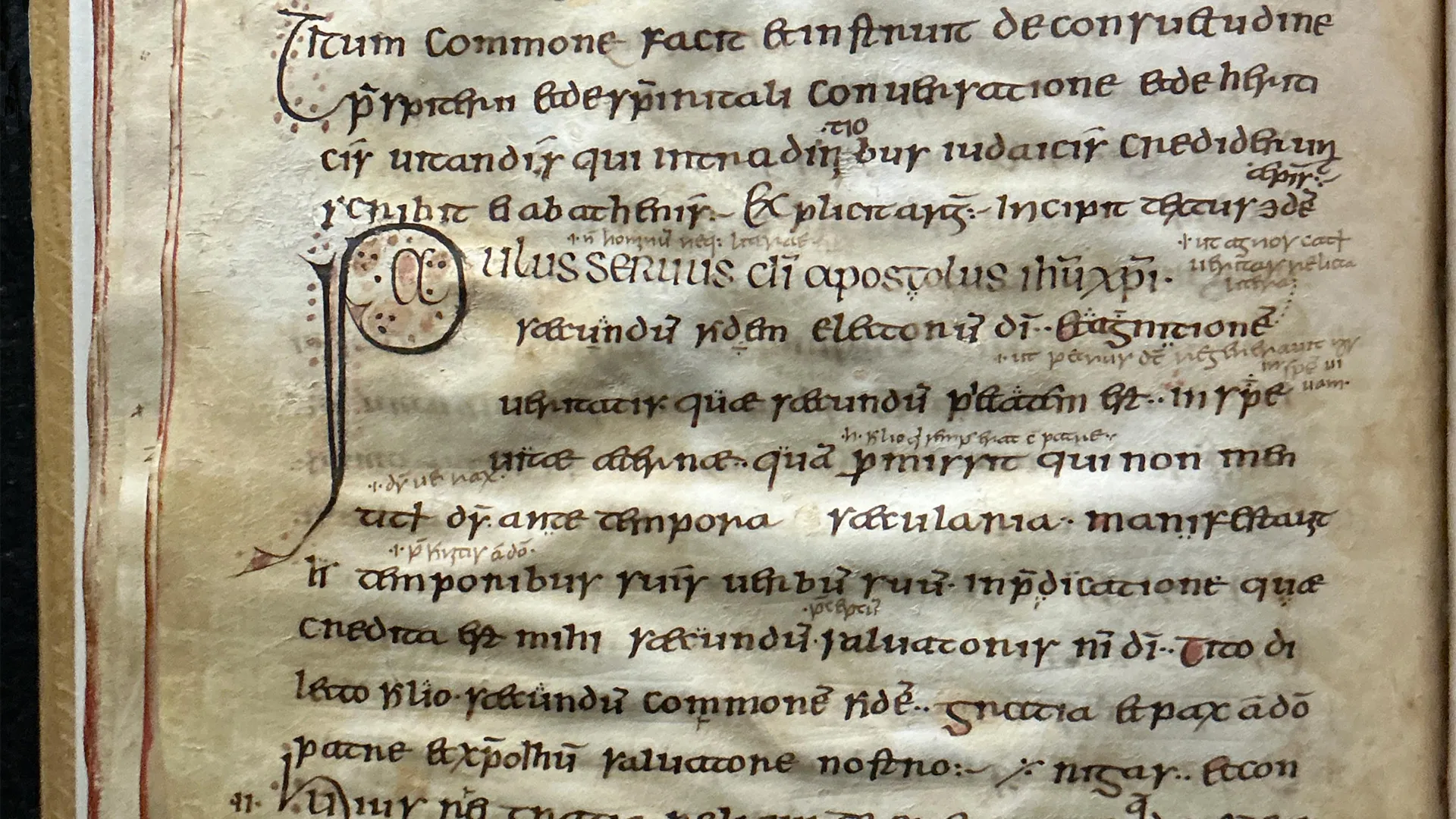
Ancient viral DNA preserved in medieval parchment has revealed a history of sheeppox virus.
Scientists examining animal skins used for historical documents uncovered the first genetic evidence that the destructive disease plagued European sheep flocks long before modern record-keeping. An international research team led by University College Dublin spearheaded the investigation, analyzing pages from cultural artifacts including the 1,000-year-old York Gospels and the Corpus Glossary at Corpus Christi College Cambridge.
The findings indicate that infected animals supplied the hides for these historical works. Sheeppox spreads rapidly through flocks, killing young sheep and driving economic losses through reduced wool, meat, and milk production.
The discovery demonstrates that libraries and archives preserve biological records alongside cultural heritage. Researchers identified viral DNA on multiple pages of several medieval manuscripts from Britain and continental Europe.

Traces turned up on calfskin and goatskin parchment as well. Because the virus primarily targets sheep, researchers note that the pathogen may have occasionally infected other livestock or contaminated skins during production.
“The recording of ancient DNA of pathogens has completely changed our understanding of infectious disease in the past, and here we show that parchment can also preserve animal pathogen DNA.”
said Louis L’Hôte, PhD candidate at University College Dublin and lead author of the study published in Science Advances.
“It is possible that archives and libraries around the world also contain the genetic traces of disease outbreaks in animals in the past.”
The investigation extended beyond books to sheep teeth dating to the Bronze Age. Teeth protect genetic material through millennia, allowing scientists to identify the oldest known genetic traces of sheeppox virus in Eurasian steppe settlements.
Comparing ancient viral DNA with modern sequences shows that main capripoxvirus branches—sheeppox, goatpox, and lumpy skin disease virus—separated between 11,500 and 3,700 years ago. This timeline aligns with livestock domestication and the movement of sheep from the Eurasian steppe into Europe.
The genome of the sheeppox virus has remained remarkably stable over the past several thousand years. Understanding this genetic stability could help researchers combat modern outbreaks.
“People around the world are still fighting against this pathogen—there is currently an outbreak of sheeppox in Greece, causing much economic damage.”
Ancient genomes can help us understand how these pathogens affecting us today evolved. We find that unlike the smallpox virus, the sheeppox virus genome was very stable over the last few millennia. Louis L'Hôte
Keep reading

Google Patches Chrome Zero-Day, Fixes Active XML Flaw
Google patched its eighth actively exploited Chrome zero-day of the year on Monday rolling out emergency desktop updates...

Nukila Evanty: Gender Blind Spots Undermine Southeast Asia’s Fight Against Human Trafficking – Independent Observer
Gender blind spots undermine Southeast Asia's fight against human trafficking, activist Nukila Evanty warned at the 24 Hour...

US Faces Loss of Measles-Free Status Amid Expert Review – RTÉ.ie
Measles infections in the United States have surged to more than 5,000 cases this year, according to newly...

US Envoy: No Announcement on Pax Silica During ASEAN Summit – Philippine News Agency
The highly anticipated Pax Silica Economic Security Zone, a proposed high-tech industrial hub in Luzon, will not see...