
Scott Colom and Black Mississippians await historic Senate results
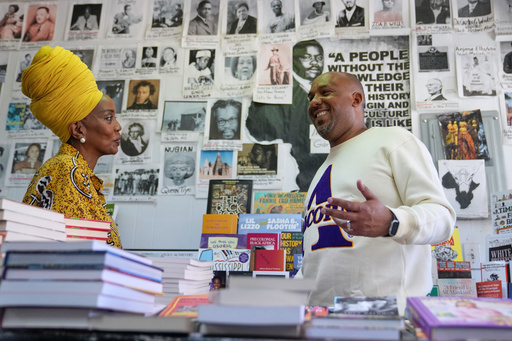
Democrat Scott Colom has not yet secured victory in Mississippi’s U.S. Senate race, but the local prosecutor was greeted as a historic figure on Friday as he walked through the Farish Street business district in Jackson. The area, once a central hub for civil rights organizing, served as a backdrop for a community watching closely as the state continues to tally ballots that could make Colom the first Black senator from Mississippi since the post-Civil War Reconstruction era, according to reporting from the Associated Press.
Let me be clear: I will never take a penny from AIPAC or Super PACs that don’t put Mississippi and America first. This Senate seat belongs to the people of Mississippi. That’s who I’ll answer to.
The possibility of Colom defeating Republican incumbent Sen. Cindy Hyde-Smith has created a atmosphere of cautious optimism and celebration among Black voters. In a state where nearly 40% of the population is Black, top-level representation has remained overwhelmingly white for generations. For many, the pending results represent more than just a change in party affiliation; they represent a shift in the state’s long-standing political landscape.
The contest remains too early for the Associated Press to call. The final outcome now hinges on a meticulous counting process occurring across Mississippi’s 82 counties. Local election officials are currently processing absentee ballots and provisional “affidavit” ballots—those cast when a voter faces issues such as a name not appearing on the rolls or a mismatch in identification.
The process for outstanding ballots remains underway
While the exact number of outstanding ballots is currently unknown, the timeline for the final count is established by state law. Absentee ballots can be counted in Mississippi as long as they are received by the Tuesday following the election, which marks five business days after the vote. For voters who encountered identification issues at the polls, they have until that same Tuesday to resolve those matters in person at their local elections office.
For those whose names were missing from precinct rolls, officials can verify their status using previous records and the information provided on the affidavit filed at the time of voting. According to the Associated Press, voters can check their specific ballot status through the Mississippi Secretary of State’s office website.
The legal landscape surrounding the count is strict. Counties have until Friday to certify their complete results to the Secretary of State, and Mississippi law currently contains no provision for a statewide recount. However, both campaigns are prepared for potential legal challenges.
“We’re going to make sure everything is followed according to the law, and I have confidence in those local officials.”
Colom said, noting that he is urging supporters to remain patient as officials do their jobs.
Hyde-Smith has maintained a different stance. Though she essentially declared victory on election night despite a razor-thin margin, she has not appeared publicly since. On Friday, she addressed her supporters via social media, stating, “We are not backinging down… Our team is working across Mississippi to monitor the remaining ballots and protect the integrity of the process.”
A seismic shift for Mississippi’s political identity
While Democrats have already secured control of the U.S. Senate, meaning this race will not alter the national balance of power in Washington, the implications for Mississippi are profound. For nearly 150 years, white conservatives have dominated the statehouse and the congressional delegation. Following the Civil Rights Movement, the political alignment of the state shifted overwhelmingly toward the Republican Party, leaving Black Mississippians with a lack of proportional representation at the highest levels of government.
Colom, once considered a long shot, saw a surge in momentum late in the cycle. The Associated Press noted that Senate Democratic leadership began investing in advertising for his campaign in late October, following a broader backlash against redistricting efforts in the South that critics argued were designed to reduce Black representation.
The human impact of this potential shift was visible in Jackson at Marshall’s Music & Bookstore. Owned by Maati Jone Primm, the shop opened in the 1930s and is recognized as the oldest Black-owned bookstore in the United States. For Primm, the candidacy of Colom offers a sense of aspiration for the next generation.
“Our youth need to see the possibilities for their lives, and we do when we see our next senator from Mississippi.”
she said.
The struggle for representation and the road ahead
The campaign has been framed by both economic concerns and the legacy of the civil rights struggle. Colom has sought to build a broad coalition by addressing issues that cross demographic lines, such as tariffs and foreign policy. Yet, he has not shied away from the racial significance of his run. His final campaign advertisement was set at the Jackson home of Medgar Evers, the civil rights leader assassinated in 1963.
Sorie Tarawally, a 76-year-old attorney who has known Colom’s father, emphasized the motivation behind the movement.
“We are motivated by the gross inequalities we have seen in society and how only one side seems to benefit.”
Tarawally said, adding that the community seeks a representative who speaks directly to their interests.
As the final days of counting approach, the tension in Mississippi remains high. Whether the results confirm a historic breakthrough or maintain the status quo, the process serves as a reminder of the ongoing evolution of the Deep South’s political identity.

Oklahoma City Pastor Sentenced to 30 Years for Labor Trafficking and Crimes Against Minors
An Oklahoma City pastor receives 30 years for labor trafficking and crimes against minors Elmer Baca Flores, a...

Ohio Law Enforcement Groups Demand Oversight for Flock Cameras
Ohio law enforcement groups call for oversight of Flock camera technology Four major law enforcement organizations in Ohio...

An author recounts emotional isolation with an economist in Cuba
A Personal Account of Disconnection in Cuba In a reflective first-person essay published by The New Yorker, an...

9th Annual Heart of Albany Festival Brings Artists and Creativity to Tift Park
Tift Park hosts 9th annual Heart of Albany Festival Artists and community members gathered at Tift Park in...