
Seattle’s Thanksgiving tables have long since drifted from the Norman Rockwell ideal, and this year the city’s Chinese barbecue houses are again leading the shift with birds that taste more like Peking duck than Pilgrim fare.
At Kau BBQ Restaurant in South Lake Union, the kitchen has been marinating turkeys in five-spice powder, soy sauce and star anise since the 1970s, then hang-drying them overnight under fans before the birds hit a commercial inferno oven.
The result is a caramelized, crackling skin and juicy interior that co-owner Randy Wo-Eng compares to Peking duck. “It’s aromatic with five-spice, sesame, star anise and has a cinnamon-floral taste to it,” Wo-Eng told the Seattle Times. “It also makes for a great post-Thanksgiving congee.”
Demand is so intense that the restaurant brings in reinforcements every November to work around the clock. When Wo-Eng’s father, Hock Wo, bought the business two years ago after starting there as a dishwasher 50 years earlier, the new ownership had to reassure the local Chinese community they would keep taking turkey orders.
Instead of asking staff to pull graveyard shifts, family members now roast the birds themselves at midnight. “For us, it was about tradition and legacy,” Wo-Eng said. “But we didn’t want our staff to stay overnight, so we took the burden of that part.”
About two miles north, Tho Tuong — a Chinese-Vietnamese barbecue spot that expanded from Tacoma to South Lake Union this year — operates on a different model: customers bring their own turkey 48 hours in advance, and the kitchen marinates, hang-dries and roasts it for $2.50 a pound. Owner Kevin Ngo said the family never planned to enter the Thanksgiving trade, but patrons began requesting a turkey version of their signature roast duck a decade ago.
The bird is dried for 48 hours, spatchcocked and blasted in an open-flame chamber. “It’s not as fatty, succulent and gamey as the roast duck, so hold onto Tho’s signature sweet umami sauce,” Ngo told the Seattle Times.
“It will help moisten the breast meat.” He also advises asking the kitchen not to chop the turkey into bite-size pieces unless you plan to eat within an hour, because the meat dries out fast once cut.
At Dumpling the Noodle, owner Sen Mao treats the turkey as two distinct ingredients. He breaks down the bird so dark and white meat can cook evenly, then prepares the leg meat Chinese Qi barbecue-style — boiled, marinated with chiles, ginger, onion, soy sauce and cardamom, then roasted until the skin crackles.
The breast becomes orange turkey: chopped into nuggets, battered, deep-fried to a tawny crisp and served with a sweet-tangy orange sauce. A half-order runs $125; a whole turkey with steamed bao buns, daikon slaw, mala tofu skins, cucumber salad and veggie chow mein is $235.
For home cooks, the sticky-rice-stuffed turkey remains a staple across Asian American households. The filling — glutinous rice, Chinese sausage, dried shrimp, mushroom and sometimes chestnuts — soaks up the bird’s juices much like the sticky rice in dim sum banana-leaf parcels, only tasting as if it were cooked in turkey bouillon.
Supermarkets such as T&T now sell a version for $99, while a premium combo with appetizer platter, salad, dessert and soda goes for $128.
Together, these kitchens turn a single holiday bird into a map of Seattle’s immigrant history: Cantonese barbecue technique, Vietnamese flame-roasting, Sichuan spice, and a dim-sum staple reimagined for an American calendar. The ovens are already heating.
Worth a look

Winter Storm Knocks Out Power to 32,000 SMUD Customers, Drops Feet of Sierra Snow
"The wind kind of feels violent in a way," James Bumpus told CapRadio, clutching his umbrella at a...
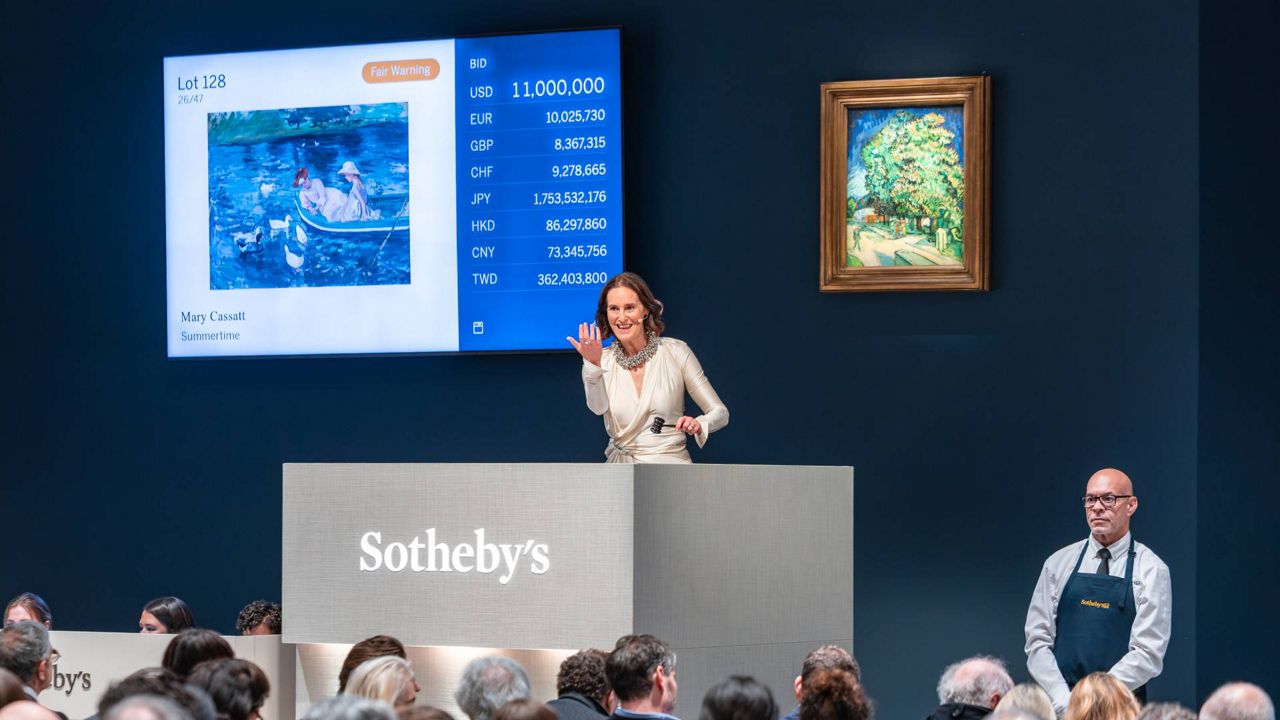
A Vibrant Painting by Vincent van Gogh, Created Weeks
A vibrant painting by Vincent van Gogh, created weeks before his death, sold for $190.4 million at Sotheby's...

New Jersey Payrolls Slip 900 in October; Unemployment Rate Steady at 4.2%
New Jersey payrolls slipped by 900 jobs in October even as the unemployment rate held steady at 4.2...

Liberty Women’s Soccer Faces No. 8 Tennessee in NCAA First Round Friday
Liberty University women's soccer will face No. 8 seed Tennessee on Friday at 6 p.m. Eastern at Regal...