
Cameras in the Stadium District were already utilized during the World Cup and will be activated immediately, according to Wilson.
The expansion moves forward following an audit commissioned from New York University’s Policing Project, which Wilson said justified the move despite her past opposition during the campaign trail.
While the NYU audit flagged important gaps and shortcomings in police surveillance policy and made 19 recommendations, Wilson determined the concerns did not warrant further delays. She plans to act on the recommendations by establishing a work group to implement policy safeguards around data retention and civil liberties.
“Seattle does not have to choose between taking crime seriously and taking civil liberties seriously,” Wilson said.
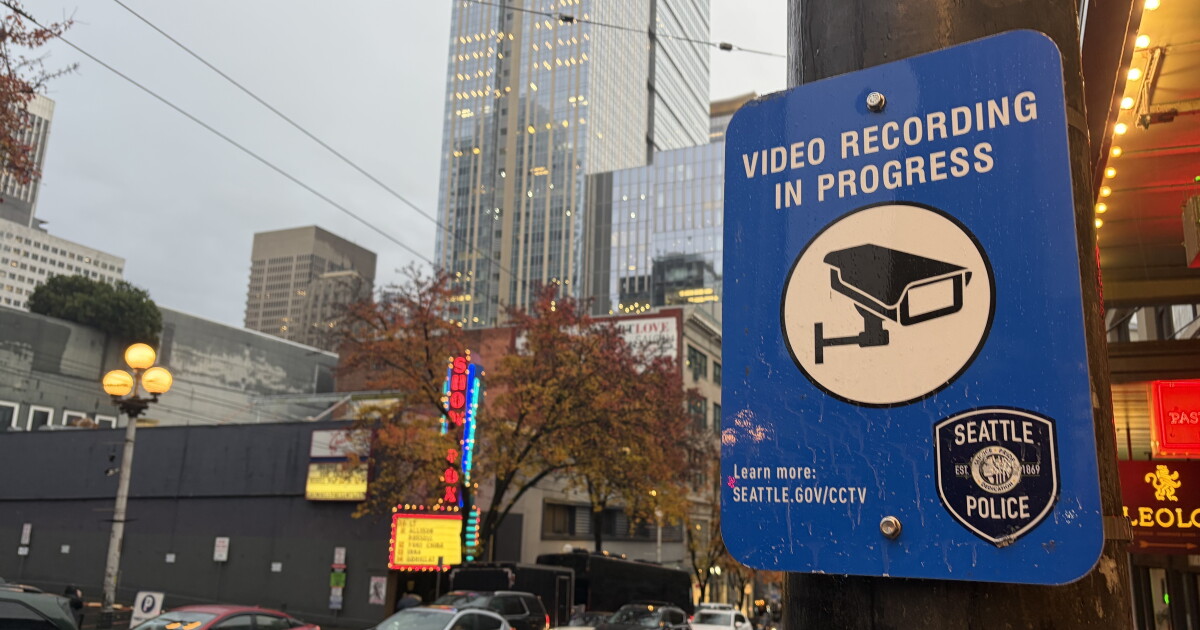
The debate over expanding the surveillance network highlights a sharp division among local officials and community groups over policing resources and privacy rights. Interim Police Chief Andre Sayles addressed critics concerned about vulnerable and immigrant neighborhoods being targeted.
That is not who we are.”
Sayles pointed to clear safeguards, regular auditing, and public engagement and notice before any camera expansion, emphasizing the value of video footage to criminal investigations.
The city launched closed-circuit TV cameras in Chinatown-International District, Downtown, and Aurora in April 2025.
City Councilmember Bob Kettle praised the mayor’s decision as pragmatic, noting that the NYU audit provides welcome oversight. However, Councilmember Alexis Mercedes Rinck voiced lingering questions regarding the system’s efficacy.
Community stakeholders expressed similarly complex views. Gabriel Neuman, director of policy at the Greater Seattle Business Association, noted past harms inflicted by police surveillance on LGBTQ+ individuals while acknowledging local safety needs.
Conversely, anti-surveillance advocates registered sharp disappointment. AJ Randall of the Community Not Cameras Coalition accused the mayor of backsliding on campaign commitments, telling knkx.org that the expansion feels forced upon the community.
The coalition also pointed to NYU audit findings warning that city agencies cannot guarantee data will never be shared with federal entities, noting that the Real-Time Crime Center has access to 538 cameras spanning police, traffic, city, and private feeds.
Wilson acknowledged that the evidence regarding cameras solving or preventing crime remains mixed and stated she does not want to oversell their impact. She pointed to ongoing police staffing shortages as a core factor driving the decision.
“I do think that the RTCC can help us be more efficient with our resources,” Wilson said.
An additional audit commissioned by the Inspector General, conducted by the University of Pennsylvania, is scheduled for release in 2027 to further evaluate the cameras’ effect on criminal cases.
Worth a look

James A. Little, 83, Renowned Idaho Cattleman and Conservationist
James "Jim" A. Little, a figure in Idaho agriculture whose influence stretched from the high-desert pastures of the...

HDOT to Open New Off-Ramp and Permanently Close Kalaeloa Exit
Commuters on the West Oahu corridor will change their daily routines starting later this month. The Hawaii Department...

Atlanta Home Linked to Bowers v. Hardwick Approved for Demolition
Demolition is cleared for the Atlanta house where Michael Hardwick was arrested in 1982 for having sex with...
The Delaware Supreme Court Addresses Advancement to Fiduciaries of ERISA Funds
The Delaware Supreme Court has clarified the rules for legal expense coverage in high-stakes fiduciary disputes, ruling on...