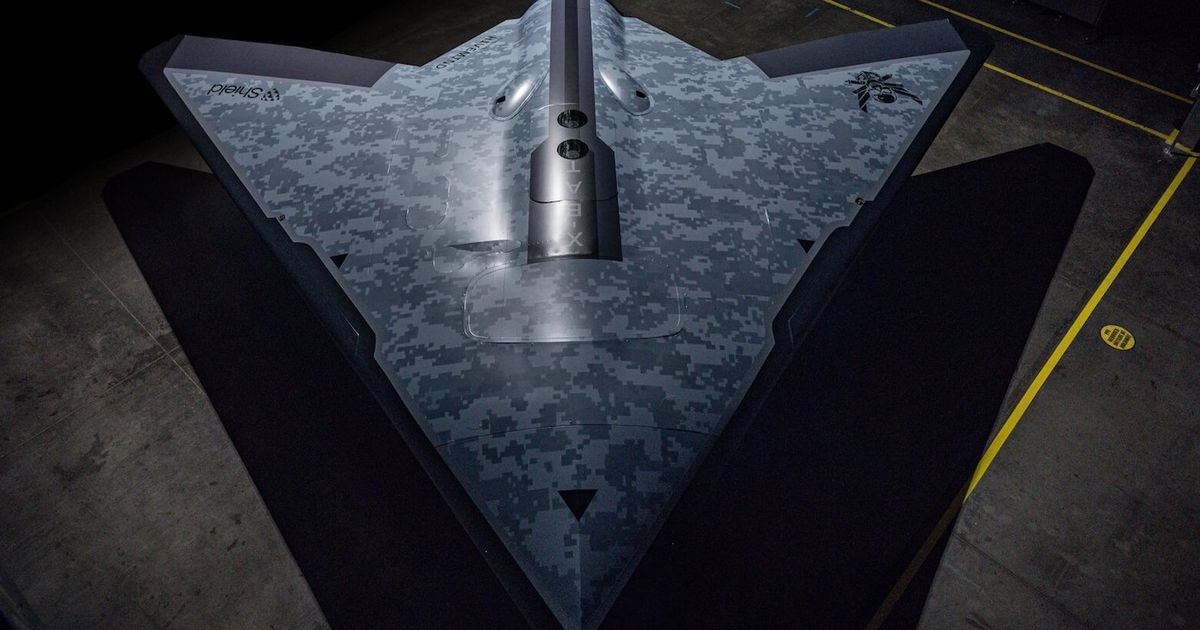
Shield AI plans a 420,000-square-foot X-BAT plant in the Seattle area, targeting 4,000 local jobs by the early 2030s.
The Seattle area is officially becoming a cornerstone of the nation’s autonomous defense infrastructure.
Shield, the San Diego-based technology firm formerly known as Shield AI, announced plans to construct a massive 420,000-square-foot manufacturing facility in Des Moines, Washington. The project, which aims to ramp up production of the company’s AI-piloted X-BAT aircraft, is expected to bring thousands of jobs to the region over the next several years.
For Brandon Tseng, the company’s president and co-founder, the decision to plant roots in the Pacific Northwest was a straightforward calculation. “Seattle really became a no-brainer,” Tseng said, citing the region’s deep pool of specialized talent in aerospace and high-tech manufacturing as the primary driver for the expansion.
The company, currently valued at $28.8 billion, is placing itself at the center of a rapidly changing sector that includes peers like Anduril Industries and Skydio.
The stakes for this expansion are high. Shield, which produces software for autonomous helicopters, boats, and drones, has already seen its technology deployed by the U.S., Ukraine, and Israel. The new Washington facility is slated to open in the spring, with production of its signature arrow-shaped, vertically-launching drones expected to begin in 2029.
By the early 2030s, the company anticipates employing roughly 4,000 people locally, with long-term projections reaching 15,000 jobs by 2046, according to a company spokesperson. The Seattle Times reported that the firm is actively scouting additional real estate, showing a long-term commitment to the area.
For Tseng, this move is something of a homecoming. He and his brother, Ryan Tseng, grew up on Mercer Island during the 1980s and 1990s. After Ryan founded the wireless charging firm WiPower—later acquired by Qualcomm—and Brandon completed seven years of service in the U.S. Navy, the brothers launched Shield in 2015. “It’s really fun and exciting to come back to the Seattle area,” Brandon Tseng said.
The company’s footprint in Washington deepened earlier this month through its acquisition of Kirkland-based Echodyne, a deal valued at approximately $5.3 billion. Echodyne specializes in radar systems designed to track drones, and its workforce of more than 400 employees at a $40 million facility in Woodinville is expected to remain in place once the deal closes in early 2027, pending regulatory approval.
Seattle-based venture capital firm Madrona said that this transaction represents the second-largest acquisition of a private, venture-backed company in the history of Washington state.
“Our combined plans will help power a new wave of Pacific Northwest growth, creating skilled jobs, expanding opportunities for local suppliers, and strengthening the region’s leadership in advanced manufacturing, said Eben Frankenberg, CEO of Echodyne, in a statement to The Seattle Times.”
This expansion arrives as the military sector continues to lean heavily into autonomous capabilities. The U.S. Navy has already invested $200 million into the development of the X-BAT, which Tseng describes as a fifth- and sixth-generation fighter jet offered at a fraction of the traditional cost.
The integration of Echodyne’s radar systems is intended to give these aircraft the ability to not only “think and act” but also “sense” their environment, with flight testing for the X-BAT expected to conclude by the end of this year.
While Shield markets its technology as a means to protect service members and deter conflict, the tension between technological advancement and human oversight remains a subject of ongoing debate. Brandon Tseng has previously said that he does not believe autonomous systems should be empowered to make unassisted moral decisions regarding the use of lethal force.
As Shield prepares for its massive scale-up in the Pacific Northwest, the company faces the dual challenge of meeting aggressive production targets while dealing with the complex, often tragic realities of AI-assisted combat.
- MSU Volleyball Caps Regular Season with 4-Set Win Over Michigan
- UMass Boston Tops Fitchburg State 84-77 in OT on Bench Scoring Edge
- Nvidia Shares Up 3% on Earnings Beat; Board Says No Plans to Reinstate Huang as CEO (archyde.com)
- US detects Iranian plans for possible dirty bomb attack in Washington (newsarchyuk.com)

MSU Volleyball Caps Regular Season with 4-Set Win Over Michigan
The Michigan State volleyball team closed out its regular season on a high note Tuesday night, securing a...

UMass Boston Tops Fitchburg State 84-77 in OT on Bench Scoring Edge
The UMass Boston men's basketball team overcame a sluggish start on Tuesday night, battling back from a double-digit...

Maryland Volleyball Earns No. 15 Seed, Faces Washington in Inaugural Big Ten Tournament
Maryland volleyball secured its place in the inaugural Big Ten Tournament by defeating Ohio State in four sets...

Q961 Writer Lists 11 Things to Love About November in Maine
An anonymous writer lists 11 things to love about November in Maine for Q961 with gallery credit from...