
“Climate change, the loss of biodiversity and the health of our oceans are not separate problems but deeply connected,” President Tharman Shanmugaratnam said at the launch of the National Marine Research Station (NMRS) on Wednesday, marking the facility’s 10th anniversary and the start of Marine Science Week.
Singapore’s only offshore marine research facility, formerly the St John’s Island National Marine Laboratory, has been renamed NMRS and tasked with leading the Southeast Asian Marine Research Stations (SEAMaRS) network — the first regional marine research network in Southeast Asia. More than 10 institutions from Singapore, Indonesia, Malaysia, the Philippines and Thailand have joined the network, which will share equipment, data and training capacity across borders.
The National Research Foundation (NRF) and National University of Singapore (NUS) announced the change in a joint statement on 25 November. NMRS will continue to provide laboratories and aquaria for research and development, while adding roles as a marine observatory, a platform for scientific training, a hub for public science outreach and an offshore sentinel monitoring Singapore’s urban waters and climate impacts.
Regional network takes shape
The Coastal Oceanography and Climate Change Research Center at Thailand’s Prince of Songkla University is among the first overseas members. Associate Professor Mathinee Yucharoen told Zaobao that SEAMaRS differs from many collaborations by supporting the sharing of research equipment as well as data, making it easier to monitor transboundary issues such as plastic pollution.
Travel between stations in Indonesia, Malaysia or Singapore for work is relatively convenient, she said, and Singapore’s expertise, technology and facilities are outstanding.
NRF chairman and former Deputy Prime Minister Heng Swee Keat said Singapore’s relationship with the sea extends well beyond shipping and trade. “We must understand the marine environment in depth so that we can manage and protect it responsibly and sustainably,” he said at the launch.
“We are, by geography and by history, a maritime nation… In many ways, the health of our marine environment is closely tied to the livability of our nation,” Heng Swee Keat said. The health of the marine environment is closely linked to the island nation’s liveability.
Heng also described SEAMaRS as a key vehicle for closer collaboration with regional partners, timely as Singapore takes on ASEAN chairmanship in 2027. “Through SEAMaRS, we can strengthen the connections among marine research communities and stations across our region… research teams can come together to tackle questions that no single country can answer alone,” he said, according to AsiaOne. “The benefits of this network will extend beyond science. Where scientists work together, they build relationships and trust, and trust, once built, outlasts any single project.”
New vessel and expanded capabilities
NMRS will receive a new, locally built research vessel within five years to replace the RV Galaxea, which has operated for 18 years, the Straits Times reported.
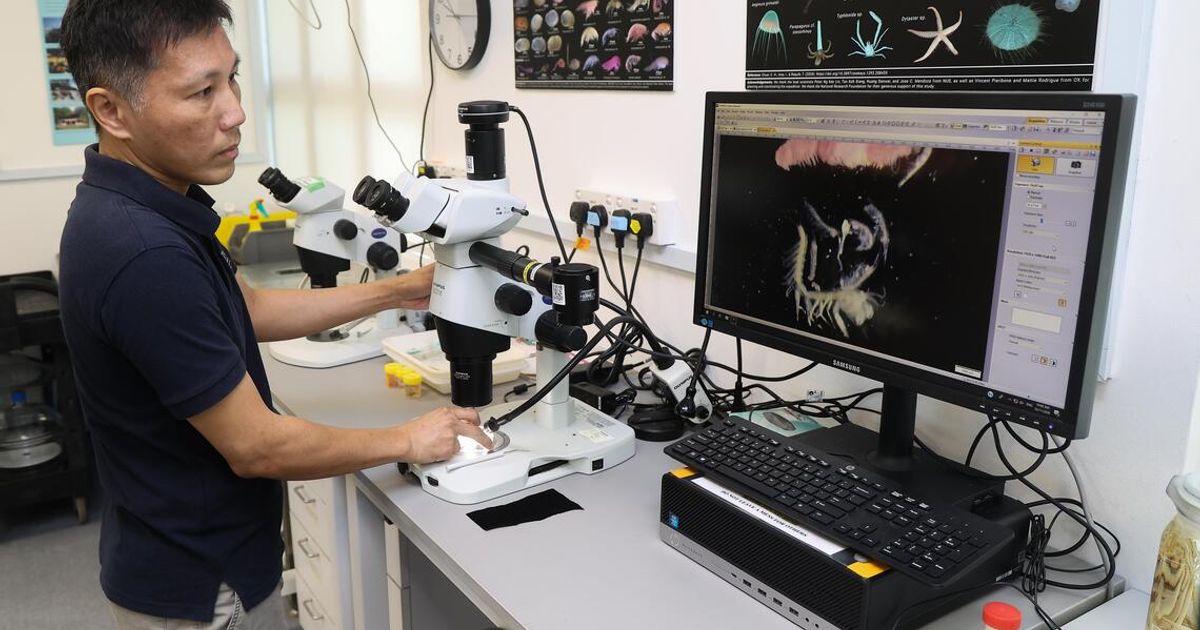
The new vessel will feature a larger deck, a moonpool — an opening within the hull that connects to the sea for deploying instruments and underwater robots — a safer diving platform for rough weather, a dinghy for shallow coastal areas and improved seabed sampling fittings. Two new imaging instruments will also strengthen plankton research at the station.
NMRS is operated by NUS with funding from NRF and forms part of Singapore’s Research Innovation and Enterprise 2030 (RIE2030) plan, under which Singapore will invest a total of S$37 billion over the next five years, according to NRF’s report released in late August.
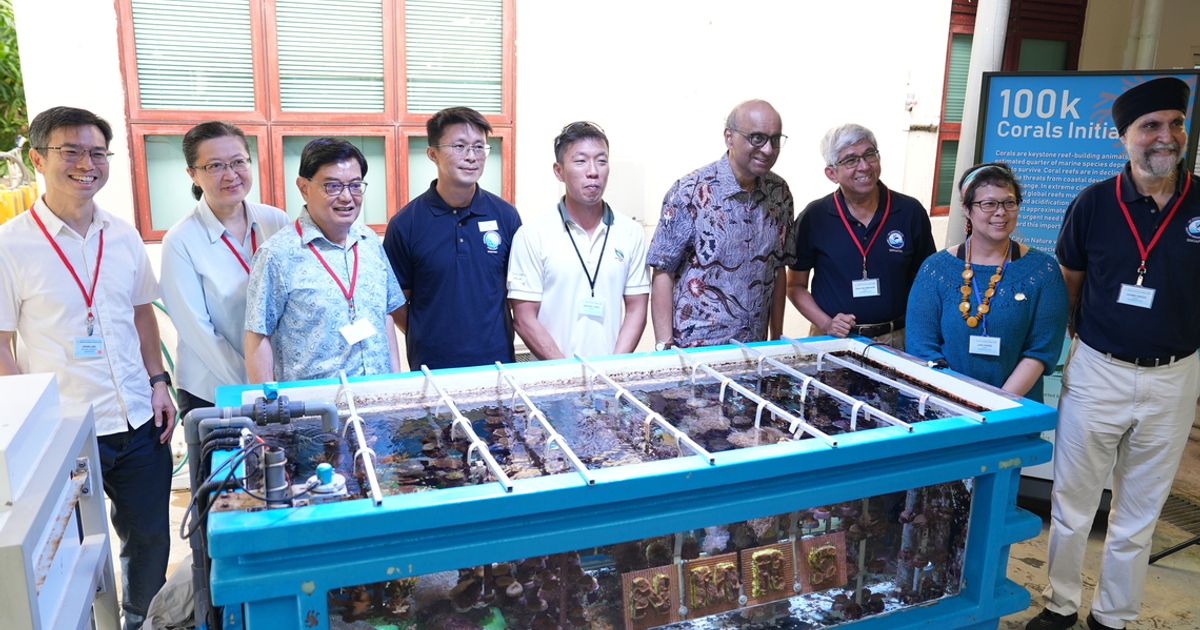
The facility’s coral culture lab supports the national 100k Corals Initiative, which aims to plant 100,000 corals in Singapore’s waters over the next decade and beyond. Research shows less than 40% of the Republic’s original coral reef area, about 10 sq km, remains today following extensive coastal development and climate change effects. More than 2,500 corals have been reared at the station so far, the Straits Times reported.
Marine Science Week runs from 25 November to 2 December.

Puerto Rico’s Jennifer Barreto Wins Miss Universe, First Mother Since Ban Lifted
Jennifer Barreto won the Miss Universe crown Tuesday night in San Juan, becoming the first mother to hold...

Irish Times: Lviv Double Bombing Kills 2; Woman Charged in Alleged Russian-Linked Attack
On February 22, 2026, a deadly double bombing in Lviv killed police patrol officer Viktoriya Shpylka and National...

Inspection Teams Find No Major Damage to Bacolod Gov’t Buildings After Quake
Bacolod City’s primary government buildings escaped major structural damage following a magnitude 5.1 earthquake that struck Panay Island...

Dan Sullivan Concedes Alaska Senate Race From Florida; DOJ Seeks Dismissal of Lawsuit
Defeated Republican Senator Dan S. Sullivan conceded his midterm race from more than 3,500 miles away in Florida,...