
Sioux Falls city officials gathered at City Hall on Wednesday, Nov. 18 to lay out winter weather procedures for residents, Sioux Falls Live reported.
The briefing covered the mechanics of snow alerts, parking restrictions, sidewalk clearing obligations and the real-world consequences for emergency response when cars stay parked on plow routes. Dustin Hansen, the city’s street operations manager, said crews aim to clear every city street within 24 to 48 hours of a snow alert, working through three geographic zones after emergency routes are open.
“Our first priority is to plow our emergency routes, those are our main arterials across the city,” Hansen said. “That is our main focus when we get any type of winter weather event.”
Zone 1 covers downtown Sioux Falls. Zone 2 runs between Western and Cliff avenues and 33rd and Russell streets. Zone 3 is the rest of the city. The city’s interactive snow alert tracker lets residents identify their zone and watch plow progress in real time.
Move the car or pay the price
Parking on city streets during a snow alert is the single biggest friction point. Once an alert is declared, vehicles must be moved off all public streets until plows have cleared curb to curb. Cars left in place can be ticketed and towed.

“On emergency snow routes, we ticket and tow immediately, so if you’re on one of those routes and you wanna save yourself roughly $150 to $200, get your car moved, because it is expensive for us to ticket it and tow it,” Lt. Andy Siebenborn of the Sioux Falls Police Department told Sioux Falls Live.
Siebenborn framed it as a public safety issue: plowing around parked cars narrows streets quickly, slowing fire trucks and ambulances. Division Chief Luke Smidt of Sioux Falls Fire Rescue said narrower streets force slower driving, costing critical response time.
Downtown residents and visitors have an alternative: the city’s five public parking ramps. According to the city’s official site, ramp parking is free from 5 p.m. to 6 a.m. on weekdays and all day on Saturdays, Sundays and city holidays during snow alerts.
Property Owners Must Clear Sidewalks Within 48 Hours
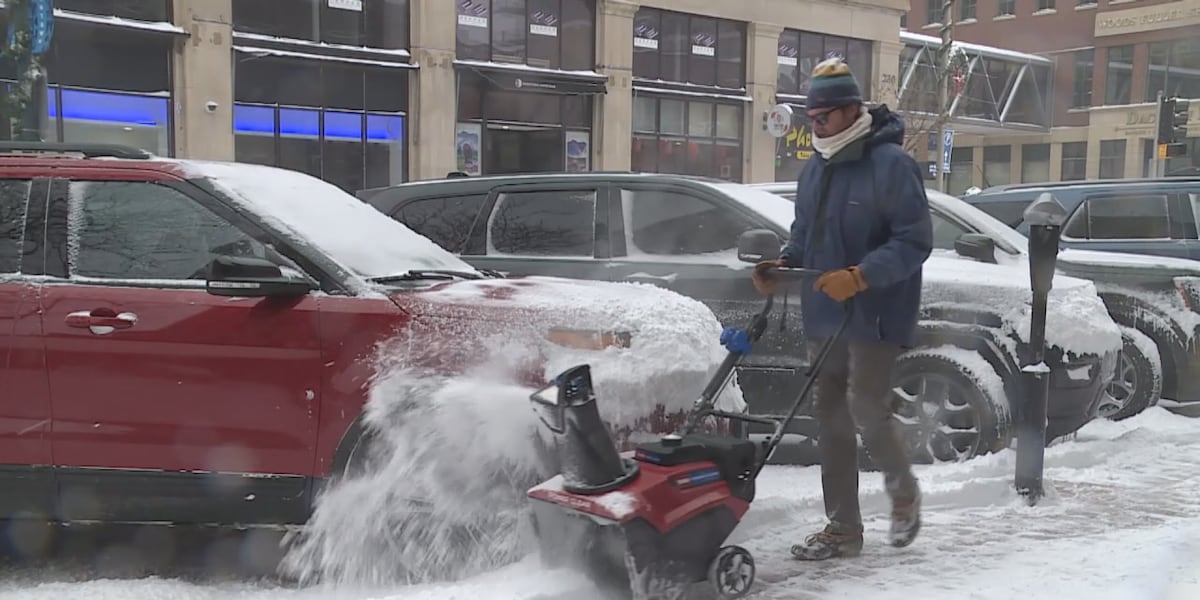
Snow alerts govern streets, but sidewalk maintenance is a separate, standing obligation. Property owners must clear snow and ice from the full width of adjacent sidewalks — edge to edge, down to concrete — within 48 hours after snowfall ends. Corner lots must also clear curb ramps and cutouts. Pushing or blowing that snow into the street is a violation.
Justin Christensen, the city’s property maintenance inspections manager, told Dakota News Now that there is no minimum accumulation threshold; any snow or ice triggers the 48-hour requirement. Non-compliance can bring a citation and a city-hired contractor to do the work, with costs billed to the property owner.
Smidt added that residents should keep a three-foot radius around fire hydrants clear and ensure driveway approaches stay open for emergency access. Clearing a path for mail and package delivery is also encouraged.
Information pipeline
The city’s message was straightforward: monitor the National Weather Service in Sioux Falls, follow Sioux Falls Police, Sioux Falls Fire Rescue and the City of Sioux Falls on social media, and check travel advisories from the South Dakota Department of Transportation and the Minnehaha and Lincoln county sheriff’s offices. Residents can sign up for snow alert texts by sending SNOWALERT to 888-777.
The city typically begins preparing for a snow alert when forecasts call for three to four inches of snow or more, Dakota News Now reported. Emergency routes may be plowed even without a full snow alert declaration.
“It’s truly a one-team effort, not just city of Sioux Falls employees but our contractor base and then you, as a good neighbor,” Hansen said. “It takes the entire city to clean the city up effectively, each and every time we have a snow event.”
Related reading

BC Supreme Court Dismisses Son’s Oppression Claim Against Family Property Companies
A British Columbia Supreme Court judge dismissed a son's legal challenge against his family's property companies, ruling that...

UW Residence Hall Wins ENR Best Higher Education/Research, Safety Awards
The University of Wyoming has completed its first new residence hall in more than 60 years, a 306,882-square-foot...

Prep Baseball 2027 West Virginia Preseason ID Uses TrackMan, Blast Motion Tech
West Virginia high school baseball players in the 2027 through 2030 classes will get their first look at...

Bruins Spoil Red Wings Centennial Celebration With 4-1 Win
David Pastrnak collected a goal and an assist Wednesday night as the Boston Bruins defeated the Detroit Red...