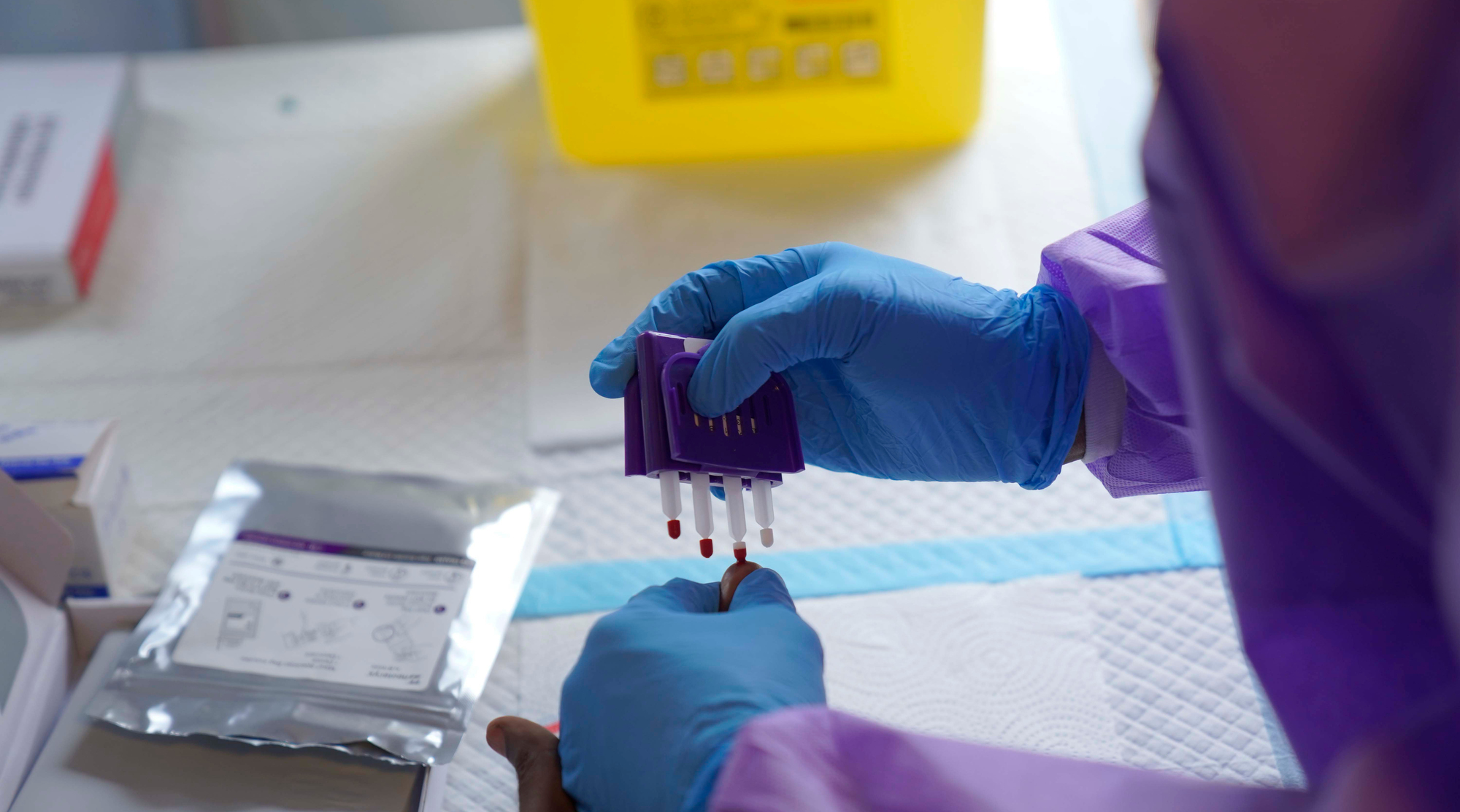
Six months after the Democratic Republic of the Congo declared its 17th Ebola outbreak, the virus is spreading faster than any previous epidemic on record, with 11,000 infections and more than 5,500 deaths already logged by government data.
The toll has doubled the early pace of the 2014–16 West African crisis, which ultimately killed 11,000 people across three countries. This outbreak, driven by the rarer Bundibugyo strain, has already surpassed the 2018–2020 DRC epidemic — previously the country’s largest at 3,481 cases and 2,299 deaths — and now ranks as the second-deadliest globally.
As @WHO Case Management Team Lead in the DRC #Ebola response, Dr Marta Lado coordinates and supports healthcare teams, helping to improve the quality of care and give patients the best possible chance of recovery. pic.twitter.com/4vaYNVZSxS
“We are seeing 500 new cases a week,” Jérôme Bertrand, head of emergency logistics at the NGO Handicap International, told AFP. The virus has since reached eight of the country’s 26 provinces, creating scattered epicenters deep in the rainforest.
“A convoy can take up to two to four weeks to travel because of crevasses and bogs in the rainy season — not to mention the collapsed bridges.”
Bertrand said, describing the logistical nightmare of moving vaccines and supplies through a region with no electricity and virtually no passable roads.
Six months into the #Ebola epidemic in the #DRC, we have made significant progress, but the battle is far from over. Ebola is only one of many health threats that affected communities face. We need all hands on deck, not only to end this outbreak, but to strengthen health… pic.twitter.com/QNYhFtUBGU
teams transport vaccines without breaking cold chain
The World Health Organization has begun trialing two candidate vaccines against the Bundibugyo species, but getting them to the front line will take weeks.
If the trials succeed, Bertrand warned, teams will need to transport doses “on a massive scale in refrigerated vehicles without breaking the cold chain, right into areas with absolutely no electricity.” Handicap International, a key logistics supplier in eastern DRC for three decades, employs more than 130 mostly local staff to travel those routes.
Less than half of the $2.9 billion pledged by donors has actually been disbursed, and the Africa CDC recently flagged more than $700 million in Ebola aid that remains unaccounted for. Health workers have gone on strike over salaries unpaid since August, sometimes leaving confirmed patients without care.
Six months into the #Ebola outbreak caused by the Bundibugyo virus in the Democratic Republic of the Congo (DRC), significant progress has been made in bringing lifesaving services closer to affected communities, despite immense challenges. Since the start of the outbreak, more… pic.twitter.com/zheORIbdDm
allied democratic forces kill civilians
Since May, 80 security incidents targeting health workers have been recorded, resulting in deaths, Bertrand told AFP. Handicap International refuses armed escorts — “under no circumstances will we be armed, nor accompanied by Congolese soldiers or any armed group” — but maintains contacts with nearly every militia to pass checkpoints.
Distrust, tradition, and the cost of burial
Mistrust of authorities and aid groups runs deep in areas where the state has been absent for years. “For some people, it’s just like with Covid elsewhere: the same rumours and conspiracy theories, such as ‘There was no Ebola before the humanitarian organisations or the government arrived,’” Bertrand told AFP.
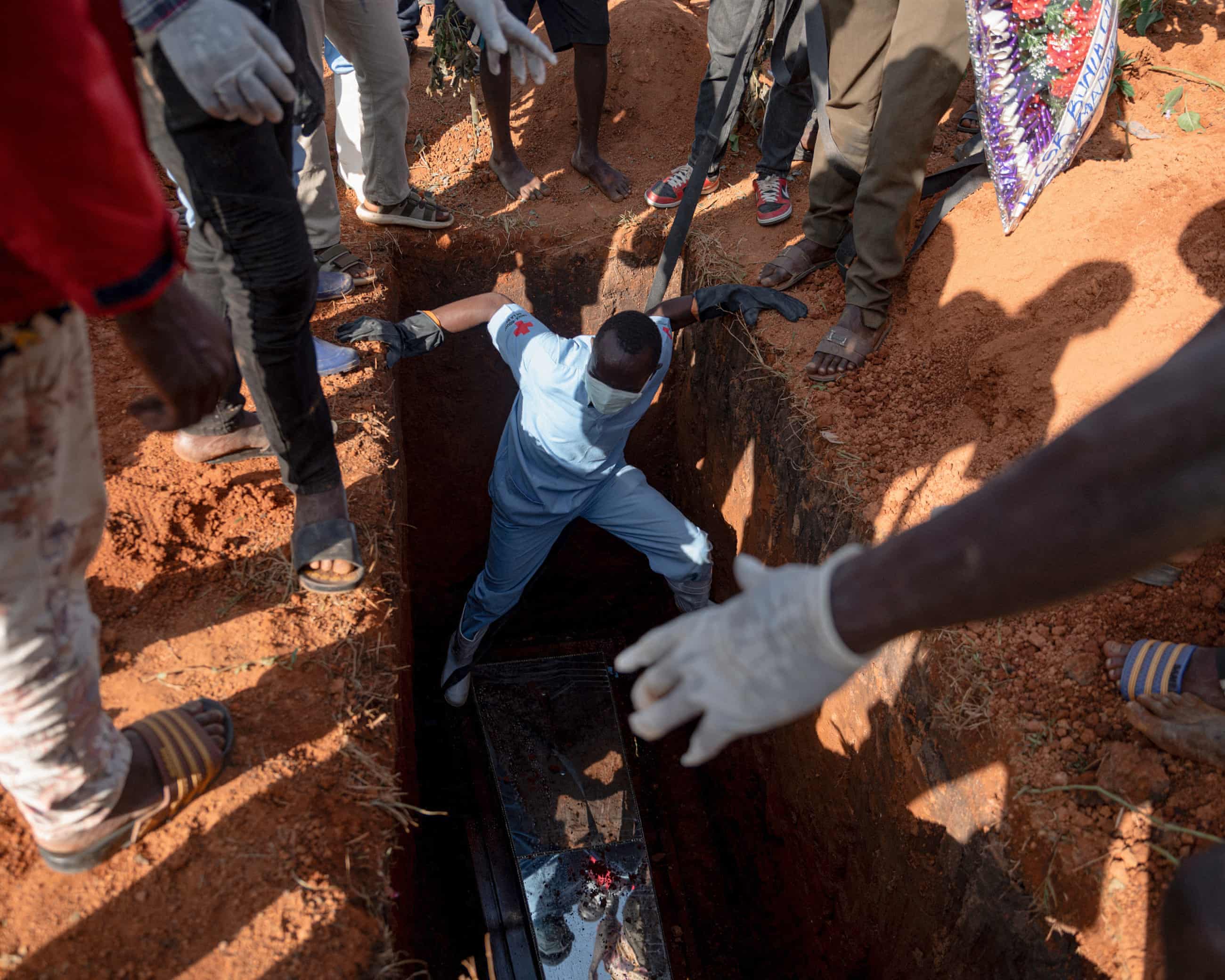
The collision of custom and epidemiology is most acute at funerals. Families traditionally wash and keep vigil over the dead for days, touching the body — precisely when Ebola is most contagious. “We must educate families on how to hold dignified yet safe funerals,” Bertrand said.
Sylvain Kabona Tibasima, 44, has lived that tension. Since the epidemic began, 46 members of his extended family have died, including his sister Sylvie, 46, who died a week after giving birth to a daughter who also contracted the virus.
When the outbreak started, “many people in this town and in my extended family believed it was sorcery,” Tibasima told the Guardian. After receiving prevention training, he has kept his own household of six children healthy, but the struggle is daily.
The #Ebola outbreak in #DRC remains a public health emergency of international concern, following the advice from today’s @WHO Emergency Committee meeting. We call for the cooperation of all governments and all partners to scale up the response further, and raise the resources… pic.twitter.com/d8B0AudYy0
Children bearing the brunt
The age skew is staggering. According to UNICEF data, children accounted for 35 percent of deaths recorded through November 4. Those under five represented 21 percent of all deaths, and nearly 72 percent of infected children in that age group died. Most received no specialized care, and malnutrition — widespread in displacement camps — compounds the fatality risk.
Surveillance blind spots
The Africa CDC says 80 percent of new cases emerge outside known contact lists, and over 65 percent of deaths occur in the community, not in treatment centers. That means most transmission chains are invisible to responders. One-third of deaths happen at home, where burials proceed without specialist supervision.
https://t.co/UuUrQUaD6m
“If we don’t stop this outbreak now, it would be the worst Ebola outbreak that the world will have,” Africa CDC Director-General Jean Kaseya told Reuters earlier this month. Only $1.3 billion of the pledged $2.9 billion has been released, he said, calling the coordination “a collective failure.” The DRC is now digitizing its health-worker payroll to end the payment delays that have fueled strikes.
Cross-border spread
But in Bunia, schools stay open and markets stay busy because daily-wage earners cannot afford to stop. “It’s very scary,” Tibasima told the Guardian. His 18-year-old daughter Malaika recently fell ill with Ebola-like symptoms; she tested negative after days in isolation. The family waits, watches, and wonders how much longer the outbreak will outrun the response.
The Ebola outbreak in eastern Democratic Republic of Congo remains out of control six months after it was first declared, with case numbers and deaths still rising at a record pace. https://t.co/5jGlg0j6O4
More on Democratic Republic of the Congo
Ebola outbreak in DR Congo doubled in three months, with more than 11,000 cases and 5,400 deaths, @DrTedros said at @WHO’s Emergency Committee on the Bundibugyo virus. This and other stories in our World News in Brief.https://t.co/0DBsAq22qj
Six months ago, I declared the Bundibugyo virus #Ebola outbreak in the #DRC a Public Health Emergency of International Concern. Since then, over 11,000 cases and 5400 deaths have been recorded across eight provinces, making this the largest and deadliest Ebola outbreak in the… pic.twitter.com/v1TncZkxJs
The number of confirmed Ebola cases in the Democratic Republic of the Congo (DRC) has reached 11,042, according to government data, with at least 5,387 deaths. https://t.co/IC14NfmbJm
- Aliyev Meets Levits on Energy Ties and Armenia Normalization
- Study Reports Salmonella and Resistance in Central Oromia Dairy Products
- Harry Kane Out Several Months With Syndesmosis Tear as Bayern Draw Köln 1-1 (world-today-news.com)
- Republic Orders Poultry Housing From Monday After Bird Flu in Swans, Heydon Says (archyde.com)

Aliyev Meets Levits on Energy Ties and Armenia Normalization
“At the meeting, it was noted that Azerbaijan-Latvia relations have the nature of a strategic partnership,” the Azerbaijani...

Study Reports Salmonella and Resistance in Central Oromia Dairy Products
Milk and cottage cheese sampled in Central Oromia, Ethiopia, carry Salmonella enterica and antimicrobial resistance, a study reports....

PKS Demands Investigation Into Main User of Listyo Sigit Wiretap on Prabowo
Illegal wiretapping targeting President Prabowo Subianto demands a transparent accounting of its primary beneficiaries, according to the Prosperous...

Concerns Over John Kelly’s Forceful Management in Simon Harris’s Fine Gael Wicklow Operation
Concerns over the forceful management style and abrasive language of John Kelly, the constituency manager for Fine Gael...