
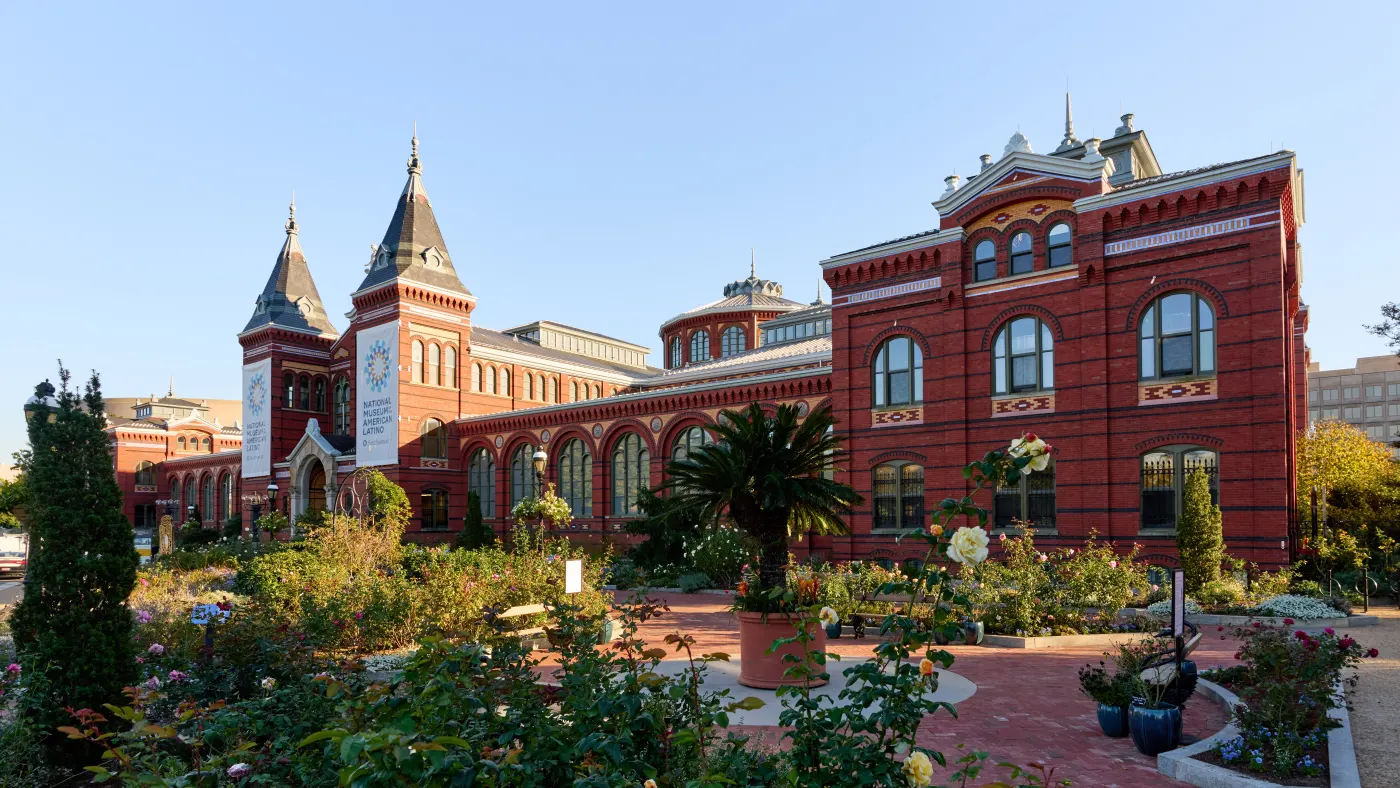
“Washington, D.C., used to be called the Red Brick City,” said Carly Bond, the Smithsonian’s director of historic preservation.
The Smithsonian’s Board of Regents announced this fall that the Victorian-era Arts and Industries Building will be renovated to house the National Museum of the American Latino, with a planned opening in 2036.
The 1881 structure, the institution’s first purpose-built museum, has sat largely empty since 2014. Latino museum leaders initially sought a new building akin to the National Museum of African American History and Culture, which opened in 2016, but concluded the historic landmark’s open floors and side galleries could accommodate exhibitions, research areas and services.
“But the Smithsonian has done a really good job caring for the building. They didn’t just, like, lock the doors and walk away,” said Jennie Gwin, a partner and director of historic preservation at Beyer Blinder Belle, which studied the building for the Smithsonian.
She noted the institution replaced the roof, windows and completed structural interventions, though major challenges remain: temperature and humidity controls, asbestos abatement, modern security upgrades and federal review processes.
The Red Brick City survivor
The building’s polychrome brickwork, geometric patterns and towers distinguish it from the Neoclassical white marble lining the Mall. Brick was chosen because it was “modern, economical and (most importantly) fireproof,” according to the Smithsonian’s website. Inside, a rotunda, wrought-iron trusses, fossil-flecked marble floors and a secret tunnel to the Castle remain intact. It is considered one of the finest surviving examples of 19th-century world exposition architecture.
From incubator to permanent home
The Arts and Industries Building opened with collections from the 1876 Philadelphia Centennial Exhibition, including a steam locomotive and Alexander Graham Bell’s telephone.
Over decades, its holdings seeded newer museums: rockets and the Spirit of St. Louis moved to the National Air and Space Museum; minerals and taxidermy went to the National Museum of Natural History; the First Ladies gown exhibit, launched there in 1914, relocated to the National Museum of American History. “It’s really been an incubator,” Bond said. The last major public exhibition ran during the 1976 bicentennial.
Building survived as a Red Brick City relic
Victorian-era architecture distinguishes the Arts and Industries Building from the Neoclassical white marble that lines the National Mall, Carly Bond, the Smithsonian’s director of historic preservation, told NPR. “Washington, D.C., used to be called the Red Brick City,” Bond said.
“This building is really one of the last of the remaining red brick buildings.” Its rusty color makes it almost a sister structure to the Castle next door, according to the NPR report.
James Ward of the Smithsonian Institution documented the intricate brickwork in a close-up photograph.
Fireproof brick created a cathedral of light
Inside, the structure features intricate wall designs, patterned marble floors with embedded fossils, colored glass windows, and a metal roof girded with wrought-iron trusses, towers and a mezzanine.
A secret tunnel runs underground to the Castle, the sources state. Noah Willman of the Smithsonian Institution photographed the building’s exterior, highlighting its geometric patterns, pointed roofs and arched windows that contribute to what the report describes as a cathedral of light.
Congress authorized the Latino museum in 2020. Founding director Jorge Zamanillo said staff have since built an advisory board, acquired collections and gathered stories nationwide. “There’s no single narrative that we’re creating for this museum. It’s more about exploring all the different stories that we can capture across the United States,” Zamanillo said. “They’re telling this powerful story of hundreds of years of Latinos in the United States, creating this identity, forging American identity.”
“People walk by every day and they’ll finally be able to open those doors and come in.”
Virginia School District Reopens After 500 Staff Missed Child Abuse Registry Checks
Albemarle County Public Schools will reopen Monday after an 11-day closure triggered by the discovery that more than...

Michigan’s Postgame Chick-fil-A Sandwiches Catch Fire After 45-0 Loss to Ohio State
A warming container holding Michigan’s postgame Chick-fil-A sandwiches caught fire outside the visitors’ locker room at Ohio Stadium...

Bay Area Hawaii Flights Shrink 52% at San Jose, 25.6% at Oakland Since 2023
Southwest Airlines cut Hawaii seats from San Jose 52% to 306,173 over two years. "It never performed that...

Louisiana Guardianship Law: Permanency Standards, Procedures, and Kinship Subsidies Under Children’s Code
Louisiana law defines guardianship as a judicial placement giving a caregiver the authority to make permanent decisions for...