Retiring investors can ground their savings using just two Vanguard index funds that cover thousands of securities for minimal annual fees.
- John Bogle launched his first index fund in 1976, raising a little more than $11 million in an offering critics dismissed as Bogle’s Folly.
- Vanguard Total Stock Market Admiral Shares (VTSAX) carries a 0.04% expense ratio, costing $400 annually on a $1 million balance, as 247wallst.com reported.
- Between October 20 and November 20, VTSAX dropped 6.53% while Vanguard Total Bond Market Admiral Shares (VBTLX) gained 0.32%.
Challenging Wall Street’s Complex Model
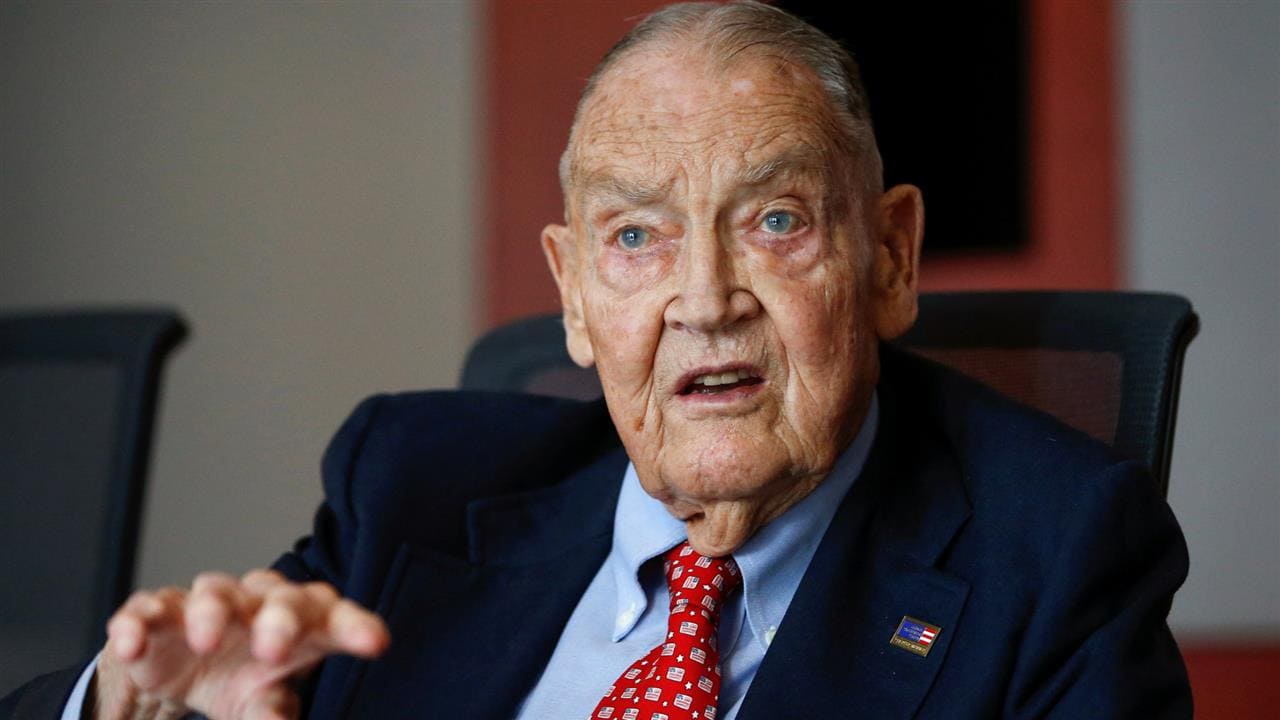
In 1976, John Bogle asked everyday investors to accept market returns instead of chasing market-beating ones. The debut fund gathered just over $11 million, a debut Bogle himself called an abject failure, while critics labeled it Bogle’s Folly.
Wall Street’s business ran on expensive managers, frequent trading, and complex strategies. An index fund holding the whole market for a tiny fee threatened every part of that model, “and critics labeled it Bogle's Folly.” John Bogle said

Bogle built on economist Burton Malkiel’s call for an index fund in his 1973 book A Random Walk Down Wall Street. Later, in The Little Book of Common Sense Investing, Bogle argued that costs come straight out of returns, allowing the lowest-cost owner of the market to keep more of what the market delivers.
Two Funds Covering Thousands of Securities
Vanguard Admiral Shares (NASDAQ:VTSAX) follows the CRSP US Total Market Index, covering large, mid, and small U.S. companies. Its expense ratio is 0.04%, or $400 a year on a $1 million balance, though its top 10 holdings are dominated by megacap technology names that drive a large share of results.
Vanguard Admiral Shares (NASDAQ:VBTLX) tracks the Bloomberg U.S. Aggregate Float Adjusted Index, combining investment-grade Treasuries, corporate bonds, and mortgage-backed securities. Both Admiral funds have historically required a $3,000 minimum investment, though rival brokerages may charge transaction fees to buy Vanguard mutual funds, bearcreekcapital.net reported.
| Fund | Year to Date | 1 Year | 5 Years (Cumulative) | 10 Years |
|---|---|---|---|---|
| VTSAX (Stocks) | 4.75% | 10.08% | 45.92% | 223.96% |
| VBTLX (Bonds) | -4.41% | -4.60% | -16.99% | -13.11% |
Managing Retirement Withdrawals and Risks
A hypothetical retiree with $1 million can split the balance across these funds depending on their goals, such as a conservative mix of $400,000 in VTSAX and $600,000 in VBTLX, a balanced mix of $600,000 and $400,000, or a growth-oriented mix of $700,000 and $300,000. More stock offers greater long-term growth potential and bigger swings, while more bonds provide steadier interest income and smaller losses.
The bond fund’s negative five-year return reflects the rate shock that hit bonds in 2022, proving that diversification buffers losses without preventing them altogether. Rebalancing annually or whenever an allocation moves several points off target helps keep risk in line, while pulling withdrawals from bonds after a stock slump gives equities time to recover.
John Bogle, founder of The Vanguard Group, launched the First Index Investment Trust in 1976 as a precursor to the Vanguard 500 Index Fund. Designed by Bogle to mimic the performance of the S&P 500, the passive approach was initially dismissed by critics as un-American and dubbed “Bogle’s Folly,” gathering just over $11 million in its debut.
That 1976 creation later transformed retirement saving by challenging Wall Street’s complex strategies and expensive managers with a low-cost model. By tracking the broader market instead of chasing market-beating returns, Bogle proved that everyday investors could keep more of what the market delivers over a lifetime of compounding.
The bigger danger for retirees is sequence-of-returns risk, where a steep decline early in retirement during ongoing withdrawals forces selling shares at low prices, permanently shrinking the portfolio. Before using the pairing, retirees should check how many years of withdrawals the bond share would cover without selling stocks in a downturn, as the two funds lack international stocks and inflation-protected bonds.
Related reading

Coleman: Gov Not to Require AI Labels in FAIR News Act
"The government may not commandeer a newsroom’s editorial discretion to advance its own vision of responsible journalism," said...
Zoom to Report Fiscal Third-Quarter Earnings on Monday
Zoom Communications shares hover near $82 ahead of Monday's market close, when the video communications platform is scheduled...

Texas defeated Arkansas 45-3 on Saturday at DKR-Texas Memorial Stadium
Texas defeated Arkansas 45-3 on Saturday at DKR-Texas Memorial Stadium. The fifth-ranked Longhorns established control early against the...

32-Year-old Warwick Man Died in Single-Vehicle Crash on Route 184
A man from Warwick, Rhode Island, aged 32, passed away early Friday morning subsequent to his car hitting...