
Governor Wes Moore recently stood alongside Lieutenant Governor Aruna Miller to celebrate a successful reelection campaign, yet behind the scenes, the administration has reportedly been weighing a significant shift in its second-in-command.
Senior state leaders and administration sources, speaking to Spotlight on Maryland on the condition of anonymity, claim that internal efforts were underway to move Miller from the lieutenant governor’s office into a Cabinet position.
The reported plan, which Spotlight on Maryland noted has been under exploration since mid-2025, would have placed Miller in charge of the Maryland Department of Transportation. This would have marked a return to her roots; Miller worked as a civil engineer for more than 25 years and served as the head of sidewalks and bikeways for Montgomery County before her statewide political career.
The stakes of such a reshuffle extend well beyond a simple change in portfolio. Sources identified Maryland Housing Secretary Jake Day, a former mayor of Salisbury, as the administration’s preferred successor to Miller. Elevating Day to the lieutenant governor’s office would place him first in the line of succession, a move that could prove critical should Governor Moore pursue and secure a national political office during his second term.
“I never heard that so news to me,” David Turner, the governor’s communications director, wrote in a text message when asked by Spotlight on Maryland about the potential for these transitions. Subsequent requests for clarification on why such discussions were reportedly occurring went unanswered.
The Succession Protocol and Constitutional Hurdles
The political intrigue surrounding the lieutenant governor’s office highlights the unique stability—and complexity—of Maryland’s executive branch. According to the Maryland State Archives, no lieutenant governor has resigned, died in office, or been replaced mid-term since the office was established in 1970.
The governor cannot unilaterally dismiss an elected lieutenant governor. Under the Maryland Constitution, should a vacancy occur, the governor would be required to nominate a replacement, who would then need to be confirmed by a majority vote during a joint session of the Maryland General Assembly.
If Governor Moore were to resign his post, the sitting lieutenant governor would automatically ascend to the governorship without the need for a special election.
Shifting Ambitions and Internal Pressure
The speculation regarding the lieutenant governor’s future coincides with a noticeable shift in Governor Moore’s public stance on his own political trajectory. While he explicitly stated in September 2025 that he would serve a full four-year term and was not pursuing the presidency, his rhetoric has since softened.
During a gubernatorial debate last month, he declined to provide a definitive “yes” or “no” when asked if he would complete his full term, and he later told a podcast host that he was “still sorting it out” regarding a potential presidential run.
This ambiguity has fueled external criticism. Del. Ryan Nawrocki, a Republican from Baltimore County, characterized the alleged administrative maneuvering as a sign of discord. “I would be very concerned if I was Lieutenant Governor Aruna Miller right now,” Nawrocki told Spotlight on Maryland, predicting that the administration may face further personnel volatility.
When pressed on his own future, Secretary Jake Day maintained that he is focused on his current responsibilities rather than hypothetical promotions. “Hard for me to speculate on a hypothetical,” Day told Spotlight on Maryland. “I’m again very interested in working on our economy and housing affordability, but I’m a member of the team, and I’ll go where the governor points us.”
Wes Moore, born in 1978, brings a diverse professional background to the governorship, having worked as an investment banker and as the CEO of the Robin Hood Foundation. Before entering elected office, he served as a captain in the U.S. Army and was deployed to Afghanistan. His path to the executive mansion included earning a master’s degree at Oxford as a Rhodes Scholar and authoring several books.
Upon his victory in the 2022 gubernatorial election, Moore became Maryland’s first Black governor and only the third Black person elected to lead a U.S. state. He secured a second term in 2026, continuing his tenure as the 63rd governor of Maryland.
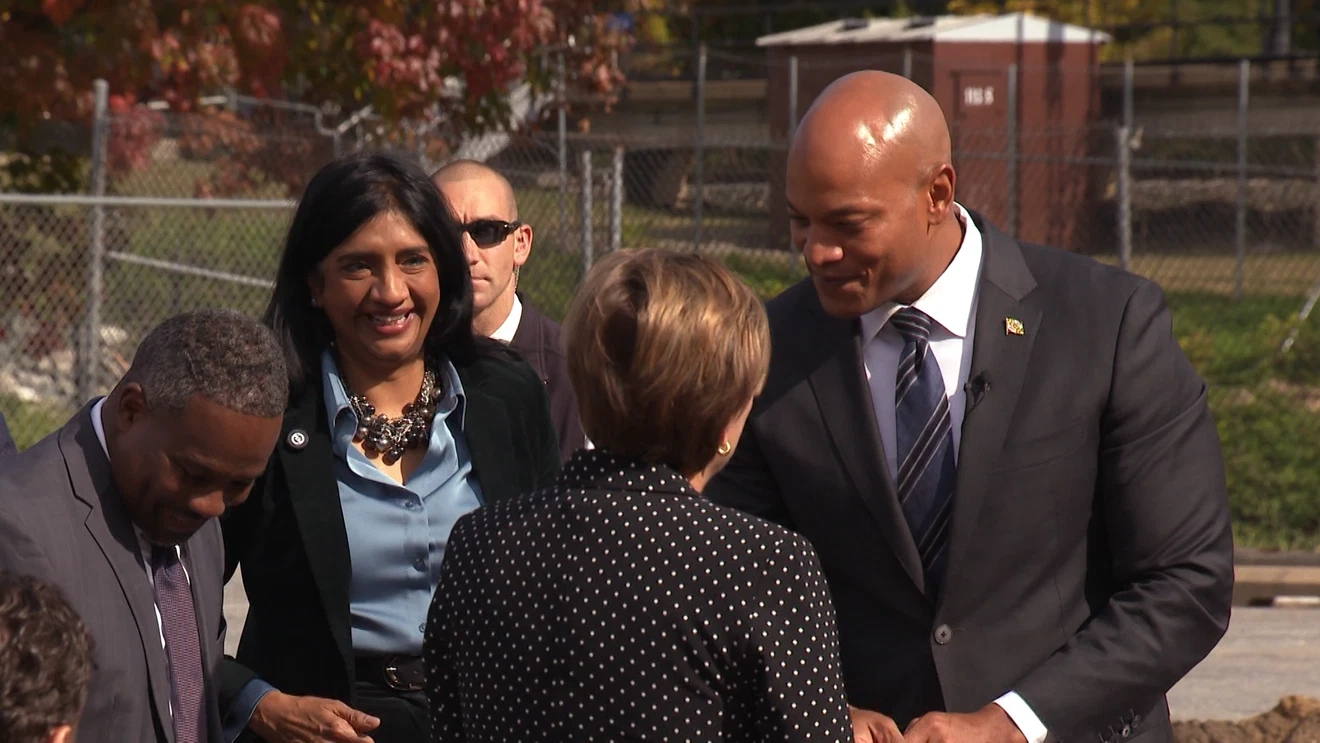
While the administration remains tight-lipped, the silence from the lieutenant governor’s office has been equally persistent. Despite repeated inquiries from Spotlight on Maryland over the past month regarding her intentions to finish her term and her readiness to lead the state, Miller has declined to provide comments. When asked directly about the transition rumors following a recent groundbreaking event, she departed the scene without answering.
Worth a look
Maricopa County Health Inspections Flag Phoenix-Area Restaurants for Violations
Public health inspectors in Maricopa County have flagged several Phoenix-area restaurants for significant food safety violations, including reports...

Heavy Rain Left the Formula 1 Field Sidelined on Thursday Evening
Heavy rain left the Formula 1 field sidelined on Thursday evening, resulting in a bizarre opening practice session...

Melania Trump Debuts Melania The Series Docuseries at Lincoln Center Premiere
First lady Melania Trump arrived at Lincoln Center’s Alice Tully Hall on Thursday, Nov. 19, marking the premiere...

Providence Barber Justin Pinheiro Brings Cuts to Brown University Main Green
Justin Pinheiro, a Providence-based barber known to his clients as “Justin Styles,” has been operating a mobile haircutting...