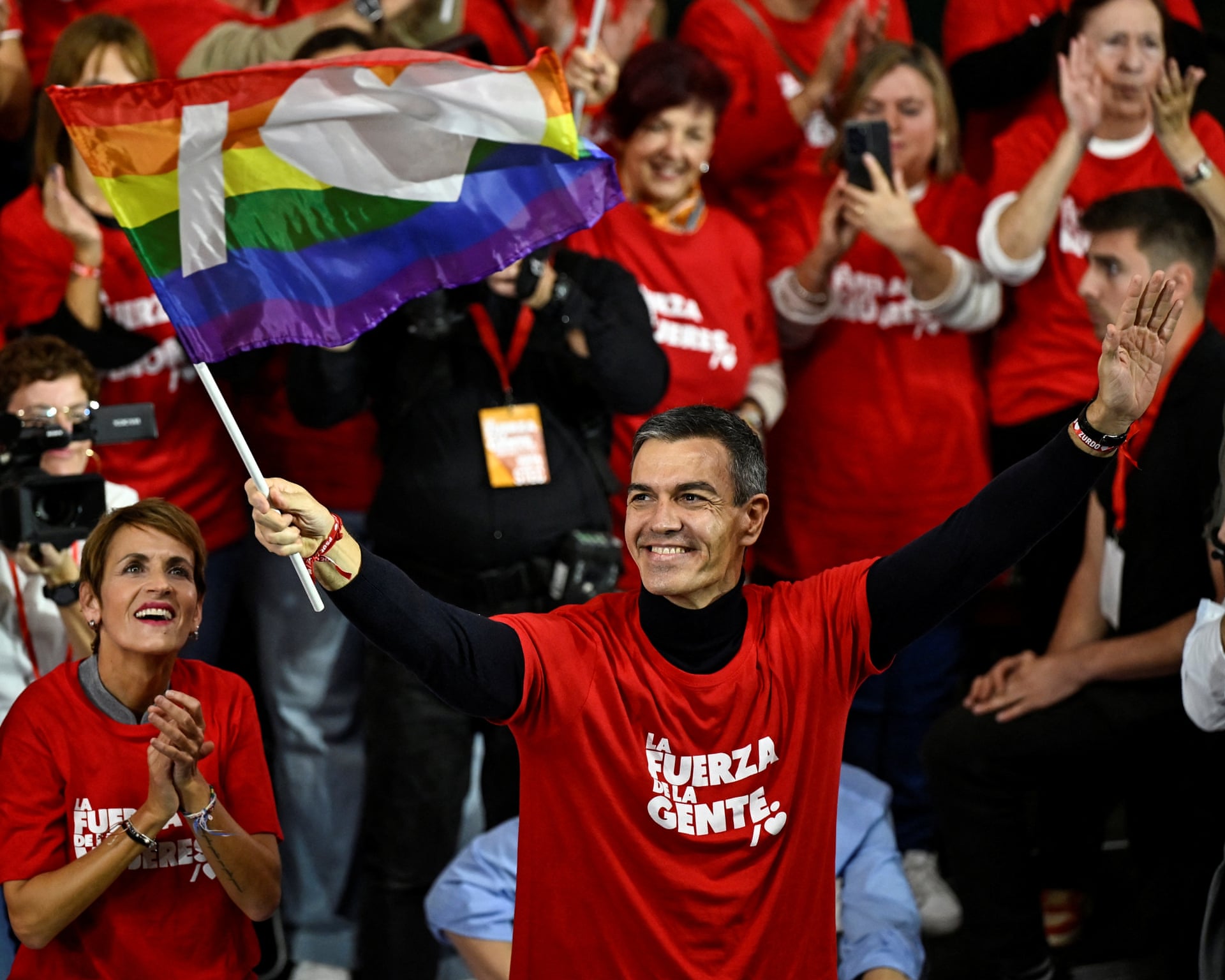
About 38,616,949 people are eligible to cast ballots in the vote.
Most polls heading into the weekend showed the conservative People’s party (PP), led by Alberto Núñez Feijóo, leading alongside the anti-immigrant Vox party, led by Santiago Abascal. If successful, the outcome would mark the first time a far-right party has entered Spain’s national government since the death of dictator Francisco Franco in 1975.
Economic Strains and Public Spending
Voters faced steep inflation, with flash estimates showing consumer prices cooling to 4.1% in November from higher peaks earlier in the year. Campaigning on the right focused heavily on cost-of-living pressures, with Vox mulling plans to cut €112 billion in spending, while Feijóo criticized Sánchez over infrastructure and transit troubles.
Supporters of the governing Spanish Socialist Workers’ party pointed to economic interventions under Sánchez and Yolanda Díaz, including a 75% increase in the minimum wage since 2018 and free train journeys. Economist Isabella Weber told The Guardian that the administration demonstrated “effective anti-fascist economics in response to the global energy crisis.”
Campaign Rhetoric and Electoral Stakes
Political analyst Ivan Redondo told reporters that voter mobilization is the name of the game, adding that Sánchez’s strategy is likely focused on mobilizing his base on the left since his narrow path to victory depends on it.
Public Services and Voter Concerns
At a rally in Murcia, Vox leader Santiago Abascal told supporters that the government wanted voters to forget that inflation is eating into their paychecks, that they cannot afford a home, and that they are paying more than ever for everything.
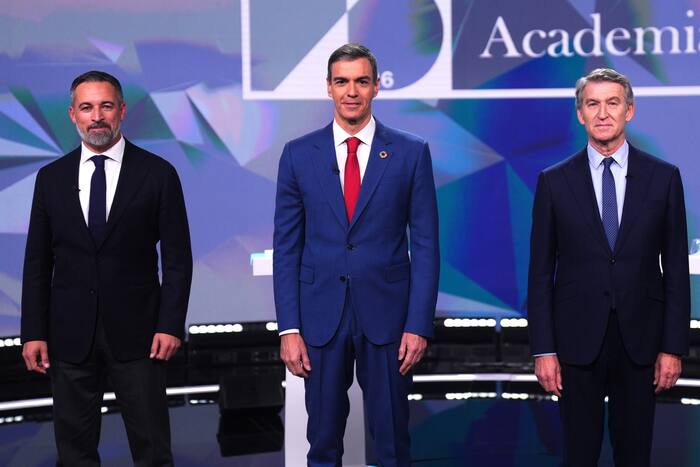
Regional authorities took away all the grants used to fund a psychologist, a social worker, a lawyer, and a community canteen, according to Antonia Avalos Torres. A total of 38,616,949 Spaniards are eligible to vote in the election, representing almost 1.15 million more people than in the July 2023 election.
International Repercussions
A victory for the right-wing opposition would remove Spain as the last major EU nation governed by socialists, accelerating a broader shift toward the center-right at the European Council, Carla Hobbs of the European Council on Foreign Relations told The Guardian.
Nic Lawley, a special adviser with Chatham House, said that bringing Vox into government would turn Spain into a test case for dropping Europe’s center-right “firewall” against the far right at a national level.
Alberto Núñez Feijóo served as President of the Autonomous Government of Galicia from 2009 to 2022, winning four consecutive regional elections for the People’s Party of Galicia. Before that, he held roles as secretary general of Galicia’s ministries of agriculture and health and later at the national Ministry of Health, and was President of the State Society of Mail and Telegraphs from 2000 to 2003.
He rose to the national PP presidency in 2022 after Pablo Casado’s ousting, running unopposed at the 20th National Congress with endorsements from regional leaders including Isabel Díaz Ayuso and Juan Manuel Moreno. His elevation positioned him as the conservative candidate for prime minister in the 2023 snap election, where he was appointed government formateur though his investiture ultimately failed.
“If Vox is brought into government, Spain will become the test case for what happens when Europe’s centre-right drops its barrier to the far right at the national level,” Lawley told The Guardian. Electoral officials mobilized 100,727 security personnel across the country for election day, according to the prime minister’s office.
More on Spain
Worth a look

Indian Police Clash With Youth Congress Protesters at Meta Offices
Water cannon deployed against Youth Congress protesters at Meta's Gurugram office on November 28. Congress youth wing has...

M23 Rebels Claim Capture of South African Pilot After Plane Shot Down in DRC
A South African pilot has been reportedly captured by M23 rebels after his aircraft was shot down in...

Netanyahu Proposes Unity Government with Eisenkot as First Prime Minister
“My responsibility as a leader obligates me to put everything aside, including the principle of the largest party,”...

Ahmed Al Ahmed Awarded Cross of Valour for Bondi Beach Heroism
Ahmed Al Ahmed has become only the sixth person to receive Australia’s highest civilian bravery honour for disarming...