
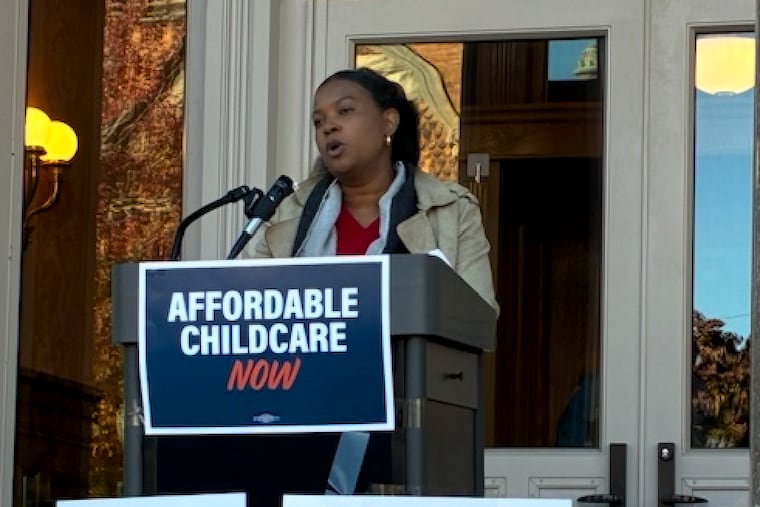
New Jersey advocates and childcare providers are calling on the state to invest an additional $35 million annually for three years to expand childcare vouchers. They warn that high costs and strict eligibility rules leave thousands of working families struggling to afford licensed care.
New Jersey has increased its spending on childcare assistance, but center directors and family advocates report that the current system still leaves many working parents behind. Gov. Mikie Sherrill allocated $582 million for childcare subsidies in the current year, an increase from just under $564 million the previous year, according to budget documents reported by the New Jersey Monitor.
Despite that funding, an advocacy coalition known as Start Strong NJ argues that thousands of families cannot access the financial help they need. The campaign wants the state to inject an additional $35 million each year over a three-year period to create roughly 9,000 new voucher slots for low-income households. Roughly 77,500 families currently receive state assistance to help pay for licensed programs, with voucher amounts scaled to household income.
Childcare costs across the state now average nearly $20,000 annually, according to Start Strong NJ campaign director Sharon Levine. In South Jersey, monthly rates run from $1,600 to $2,200 for infant care and $1,400 to $1,900 for toddlers, according to state market data cited by the Philadelphia Inquirer. For families with multiple children, the financial strain is even greater.
Helen Zamora-Bustos told lawmakers that she and her family pay $2,500 a month for each of their three children, bringing their total monthly bill to $7,500, the Jersey Vindicator reported.
“There goes our income,” Zamora-Bustos told New Jersey lawmakers during a joint legislative hearing in Trenton, as reported by the Jersey Vindicator. “I haven’t even counted for other services, for my utilities, and for our rent, and hopefully, in the future, for a mortgage if we can afford it.”

Families Above Subsidy Threshold Cannot Afford Childcare
Families do not qualify for state subsidies if their household earnings exceed 200% of the federal poverty level, which equals $66,000 for a family of four, as detailed in federal guidelines. Many working-class and middle-class households earn just above this threshold but still cannot afford market rates.
“If they’re even a dollar above the eligibility, they don’t get it,” Patricia Velez told the New Jersey Monitor. Velez is the longtime owner of Wonder World childcare center in Union, where children ages two and a half to five participate in structured activities covering colors, numbers, and basic science.
Advocates point out that the lack of affordable care ripples across the broader economy. Levine estimated that New Jersey loses approximately $5 billion each year in missed wages, tax revenue, and productivity because parents cannot find stable care to maintain their employment.
“I like to say it’s sort of the linchpin. If you don’t have affordable, stable childcare, people can’t show up for their jobs,” Levine told the New Jersey Monitor, highlighting that remote work is not an option for many employees.
“Ultimately you want to keep parents in the workforce. And you want to keep kids in programs that will help them,” Patricia Velez told the New Jersey Monitor.
Funding Freeze Forced Mothers Out of Workforce
During an emotional legislative hearing in Trenton, childcare operators described severe operational hurdles. Joan Dillon, executive director of Glassboro Child Development Centers in Gloucester County, explained to lawmakers that her center opened a 46-space facility for infants and toddlers, only to face immediate crisis when the state temporarily froze additional funding for the Child Care Assistance Program in July 2025.
Although former Gov. Phil Murphy reversed that freeze eight months later, the disruption forced roughly one-third of the affected mothers to leave the workforce, while others relocated or pieced together informal arrangements, Dillon told the Assembly committee, according to the Philadelphia Inquirer and the Jersey Vindicator.
Center directors also struggle with low staff retention.
Paid wages average less than $15 an hour statewide, making it difficult to keep qualified educators, according to Start Strong NJ. Velez said that rising operational costs prevent her from paying her own staff higher wages.
The governor’s office declined to comment on budgetary plans for the upcoming fiscal year.
“As a mom of four, Governor Sherrill understands how critical access to affordable childcare is for working parents,” said Maggie Garbarino, her deputy press secretary, in statements reported by the New Jersey Monitor and Yahoo News. “While the Trump Administration continues to drive up everyday costs, New Jersey is laser focused on affordability and easing the strain on our families’ household budgets.”
Keep reading

Brewers Win First World Series Title in Franchise History
Brewers finished the regular season with a franchise-record 103-59 mark, best in MLB. Milwaukee won 11 of 13...

King County Has Vacant Wing, Funds for Trafficking Center; Kids Still on Aurora
King County has a vacant wing at its $210 million Children and Family Justice Center, $1 million in...

EF-1 Tornado Strikes Santa Fe, Damages Homes, Displaces Families; City Pursues FEMA Aid
An EF-1 tornado that touched down in Santa Fe on Saturday, Oct. 24, damaged more than a dozen...
Ocean Features in Draft COP31 Decision and Antalya Compact; Final Inclusion Undecided
Ocean references appear throughout the draft COP31 Cover Decision and a new Antalya Ocean and Seas Compact, marking...