
In a column for Kansas Reflector, Robert Stewart argues that human freedom carries a moral burden in the age of climate change.
He writes this at the start of the 2026 U.N. Framework Conference on Climate Change in Antalya, Turkey.
The United States did not send an official delegation to this year’s conference. The city of Antalya provides a stark context; its temperature in July 2025 set a record at 115 degrees Fahrenheit.
Stewart’s argument is personal. He recounts the death of his grandfather, John Frederick Stewart, a retired plumber, during a 1954 Midwest heat wave. On Aug. 4, 1954, the temperature reached 104 degrees. Stewart’s grandfather made his daily afternoon route to two saloons in St. Louis, Missouri, and collapsed at the second one. “No one we knew had air conditioning then,” Stewart writes. Most families had a single window fan, and the trick was to be selective: "The fewer openings, the stronger the breeze."
This summer, the Midwest experienced weeks of near 100-degree weather, resulting from historical human causes traced to 19th-century industrialization, according to the journal "Nature."
Stewart argues the difference from the 1950s is that we now know the causes and inevitable effects of such warming, such as drought and intense storms. In the past, “folks bore such heat as a variation in time.” He says that glaciers, aquifers, and even the Rhine River were once full.
Stewart weaves in reflections on faith and fate. A priest would say, “Sursum corda,” or “Lift up your hearts.”
He references a nun’s promise that the world would not be destroyed by flood again, quoting Genesis. “The Lord doesn’t repeat himself,” he writes. He also alludes to Robert Frost, who favored fire but admitted “ice / is also great / and would suffice.” Stewart rejects fatalism, siding with poet Kathy Fagan, for whom it doesn’t matter how the world ends “if it can’t end well.”
He draws parallels between addiction and the climate crisis. Tradition, he writes, reminds us that each person is a small part of a great whole. “Common welfare comes first. Humility is a strength.” He quotes a Japanese Buddhist monk, Kanzan: “To meet with ill fortune is to meet with good fortune. To meet with submission is to meet with an enemy.”
Scholar R.H. Blyth is quoted as saying, “We make it ill or good ourselves.”
Stewart addresses writer Meghan O’Gieblyn’s idea that humans are “conscious beings who are increasingly helpless against the unconscious (social) forces that are carrying us toward some uncertain destination.” He disagrees, positing that choices remain ours.
He reflects on his grandfather’s work as a plumber, a life of choice and focus, and models a life of integrity. “The question I pose is, ‘What follows?'” Stewart concludes. “Society, nevertheless, learns from those who came before, and that learning heightens our responsibility to oneself and community.”
Rejecting fatalism's helplessness
Writer Meghan O’Gieblyn, alluding to Simone Weil’s 1930s hope for workers’ freedom, poses that humans are “conscious beings who are increasingly helpless against the unconscious (social) forces that are carrying us toward some uncertain destination.” She frames this as a diagnostic idea, not a definitive statement.
As the next round of climate talks begins at COP31 in Antalya, Turkey, farmers worldwide are forced to find their own way to cope with a changing climate rather than wait for countries to settle long-standing arguments at the annual talks over who should finance adaptation…
Robert Stewart directly challenges this notion of helplessness, arguing that choices remain ours despite overwhelming forces. He draws a parallel to his grandfather, a retired plumber whose life of focus and integrity modeled personal agency even in the face of a deadly heat wave.
Attributing fortune to human agency
Scholar R.H. Blyth states, “We make it ill or good ourselves,” emphasizing that fortune is not predetermined but shaped by human action. This view rejects fatalism, aligning with Stewart’s belief in individual and collective responsibility.

To meet with submission is to meet with an enemy.” Stewart uses this to argue against surrendering to forces beyond our control, urging instead for active engagement with the world’s challenges.
Worth a look

Wilmington Storm Knocks Out Power to Thousands Before Thanksgiving
A coastal low pressure storm brought heavy rain and high winds to the Wilmington area on Wednesday, Nov....

“The Whole System Is Out of Whack,” Said John Truscott, a Former Consultant for Gov. John Engler
“The whole system is out of whack,” said John Truscott, a former consultant for Gov. John Engler when...
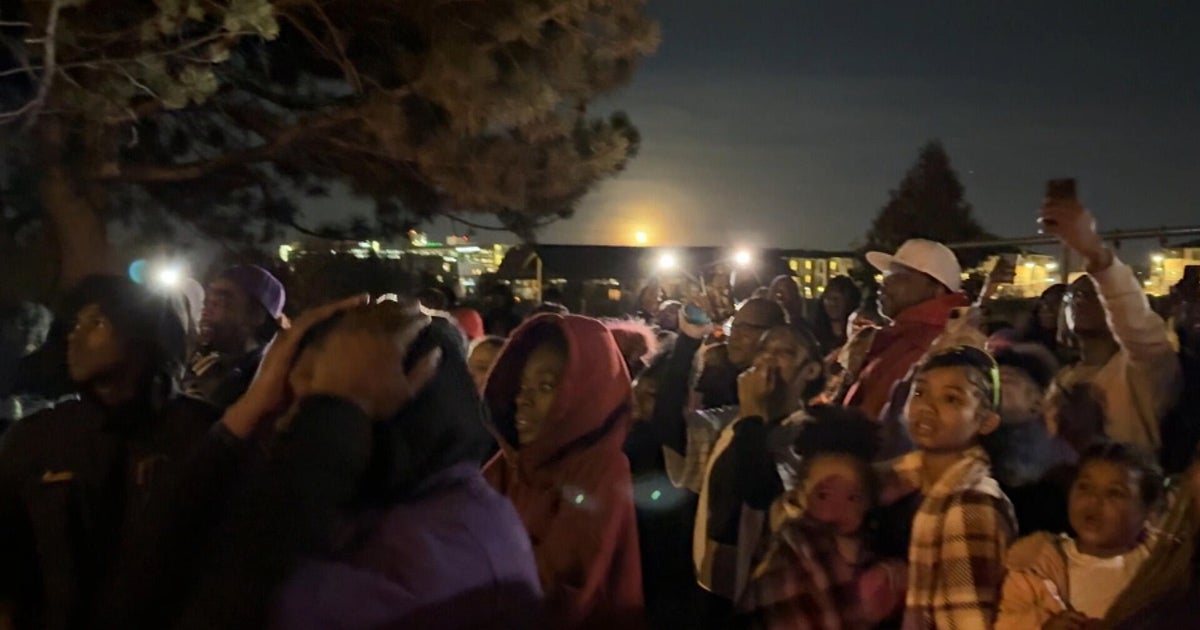
Two Parents Dead, Three Hospitalized in Suspected Fentanyl Mass Overdose at Aurora Apartment
Two parents died and three people were hospitalized in a suspected mass overdose at an Aurora apartment Monday...

The American Myth of Thanksgiving’s First Feast
Thanksgiving, celebrated annually as a national holiday, is rooted in a 19th-century creation by magazine editor Sarah Josepha...