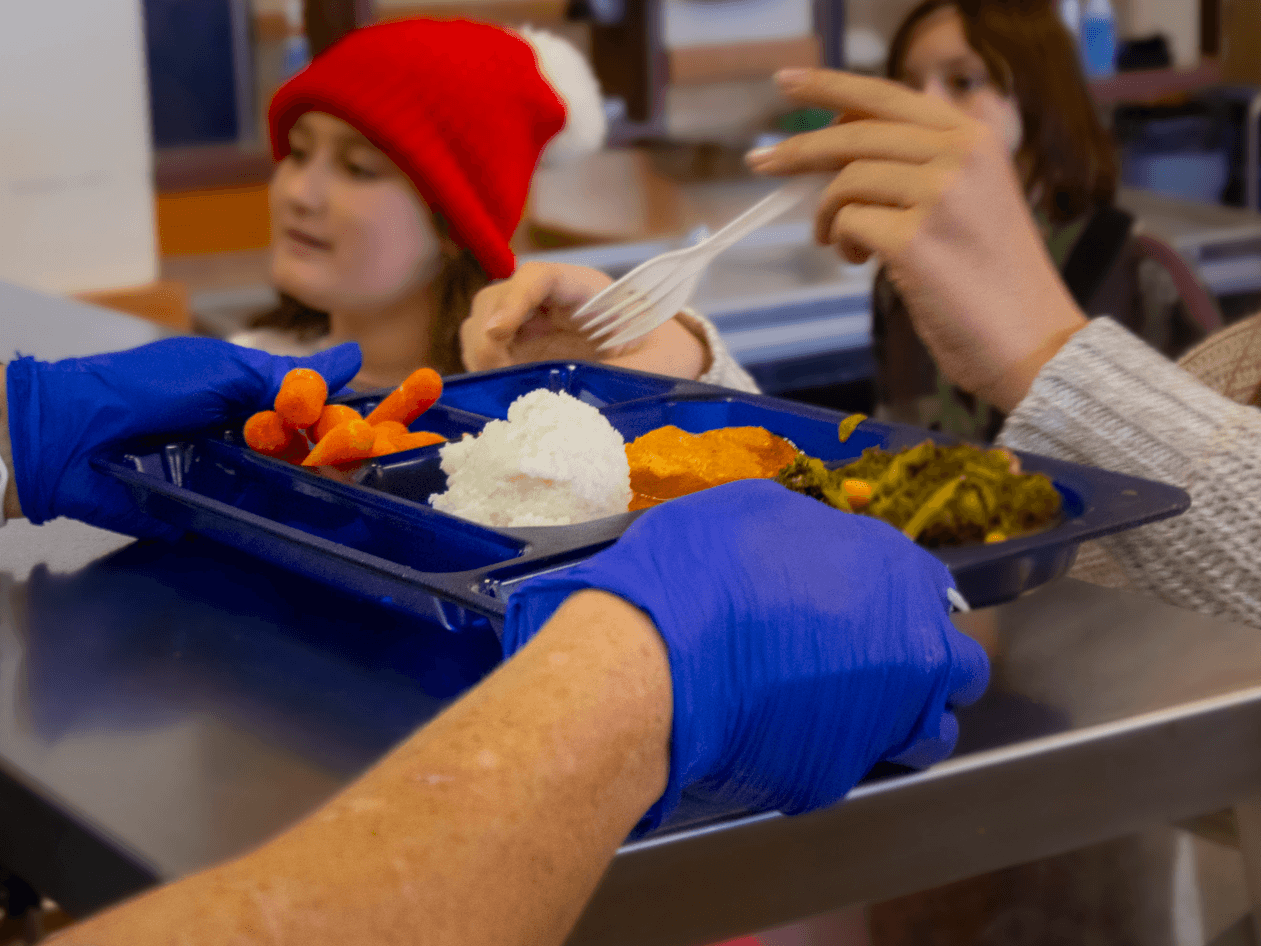
Juliet Falk argues in a new report that biodegradable sporks could significantly cut down on plastic waste in New York City public schools.
- Juliet Falk found biodegradable sporks could reduce plastic waste
- Research was conducted at Bronx High School of Science
- A school survey found 70% said they didn’t know where the recycling bins were in the cafeteria
Her research found that individually wrapped plastic utensils are a major source of waste. Falk, a former student at the Bluedot Institute, conducted the project while attending the Bronx High School of Science.
“What surprised me a lot was that we had each utensil individually wrapped in single-use plastics,” Falk told Bluedot Living. “Why would we not just put all three utensils in one wrapping?”
She also noted a lack of recycling awareness. Most recyclable utensils were thrown into the trash instead of recycling bins, Falk said.

The research project aimed to be a localized, community-focused effort. Falk explained that she wanted to address issues having a direct influence on students at her own school or other high schools throughout New York City.
Her interest in environmental leadership developed through participation in various group projects. Falk said that attending climate protests at her school helped her connect with others who shared her commitment to sustainable initiatives.
To measure involvement, Falk distributed a survey to teachers and classmates. The results showed that approximately 70% of respondents were unaware of the locations of recycling bins within the cafeteria.
Falk chose to focus on sporks as part of a project to improve life in her community. “My mind went to environmental concerns because that’s a big problem in the city, especially related to waste management,” she said.
Her research targeted the “throwaway culture” she observed in the cafeteria. “We don’t often think about these small nudges and how they can really make a difference,” Falk said.
She hopes her work encourages people to connect their environmental intentions with their daily actions. “I want people to understand that we want to help the environment and do what we can, but that doesn’t always manifest in our daily lives,” Falk said.
Keep reading

Thanksgiving Nor’easter Drenches N.J. With 4+ Inches of Rain, Knocks Out Power to 180K
A Thanksgiving nor'easter drenched New Jersey with more than 4 inches of rain in at least five counties...
A&A Dental Implant and Cosmetic Center Outlines Staged Periodontal Treatment in Houston
A&A Dental Implant and Cosmetic Center in Houston outlines a staged approach to periodontal disease, emphasizing early diagnosis...

California Requires 5-Step Seat Belt Test for Kids 8-16 Starting 2027, Fines Up to $500
California Governor Gavin Newsom signed a bill in October 2025 requiring children aged 8 to 16 to pass...

Detroit Father of Two Shot, Seriously Injured While Resting in Car After Gig Work
A 32-year-old Detroit father of two was shot and seriously wounded Thursday morning while resting in his car...