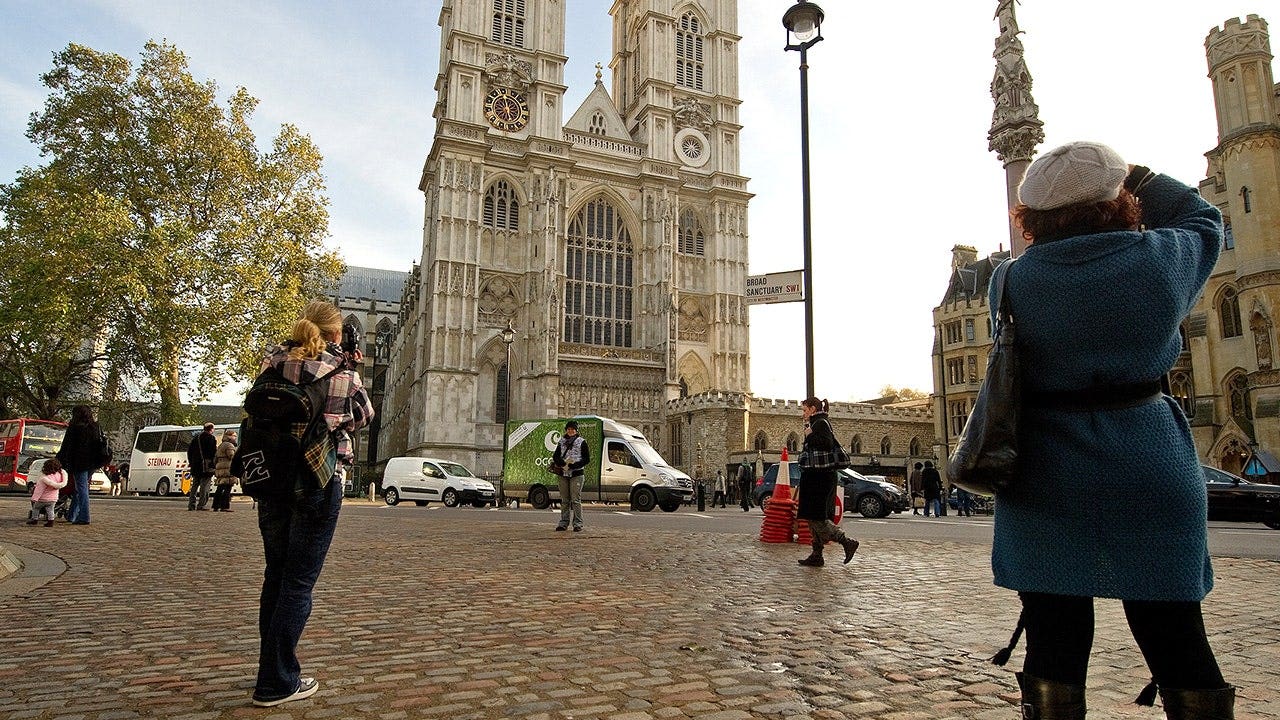
A Roman sarcophagus unearthed at Westminster Abbey in 1869 held bones that predated the coffin by six centuries, new research shows.
The study, published in the Journal of the British Archaeological Association and led by Warwick Rodwell, consultant archaeologist at the Abbey, identifies two 11th-century abbots as the only plausible occupants, Fox News reported. Carbon dating of a bone sample at the Scottish Universities Environmental Research Centre produced a range of 987 to 1052 AD, placing the burial firmly in the late Saxon period.
The limestone casket bears an inscription naming Valerius Amandinus, a wealthy Briton from the fourth century. A large Latin cross carved into its lid, however, dates to roughly the 10th or 11th century, ScienceDaily reported.
“Either would fit equally well if we assume the Abbot was in his early twenties when the appointment was made and close to 50 when he died,” Rodwell said, as SWNS noted.
The shortlist comprises Aelfwig, who died around 1020, and his successor Wulnoth, who died in 1049. Both led Westminster Abbey and both fall within the radiocarbon window. The skeleton belonged to a man aged 35 to 49 who stood five feet nine inches tall. White lime residue inside the stone chest outlines where a wooden inner coffin had decayed.
Rodwell’s conclusions draw on investigations spanning decades, including a 2009 Time Team examination of King Henry III’s original sacristy. Workers had first struck the Roman coffin in 1820, breaking its lid into six pieces; the damage was repaired before the formal 1869 excavation, ScienceDaily reported.
The latest phase was a 2025 excavation of the Abbey’s vestry by Pre-Construct Archaeology, undertaken ahead of construction on the King Charles III Sacristy, scheduled to open in 2027.
The sarcophagus is now displayed in the Queen’s Diamond Jubilee Galleries at Westminster Abbey. Researchers have not established the occupant’s identity beyond doubt.
Related reading

Belgium Strike Grounds All Flights at Brussels, Charleroi Airports for 14 Hours
Belgium’s airspace shut down on Monday as air traffic controllers joined a nationwide strike against Prime Minister Bart...

Indonesia’s Prabowo Nominates Two Ministers as VP Candidates; Parliament to Vote Dec. 11
Indonesian President Prabowo Subianto nominated two cabinet ministers as vice-presidential candidates on Monday, setting up a parliamentary vote...
Libyan Officials Say Russian Corvette Merkury Sank After Suspected Ukrainian Drone Strike
A Russian navy corvette sank in the Libyan port of Benghazi on Sunday after a suspected Ukrainian sea...

Ukraine Sinks Russian Warship in Libya Drone Strike, Zelenskyy Confirms
Ukrainian sea drones struck the Russian navy corvette Merkury at the port of Benghazi in eastern Libya early...