| Group | Share stopped with same-race passenger |
|---|---|
| Young Black men | ≈ 1 in 4 |
| Young white men | < 1 in 20 |
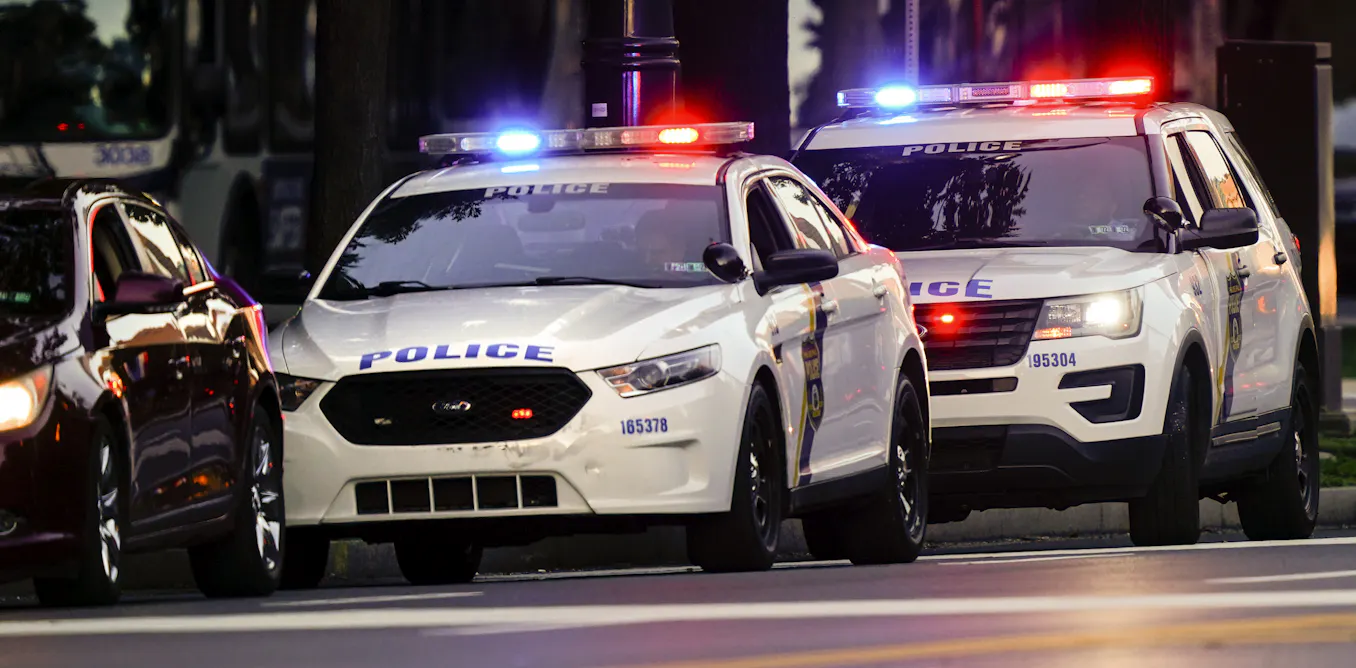
To test whether police decisions drove the disparity, researchers Lance Hannon, a professor of sociology and criminology at Villanova University, and Molly Biddle, then a data analyst for the Police Accountability Unit at the Defender Association of Philadelphia, used the “veil-of-darkness” method.
The technique compares stops at the same clock time across seasons, when daylight visibility of a vehicle’s occupants changes.
The racial gap between young Black and white male drivers narrowed in darkness. The gap between young Black men driving in groups versus driving alone narrowed even more, and both patterns remained statistically significant after controlling for time of day, neighborhood, police assignment, season and other factors, the study found.
“These findings suggest that the visibility of a young Black male passenger in a vehicle may influence police decisions as much or even more than the visibility of a driver’s race alone,” Hannon wrote in the article for The Conversation.
Social psychology research offers a possible explanation: groups are often perceived as more threatening than individuals, and racial stereotypes can intensify that perception.
In the sample, young Black male drivers with young Black male passengers were far more likely to be ordered out of the vehicle and frisked without contraband found than to receive a citation for the traffic offense that justified the stop. Only 7% were ticketed, which the authors said suggests many stops were pretextual.
The findings build on an earlier study by the same authors examining more than 76,000 stops of Black drivers in predominantly Black Philadelphia neighborhoods.
That work showed the share of younger Black men among stopped drivers rose with daylight visibility, while the share of older Black women fell — a within-race disparity comparable in magnitude to typical Black-white disparities reported in the literature.
“Taken for granted freedoms, such as the right to travel with a friend or family member without excessive scrutiny, appear more tenuous for Black citizens,” the authors concluded in the journal article. “Common-sense mottos like ‘there is safety in numbers’ might be less sensible for young Black men fearful of being targeted by the police.”
Keep reading

Florida Man Charged with Kidnapping Louisiana Minor Across State Lines
Thomas Hoehn, 32, of Fort Myers, Florida, faces federal charges after allegedly transporting a minor across state lines....

What Your Elevator Service Contract Must Cover Before You Sign
Elevator service contracts often look similar until a breakdown reveals gaps in coverage, response time, or inspection support....
Ohio Leadership Trail Launched as Final America 250 Heritage Route
America 250-Ohio launched its sixth and final statewide heritage route Monday, an experiential driving trail linking more than...

Essence Festival Leaves New Orleans After 32 Years Following Failed Contract Talks, City Plans Replacement
The Essence Festival of Culture will leave New Orleans after 32 years, ending its run at the Caesars...