The Supreme Court of India on July 24, 2026, ordered the central government and the National Testing Agency (NTA) to implement permanent structural reforms for the NEET-UG examination. The court demanded a shift away from ad hoc security measures toward an institutionalized system to prevent recurring paper leaks and administrative errors.
A bench consisting of Justices PS Narasimha and Alok Aradhe has made it clear that the current state of the medical entrance exam is unacceptable. The court specifically targeted the series of errors
that have plagued the NEET-UG process, insisting that the government provide a concrete roadmap for systemic stability rather than temporary fixes.
The Shift to Computer-Based Testing and Data Security
A central pillar of the court’s demand is the feasibility of shifting completely to an online mode. The bench questioned the government on how it intends to protect sensitive data if the exam moves to a Computer-Based Test (CBT) model, similar to the Joint Entrance Examination (JEE).
The court’s concern is that digitizing the process without rigorous safeguards could simply trade one set of vulnerabilities for another. Specifically, the bench highlighted that cybersecurity architecture and secure data transmission would become more critical than the physical security of exam centers. The government has also been asked to explain its proposal for using technologies like DigiYatra for candidate verification.
To address the leak of physical papers, the court is examining a hybrid model. Under this proposal, encrypted digital question papers would be sent electronically to centers and printed locally only 30 to 60 minutes before the exam, effectively removing the need for physical transportation.
Ending Ad Hocism and the IAF Precedent
Justice Narasimha explicitly criticized the government’s reliance on temporary solutions to solve deep-rooted systemic failures. He pointed to the deployment of the Indian Air Force to transport question papers after a previous leak as a prime example of ad hocism
that has troubled the system for years.
The court is now requiring the Centre and the NTA to file detailed affidavits on the progress made in the implementation of reforms. This includes a status report on every stage of the examination cycle: pre-exam, during the exam, and post-exam. The goal is to ensure the NTA develops an institutional memory so it can act on gathered data and experience in every single cycle.
The Radhakrishnan Committee and Legislative Tightening
Solicitor General Tushar Mehta, representing the Centre, assured the court that the government is going 10 extra miles
to protect the futures of students. He confirmed that the reforms suggested by the Radhakrishnan Committee have been fully accepted, though Mehta suggested the government may go even further than those recommendations.
Beyond administrative shifts, the government is moving to harden the legal consequences for cheating. Sources report that the government plans to amend the Public Examinations (Prevention of Unfair Means) Act, 2024.
- The establishment of fast-track courts specifically to try paper leak cases.
- An increase in both monetary penalties and jail terms for those involved in leaks.
Protests and the NEET-UG 2026 Fallout
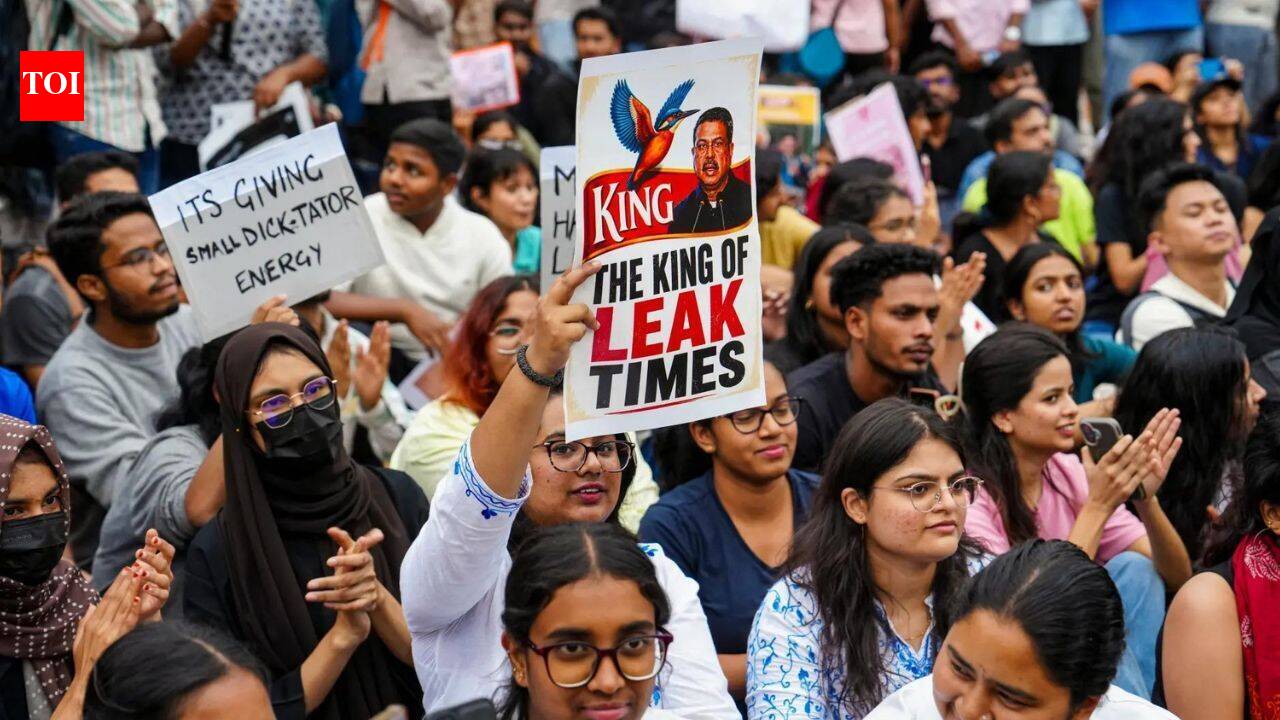
These legal battles are unfolding against a backdrop of significant unrest. Students led by the Cockroach Janta Party (CJP) have been protesting at Delhi’s Jantar Mantar, demanding the resignation of Education Minister Dharmendra Pradhan. These demonstrations have previously escalated into violent clashes, with Delhi police using tear gas and baton charges during a ‘Chalo Sansad’ march.
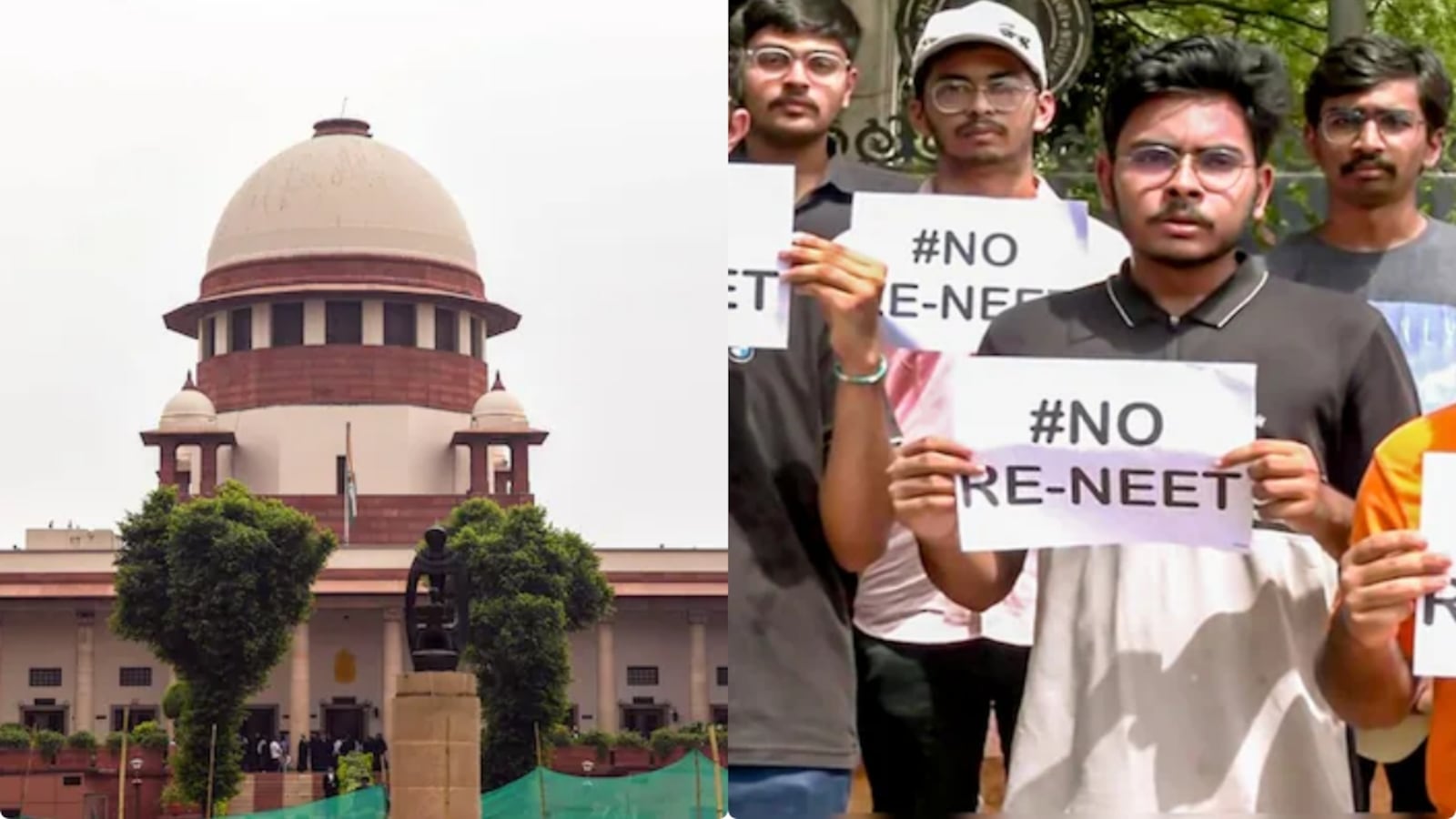
The urgency of these reforms is underscored by the chaos of the 2026 cycle. The original NEET-UG exam held on May 3, 2026, was cancelled following leak allegations, affecting more than 22 lakh candidates. A nationwide re-test was eventually conducted on June 21.
The fallout also reached the courtroom via Dr. Mangala Kohli, former Assistant Director General of Health Services (DGHS), who challenged the decision to conduct a total re-test. She argued that cancelling the exam for all candidates unfairly penalized those not involved in the irregularities. However, the Supreme Court dismissed her plea as infructuous
since the re-examination had already taken place.
The court has now listed the matter for further hearing on August 3, when it expects to review the Centre’s detailed submissions on cybersecurity, the transition to computer-based testing, and the broader institutionalization of the examination process.
Keep reading
Worker Dies After Being Struck by Compressed Air Hose at Jurong Port Road
A 35-year-old worker died at a Jurong Port Road construction site on September 11, 2026, after being struck...
Singapore Police Investigate Three Traffic Officers Over Unsafe Riding Footage
The clip, which surfaced online, shows the outriders cutting across lanes and forcing sudden braking near the Traffic...
Justice Department Deports Legal Resident to Afghanistan in First ATRC Case
The Justice Department deported a 47-year-old legal U.S.

Mahnoor Safdar Marries Azan Jabbar Today at Jati Umra Estate
The private family gathering brings together close family and invited guests for the celebration.