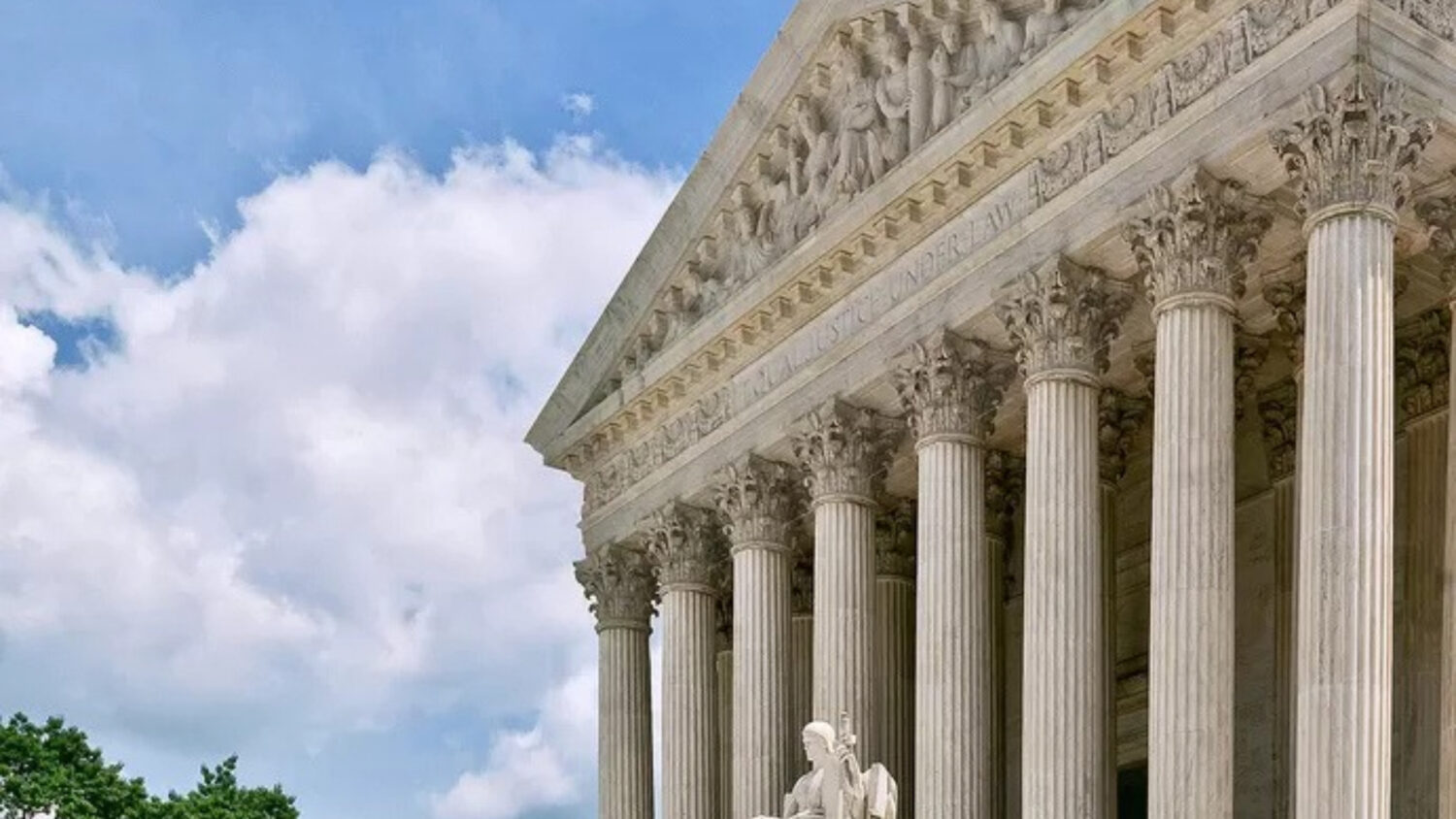
The U.S. Supreme Court will hear arguments on December 8, 2026, in a case that will decide whether Arizona can enforce its proof-of-citizenship law for voter registration and purge voter rolls before an election. The Republican National Committee, backed by the Trump administration, is seeking to restore two parts of the 2022 laws.
Arizona’s Registration Proof Requirement
Arizona’s state voter registration form requires applicants to show proof of U.S. citizenship, such as a passport, a birth certificate, or an Arizona driver’s license number. Without it, applications are rejected. The rule has been in place since 2024, following a Supreme Court decision that permitted Arizona to enforce it during the legal proceedings.
A defeat for the RNC would cause individuals who apply without documentation to become “federal-only” voters, who are permitted to vote for president and Congress but not in state or local elections. As of June, data from the Arizona Secretary of State’s Office shows that approximately 43,900 Arizonans were federal-only voters, constituting less than 1% of the state’s electorate.
Challenging Voter Roll Checks
The second part of the law would have counties check voter rolls against government records to find noncitizens. If a voter is flagged, they would have 35 days to prove they are a citizen, or their registration would be canceled. Courts have said federal law bars that kind of check in the 90 days before a federal election. The RNC wants that limit lifted.
Arizona Officials and Rights Groups Clash over Citizenship Laws
Senate President Warren Petersen said Arizona requires proof of citizenship “because only American citizens should decide American elections.” Arizona’s Democratic officials are split. Attorney General Kris Mayes filed a brief partly backing the RNC, defending the state’s power to require proof of citizenship on its own form.
Secretary of State Adrian Fontes’ office has said the laws could keep eligible voters from voting. The challengers include Latino and voting rights groups, students, tribes and Democrats. Mi Familia Vota and Voto Latino first sued in 2022. “This case is not about election security,” Mi Familia Vota President and CEO Hector Sanchez Barba said in June, comparing proof-of-citizenship rules to poll taxes and literacy tests.

The Justice Department’s Change in Position
In 2022, under President Joe Biden, the Justice Department sued Arizona over the proof-of-citizenship law, calling it a “textbook violation” of federal voting law. Under President Donald Trump, the department is now backing the RNC.
Noncitizen Voting Remains Rare Despite Database Flaws
Noncitizen voting has been shown to be incredibly rare with it making up approximately 0.0001% of all votes cast. When the Bipartisan Policy Center analyzed data compiled by the Heritage Foundation, a right-wing think tank, it “found only 77 instances of noncitizens voting between 1999 and 2023” and concluded that “there is no evidence that noncitizen voting has ever been significant enough to impact an election’s outcome.”
The Systematic Alien Verification for Entitlements (SAVE) database, a tool used to find noncitizens, has been found to falsely flag U.S. citizens as noncitizens.
Justices Leave Other Law Provisions Blocked Until 2027
The justices will not consider two other parts of the laws, which would have kept federal-only voters from voting by mail or for president. Those remain blocked. A ruling is expected by the end of June 2027.
Keep reading

Gov. Green Slams Reworld Over 403,000-Gallon Diesel Fuel Leak
Governor Josh Green blasted contractor Reworld for its handling of a 403,000-gallon diesel fuel leak at the Kapolei...

Boston Sports Stars Reflect on City’s Unique Passion at The Tradition Gala
Boston sports stars, including Derek Lowe and Dana Barros, gathered last week to celebrate the city's unique sports...
Winter Storm Warning in SW Illinois; Chicago Sees Rain Through Thanksgiving Evening
A winter storm warning is in effect for southwestern Illinois through Thanksgiving evening, bringing snow to parts of...
West Hartford Students Honor Fallen Classmate With Camden Siegal Community Food Market
“The bell rang, and no one said anything, and no one knew what to do. It’s hard to...