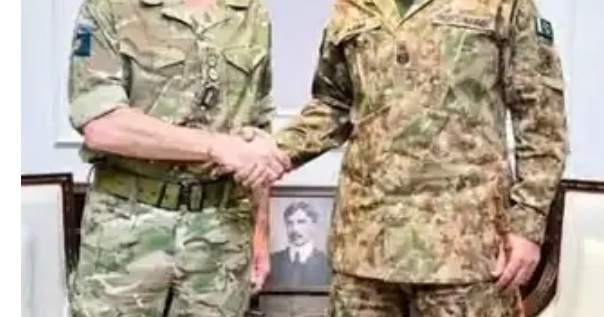
Amir Khan Muttaqi described Pakistan’s cross-border strikes as “unreasonable,” said they had yielded Islamabad nothing, and called his government the legitimate representative of all Afghans, Afghanistan International reported.
Muttaqi told Ariana TV that the Taliban would not respond to Pakistani attacks with “childish” actions, adding that history showed Afghans do not surrender under pressure and that the situation would turn in the Taliban’s favour in the long term. He said the group wanted normal relations with Pakistan, just as it sought normal ties with Britain and the former Soviet Union despite their past invasions of Afghanistan. Muttaqi denied that the Taliban supports the Tehreek-e-Taliban Pakistan (TTP) or Baloch militant groups, saying their disputes with Pakistan existed before the Taliban returned to power. He added there were currently no negotiations between the Taliban and Pakistan. On Ahmad Massoud’s recent visit to Tehran, Muttaqi said the trip was of little significance because Massoud attended a condolence ceremony and did not discuss Afghanistan’s situation. He said the Taliban had conveyed its objection to the Islamic Republic of Iran. Muttaqi claimed the Taliban had effectively been recognised in practice because no obstacles remained to engagement and cooperation with other countries. He cited Russian Foreign Minister Sergei Lavrov’s praise at the Moscow Format meeting for the Taliban’s efforts against ISIS. The group also wanted positive relations with the United States, he said, noting Washington had taken no negative action against the Taliban despite 20 years of war. Responding to Donald Trump’s remarks about Bagram Air Base, Muttaqi said the Taliban would not give up “even an inch of Afghan territory to anyone.”
Weapons and equipment left by US forces were war spoils used to defend Afghanistan. Muttaqi described relations with Iran as good, saying Afghanistan needed Iranian products and industrial capabilities. On a possible Iran-US war, he said the Taliban maintained neutrality but opposed aggression against any country and its people. On human rights, Muttaqi claimed there were no violations in Afghanistan and said Afghan society differed from Western societies. He denied the existence of political prisoners and said the Taliban government was inclusive and represented all ethnic groups. “Afghanistan had never had a fully inclusive government,” he said, arguing the emirate was not a party or faction but a collective structure representing all Afghans.
Muttaqi described Taliban opponents as mainly active on social media and fragmented into several groups. He said a five-year effort by opponents to launch an attack in Nuristan was defeated within two hours. He claimed ISIS had no presence in Afghanistan and said the threat originated from outside, pointing to Pakistan’s Balochistan province.
Muttaqi denied divisions within the Taliban. Referring to a clash involving Juma Khan Fateh in Badakhshan, he said the objection of one local commander did not amount to a split. On negotiations with opponents, he said the Taliban was not hostile toward anyone and had even pardoned people who had mistreated the bodies of its members.
Related reading
Magnitude 5.2 Earthquake Strikes Laos-China Border Region
A magnitude 5.2 earthquake struck the Laos-China border region on Saturday, November 28, at 8:17 a.m. Thai time,...

Survivalism Goes Mainstream in Europe Amid Growing Preparedness Concerns
Survivalism is going mainstream in Europe. Sales of canned goods, shelf-stable milk, and paper maps are rising, as...
Papua New Guinean PM Lauds Chinese Work Ethic – 巴士的報
Papua New Guinea Prime Minister James Marape praised China's economic transformation and work ethic in an interview with...

Election Likely to Oust Sanchez and Bring Right-Wing Coalition to Power
Spain's voters head to the polls on Wednesday in an election likely to oust Socialist Prime Minister Pedro...