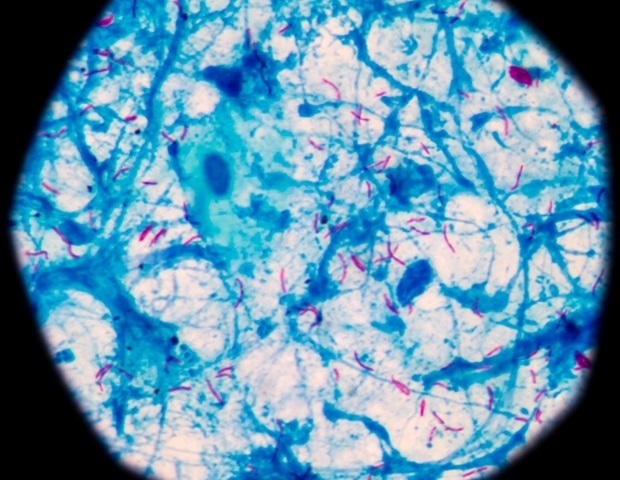
Researchers at UT Southwestern Medical Center have identified a molecule produced by highly transmissible tuberculosis strains that activates sensory nerves and triggers coughing, according to a study published Monday in Nature Microbiology.
PGL and Sulfolipid‑1 Act Together
The molecule, phenolic glycolipid (PGL), is produced by certain TB strains including HN878, which is associated with high virulence and transmissibility, News-Medical reported. PGL activates sensory nerve cells from both mice and human donors and changes the electrical state of human nerve cells, making them more responsive to stimulation.
“Every breath can bring irritants into the airways. By making sensory nerves more excitable, PGL could make otherwise harmless exposures more likely to provoke a cough,” said Michael Shiloh, M.D., Ph.D., study corresponding author and professor of internal medicine in the Division of Infectious Diseases and Geographic Medicine and Microbiology at UT Southwestern.
The team previously identified sulfolipid‑1 as a TB‑produced molecule that activates sensory nerves. In the new study, exposure to PGL and sulfolipid‑1 together produced greater nerve activation than either molecule alone. Aerosolized PGL was sufficient to trigger coughing in preclinical models.
ATP and P2X3 Receptors Mediate the Signal
The researchers found evidence that PGL stimulates the release of ATP, which activates P2X3 receptors on sensory nerves to help initiate cough signals. When nerve cells were treated with gefapixant, a drug that blocks these receptors, the response to PGL was significantly reduced. Gefapixant is approved in the European Union for adults with refractory or unexplained chronic cough.
“Our finding that gefapixant reduces the neuronal response to PGL provides a rationale for testing drugs like it against TB‑associated cough,” Shiloh said. “If effective during infection, such treatment could potentially relieve symptoms and reduce infectious spread when used alongside antibiotics.”
Transmission Remains a Global Challenge
Tuberculosis remains the world’s leading cause of death from a single infectious agent. The existing BCG vaccine protects young children against severe forms of TB but provides inconsistent protection against pulmonary TB in adolescents and adults.
“Tuberculosis can be deadly and can cause lasting damage to the lungs and other organs, even after successful treatment,” Shiloh said. “If we understand how to intervene in TB transmission, it could have a substantial impact on the number of new cases.”

DOLE: 313,000+ Workers in Ilocos, Cagayan Valley Get Wage Hikes Effective Nov 2025
Over 313,000 minimum wage earners and domestic workers in the Ilocos and Cagayan Valley regions will receive pay...

Passenger Arrested for Punching, Attempting to Strangle Co-Passenger on IndiGo Flight
Police in Kochi arrested a passenger on Wednesday following a mid-air assault aboard an IndiGo flight from Abu...

Black-White Mortality Gap Narrows 56%-68% Since 1993, Study Finds
The mortality gap between Black and White Americans narrowed by 56% for men and 68% for women from...

Rescuers Search for Miners Trapped in Flooded Illegal Gold Mine in Indonesia
Rescuers in West Java searched Wednesday for miners trapped since Monday when floodwater surged into an unauthorized gold...