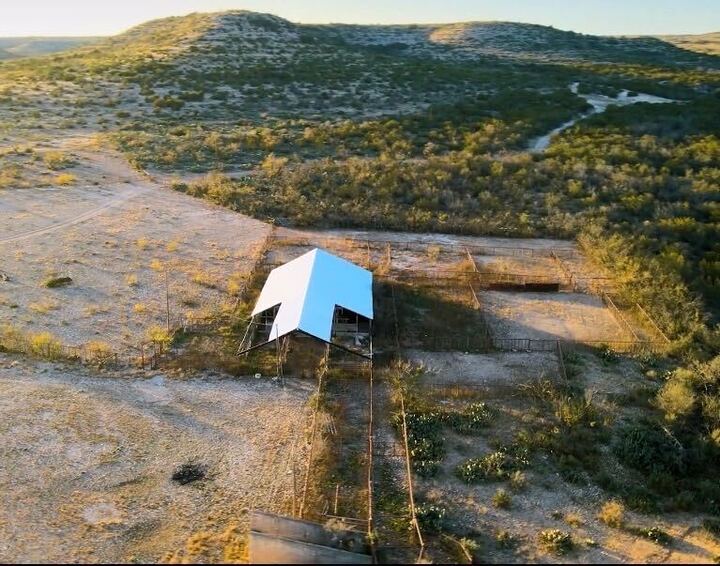
Landowners along the newly approved Howard-Solstice transmission line route face mandatory easement talks, property surveys, and potential condemnation lawsuits as utilities prepare to build Texas’s largest-ever power line across 14 counties, the San Antonio Express-News reported.
Merily Keller and her husband immediately hired a lawyer after learning that their more than 20,000-acre ranch in Val Verde County would be impacted by the state project. One proposed route would have bisected their 21,500-acre working ranch, while the approved modification runs along its northern edge.
“And still, you can see it from two-thirds of a large property. It doesn’t have to be through the middle of your property to ruin it,” Tom Keller told the San Antonio Express-News.
The Route and Timeline
The Public Utility Commission gave CPS Energy and American Electric Power Texas a green light on Sept. 11 to construct the 370-mile transmission line from San Antonio through the Hill Country to West Texas. CPS said construction is scheduled to begin in May 2028 with the line expected to be operating around 2030.
The steel lattice structures stand between 130 feet and 180 feet tall, towering over typical 40-foot rural power lines. “At this point of the process, landowners don’t have a choice. They can’t say no,” said Patrick Reznik, an attorney with Braun & Gresham in Austin.
Landowners Face Permanent Easement Burdens
As utilities prepare for easement acquisitions, Nicholas Laurent, a partner with Texas eminent domain and condemnation law firm Barron, Adler, Clough & Oddo, stressed the permanence of the legal burden.
“It’s a forever easement that will be burdening the property long after whoever currently owns it owns it — their heirs, children … are going to be burdened by the easement,” Laurent told the San Antonio Express-News. “It’s really important that you get it right.”
Laurent expected landowners on the selected route to receive formal notice packets from utilities by mid-November. CPS Energy stated in early October it was beginning informal outreach efforts. Surveyors are expected to visit properties in late 2026 and early 2027.
Compensation and Legal Disputes
Compensation consists of three components: the value of the easements, the cost to cure hard expenses like damaged fences, and diminished property value outside the easement. Reznik speculated that CPS will pay landowners 90% of the devaluation per acre, while diminished remainder value is expected to be heavily contested.
“What is the difference in value of those two properties as a result of that power line? That’s usually a component of the compensation that is heavily contested between the electric transmission line company and the property owner,” Laurent said.
If financial offers are rejected, utilities will file lawsuits to condemn the property. A judge will appoint three resident landowners to determine amounts, and utilities can deposit funds and begin building regardless of agreement. Disagreements will proceed to jury trials spanning years, according to Rudy Robinson, a partner with Austin Valuation Consultants.
Worth a look
- Wealthtech Startup Finny.club Raises Rs 5.3 Cr in Angel Round – Entrackr
- Republicans Pick Veteran Lawmakers to Cheyenne Leadership | Wyoming Public Media
- Honoring Dolores Huerta: The Legacy of a Civil Rights Icon and the Power of Sí Se Puede (archyde.com)
- City of London 1973 Rolls-Royce Phantom VI converted to electric power (newsarchyuk.com)

Wealthtech Startup Finny.club Raises Rs 5.3 Cr in Angel Round – Entrackr
An angel funding round has brought in Rs 5.3 crore (about $560K) for finny.club, a wealthtech startup located...

Republicans Pick Veteran Lawmakers to Cheyenne Leadership | Wyoming Public Media
“Good government requires more than good intentions. It requires experience, respect for the institution, and the willingness to...

Charleston Committee Approves New Filming and Photography Rules
Charleston is tightening its grip on commercial film and photography sets, moving to protect resident quality of life...

Big Ten Student Leaders Discuss Campus Safety and Wellbeing
“[Hazing] is definitely a pretty big issue. I think, across all of our campuses, there’s a lot of,...