Winter Storm Uri, which began the evening of February 14, 2021, caused a major power crisis in Texas.
By the peak of power outages on February 16, an estimated 4 million customers in the state, or 31% of those served by the Electric Reliability Council of Texas (ERCOT), lost power. ERCOT reported an end to emergency conditions on February 19.
The crisis was precipitated by a severe drop in power generation capacity. As the storm hit, total power generation initially increased, largely due to natural gas, as customers turned on their heat. However, as the storm intensified on February 15, energy generation from multiple sources rapidly decreased.
Although the Texas grid operator managed to prevent a full collapse by disconnecting approximately 20 GW of load, the impact on the population was severe, as houses were not built to withstand temperatures down to -20°C. “The most obvious problem was the lack of cold weather proofing”, according to a detailed breakdown of the event.
The sudden extreme freezing weather affected all generators on the grid. Wind turbines suffered from iced-up blades, leading to a loss of capacity and causing protection mechanisms to kick in due to excess vibrations from unbalanced blades.
Gas-powered plants faced numerous issues, relying on a constant supply of pressurized gas with many weak points at processing and extraction sites. Even one nuclear power unit tripped due to an external feedwater sensor malfunctioning, and some solar capacity was also lost.
However, “with the short memory of the politicians and populace at large those lessons were repeatedly forgotten”. The crisis was accompanied by major surges in pricing and a highly politicized discourse, with attempts to blame either wind or natural gas generation failures, despite outage data being able to support either narrative.
“Although often called a blackout, the grid operator managed to disconnect enough load to limp by on the remaining generators to keep part of the grid functional”.
The Texas power crisis was not without precedent, as similar failures had occurred in 1989 and 2011, according to a detailed breakdown by Jordan, also known as The Electric Brit. These past incidents had demonstrated the urgent need for better preparation, yet the lessons were repeatedly forgotten.
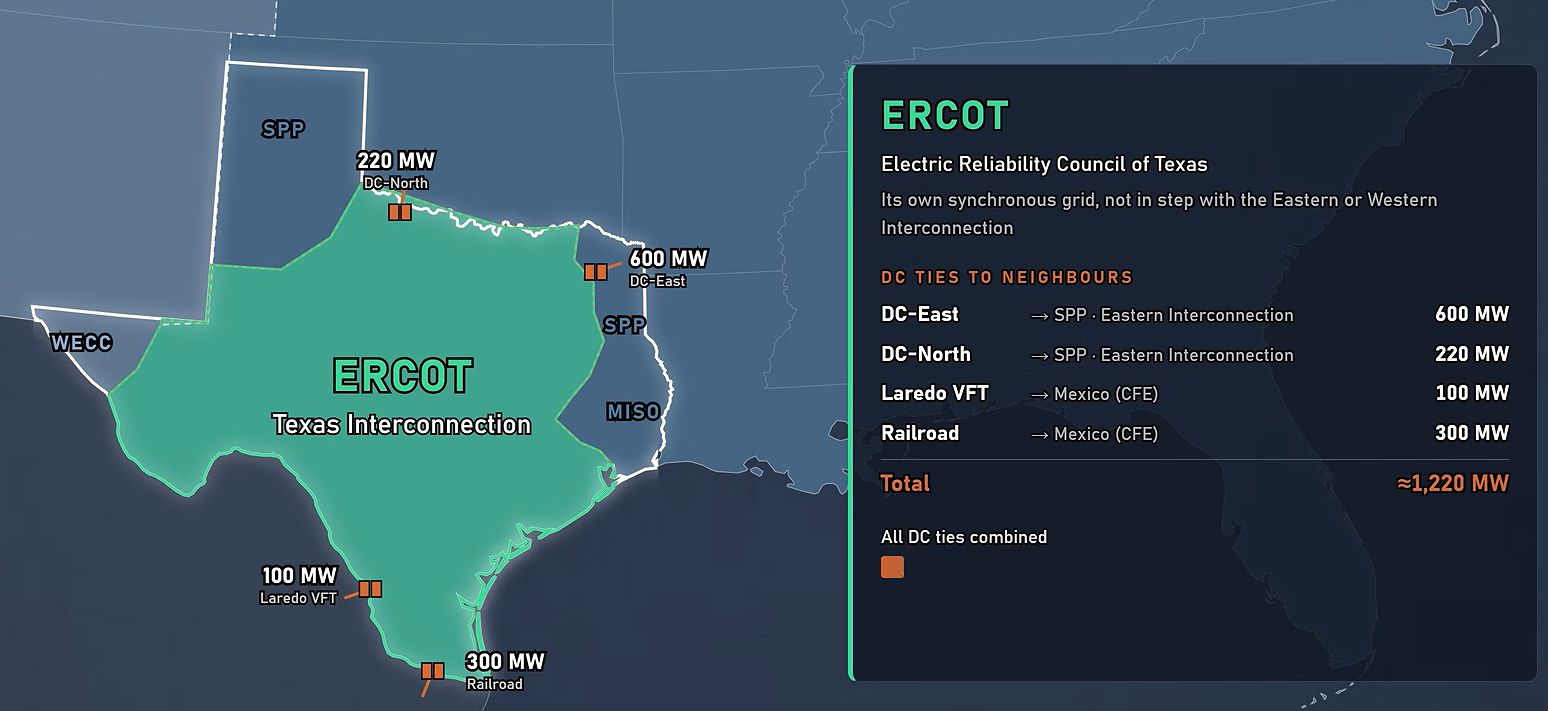
A key lesson that was ignored was the benefit of having more interconnects with the wider US grids, which could have provided critical support during the crisis. The short memory of both politicians and the populace at large allowed these vulnerabilities to persist, leading to the devastating outcome of Winter Storm Uri.
A Stanford University report from December 2025, submitted as coursework for PH240, analyzed the politicized discourse surrounding the crisis, noting attempts to blame either wind or natural gas failures. The report explained that outage data could be presented to support either narrative, creating further confusion.

“Usually this goes well, but as the 2003 Northeast Blackout showed, sometimes the holes line up perfectly and all you can do is hold on for dear life”, according to a detailed breakdown of the event.
ERCOT reported electricity generation and storage outages from February 10-19, 2021. “If you’re lucky the crisis happens during pleasant weather as in 2003 or with the 2025 Iberian peninsula blackout, rather than during an extreme winter storm”, the breakdown said.
Keep reading
LeBron James Scores as 76ers Rout Pacers to Reach NBA Cup Quarterfinals
LeBron James scored 21 points and the Philadelphia 76ers routed the Indiana Pacers 111-87 on Friday night to...

Community Remembers Lauren Becker at Omaha Vigil
Family and friends of Lauren Becker gathered in a candlelight vigil at the Kids Can parking lot in...
Pistons Win Over Milwaukee Likely Secures East Group a for Detroit
East Group A standings show the Orlando Magic leading at 3-1 with a minus-1 point differential, followed by...

Armed Robbery Suspect Terrence Jones Chased Across Indianapolis Motor Speedway Track, Faces Felony Charges
Terrence Jones, identified by police, allegedly stole six cartons of Newport cigarettes worth $864 from a Speedway gas...