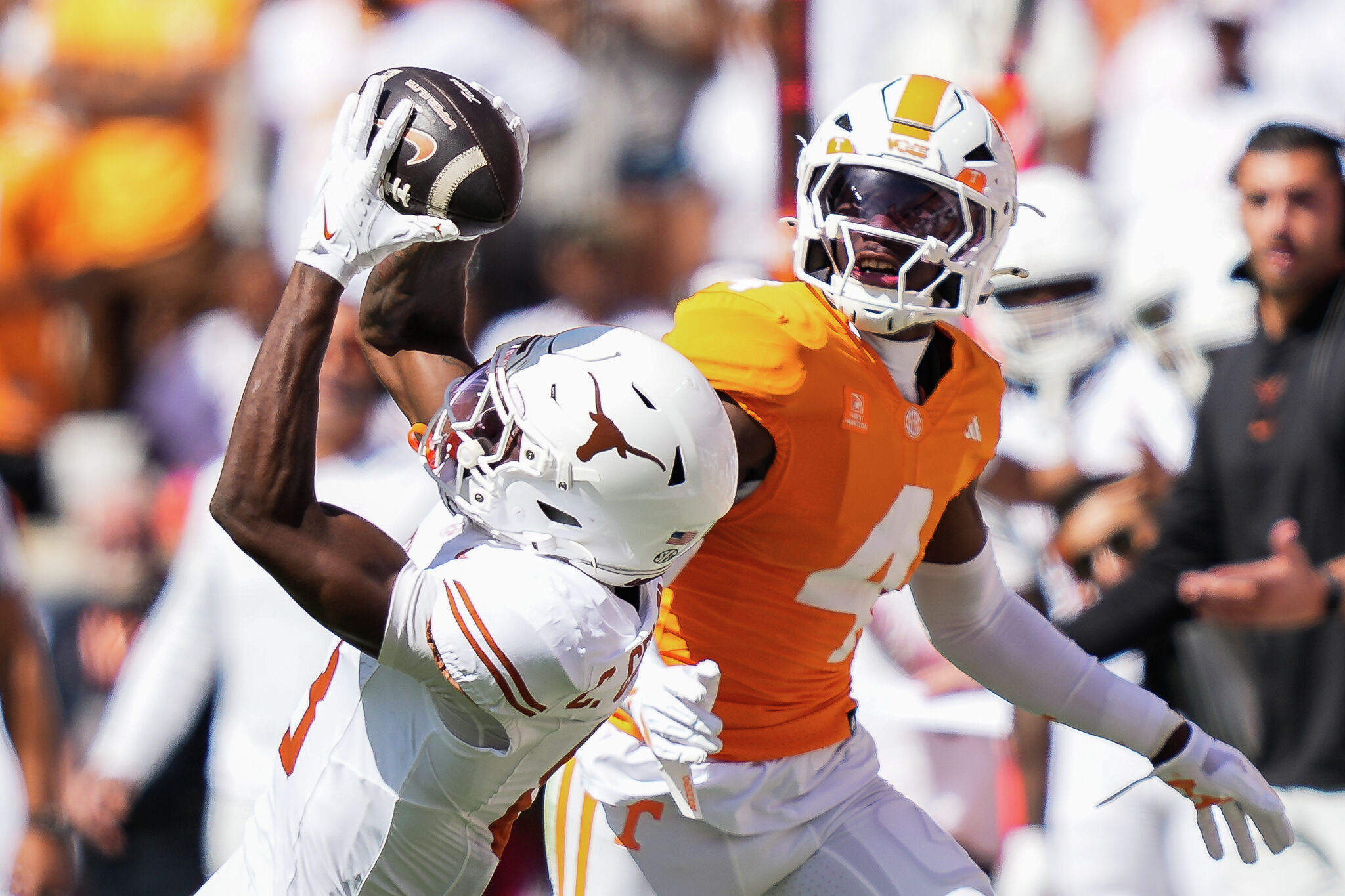
Texas spent a small fortune on its largest transfer class and several high-profile signings have paid off, but the $3 million receiver is barely catching passes.
Cam Coleman arrived from Auburn as the crown jewel of a 22-player portal class, yet through ten games the junior wideout has just 23 receptions — tied with true freshman Jermaine Bishop Jr. for third on the team — putting him on pace for the least productive season of his career, Austin American-Statesman reported. At Auburn he caught 93 passes for 1,305 yards and 13 touchdowns over two years.
“People have to feel like, ‘Man, at any moment, at any time, Cam’s going to go deep on me, and if I don’t defend this well, I’m going to get a PI or he’s going to catch it,’” coach Steve Sarkisian said. “So, there has to be that threat, and then that hopefully opens some other things up for us.”
The numbers back the gravity argument: Coleman averages a team-high 17.8 yards per catch and leads Texas with seven touchdown receptions. In Baton Rouge on Saturday, LSU cornerback Ja’Keem Jackson was flagged for pass interference after getting beaten deep, a play that typified the Longhorns’ 22-21 win.
While Coleman’s stat line looks quiet, the transfer class around him has delivered.
Linebacker Rasheem Biles (Pittsburgh) is in Butkus Award conversation, fellow linebacker Justin Cryer (Florida State) anchors the second level, kicker Gianni Spetic (Memphis) is a Lou Groza candidate, cornerback Bo Mascoe (Rutgers) locks down the boundary, and offensive linemen Melvin Siani (Wake Forest) and Dylan Sikorski (Oregon State) both start. Running back Raleek Brown (Arizona State) caught the game-winning touchdown pass against LSU.
Coleman missed one game with a sore shoulder, but the deeper context is a passing game that spreads the ball — Arch Manning distributes to tight ends, backs, and a rotation of receivers — and defenses that bracket the 6-foot-3, 205-pound junior over the top. The result: fewer targets, higher stakes per touch.
Keep reading

Mississippi Appeals Court Overturns Edwards’ Murder Conviction, Orders New Trial
A Mississippi appeals court has overturned the murder conviction of William “Polo” Edwards, ordering a new trial because...

Free Thanksgiving Dinner, Deferred Assault Charge and Belgrade Community Calendar
A free Community Thanksgiving Dinner will be held at Belgrade High Schools Commons on Nov. 26, while a...

Springfield Personal Injury Lawyers Handle Injury, Workers’ Comp, and Employment Claims Under One Roof
Legal claims in Greene County often arrive in multiples of three, merging an injury claim, an insurance coverage...

They Have Zero Fear’: Aggressive Coyotes Stalk Portland Suburb, Neighbors Say
The coyotes in Raleigh Hills and Garden Home have stopped running when they see people. They stand their...