“The dune at 11th Avenue has been lost, and the dunes at 12th and 13th Avenues are barely holding as waves continue to breach them,” Longport Mayor Pat Armstrong said Thursday.
A Thanksgiving nor’easter hammered the Jersey Shore on Nov. 26, dropping up to five inches of rain and unleashing 80 mph winds that compounded erosion from a September storm. The New Jersey Department of Environmental Protection will assess damage across Atlantic Ocean, Delaware Bay and Raritan Bay shorelines through Dec. 1, NJ.com reported.
High tide reached 8.3 feet — just under the 1992 record of 9 feet — flooding back-bay neighborhoods and stranding drivers in the Venice Park section, 6ABC reported. Emergency crews conducted 14 rescues. “That was one of the biggest losses we had in this storm: our beachfront real estate, so to speak, the dunes, which is our main protection,” said Atlantic City Fire Chief and Emergency Management Coordinator Scott Evans.
North Wildwood Deputy Administrator Kyle Rutherford told NJ.com the city’s beaches “suffered extensive erosion.” In Stone Harbor, Borough Administrator Joseph Clark said damage stretched from 80th Street past 122nd Street, adding, “We are hoping that the loss of sand is not so significant that it can’t be replenished during our latest beach fill, which is currently ongoing.”
Joseph Clark told the Philadelphia Inquirer the promenade took another bad hit and warned of breaching risks to the south: “We think the homes further south of [the promenade] are also starting to be in danger of being hit by the ocean.” “Our beaches were beat up, again,” Vince Sera, mayor of Brigantine, said on Friday.

Cape May Mayor Zack Mullock, the Democratic representative-elect for the district, told the Inquirer that Cape May Point — where dunes have grown to 20 feet over two decades — saw no flooding: “In Cape May Point, they didn’t have a drop of water anywhere in the entire town.”
He contrasted that with towns relying on “wimpy dunes” built up a few feet: “We have to stop legislating based on the loudest people on the beachfront.” Mullock acknowledged the trade-off: “Now, they’ve lost their view from those beachfront homes. But those are the same homes that wouldn’t be there otherwise.” “To me, that’s not a dune.” Mullock’s said his own Cape May has “good dunes, but not great dunes.”
This year, $73 million in federal funds were allocated for Shore replenishment. Mullock said he has been working with outgoing U.S. Rep. Jeff Van Drew’s office on emergency needs.
The NJDEP will present findings in a Coastal Storm Survey & Damage Assessment report covering beach erosion, dune damage and tidal flooding.
Cape May Mayor Zack Mullock, the Democratic representative-elect for the district, told the Inquirer that Cape May Point — where dunes have grown to 20 feet over two decades — saw no flooding: “In Cape May Point, they didn’t have a drop of water anywhere in the entire town.” He acknowledged his own Cape May has “good dunes, but not great dunes,” noting a breach at Wilmington and Beach Streets.
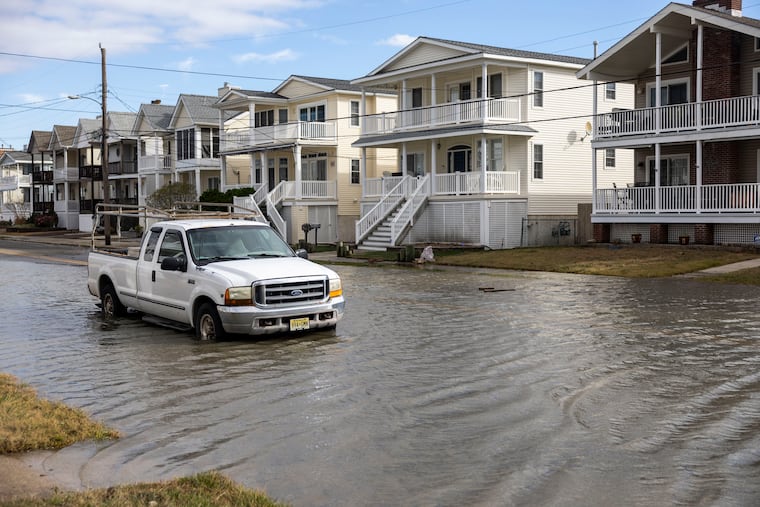
Mullock said the city was largely protected on Thursday, but the breach highlighted the need for higher dunes even if they sacrifice oceanfront views. “Now, they’ve lost their view from those beachfront homes.”
Worth a look

Kansas State vs. Iowa State: 110th Farmageddon Rivalry Game on ESPN+
Kansas State and Iowa State will play the 110th edition of their Farmageddon rivalry on Saturday, November 28,...

PA Electric Rate Hikes Tied to Data Centers; Lawmakers Seek Oversight
In a column for the Scranton Times, Chris Kelly argues that the Olyphant Boro Council’s recent $101 million...

The AWS Builder Loft is now open at re:Invent 2026 in Las Vegas
The AWS Builder Loft is now open at re:Invent 2026 in Las Vegas, offering developers a dedicated space...

Chicago Shelter Volunteers Use Menards Black Friday for Animal Donations
Volunteers from Chicago no‑kill shelters returned to Menards in Lincoln Park on Friday to stock up on $1.50...