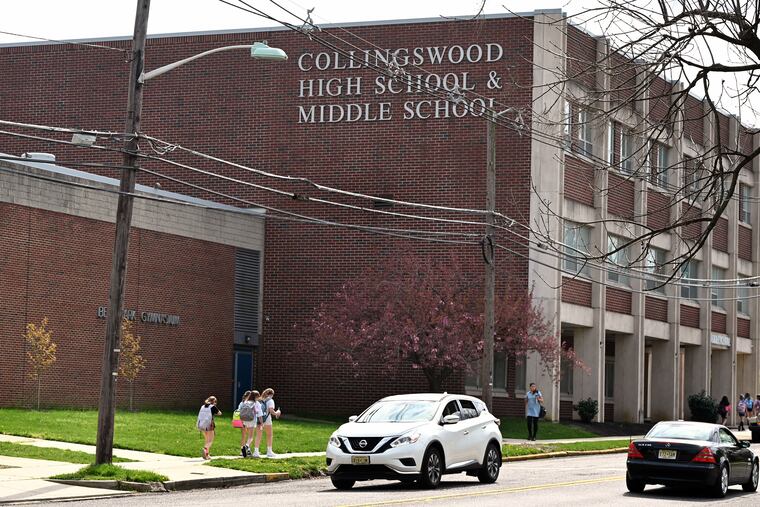
Collingswood Voters Reject $4.56 Million School Funding Bid
The Collingswood School District’s attempt to close a persistent structural budget deficit hit a significant roadblock Tuesday as voters narrowly rejected a $4.56 million operating referendum. According to results reported by The Philadelphia Inquirer, the measure failed by a margin of 2,863 to 2,646, leaving the future of the district’s 2027-28 academic programming in a state of uncertainty.
This ballot question, the first of its kind in the South Jersey school system, was designed to bridge a gap that current tax levels cannot cover. Under the proposal, homeowners would have seen their annual tax bills rise by $1,324 for a property assessed at the borough average of $448,000.
The Stakes for the 2027-28 School Year
Superintendent Fred McDowell has been clear about what this rejection means for the classroom. Without the influx of $4.56 million, the district faces the prospect of significant cuts. These potential reductions include shedding teaching positions, increasing class sizes, and trimming elective courses and athletics. Perhaps most concerning to some parents is the potential reduction in student mental health services, a pillar of support that the district has struggled to maintain as state aid remains stagnant.
The district’s financial strain is not new. To address a $3.3 million budget shortfall for the current school year, Collingswood officials previously consolidated middle and high school campuses, closed a school, and eliminated 30 staff positions. As reported by the Courier-Post, the Board of Education had unanimously voted on August 19 to advance this referendum as a necessary step to stop the cycle of annual austerity measures.
“I think in general I had to weigh the future of our schools with the current lack of affordability … but in the long term, with two kids, I need a school system not to crumble,” said Emma Rose, a 40-year-old resident.
Divided Perspectives on Fiscal Oversight
For some, the referendum was not merely about the tax impact, but about a lack of trust in the district’s financial planning. Patricia Nigro, an attorney who voted against the measure alongside her husband, Donald, pointed to a perceived lack of accountability.
“We don’t have confidence in the members of the school board to be fiscally responsible,” Nigro said. “I just felt like they need a little more scrutiny and a little more fiscal responsibility.”
A Statewide Trend in School Funding
Collingswood was one of four New Jersey districts to seek an operating bond on Tuesday to circumvent the state’s 2% property tax levy cap. While Burlington Township voters approved a $567,000 bond to hire additional teachers and expand music programs, voters in Oradell, Bergen County, rejected a smaller $73,000 referendum intended to fund an armed law enforcement officer and specific educational programs.
Meanwhile, in the Bordentown Regional School District, voters backed a massive $86.1 million capital bond. That measure, which will see the state pick up $34.4 million of the total cost, focuses on structural renovations across five schools rather than the operational expenses that triggered the debate in Collingswood.
As the dust settles in Camden County, Superintendent McDowell has signaled that the district’s focus remains on maintaining a supportive environment for students, even as the administration prepares for another difficult budget cycle. With the referendum failing to pass, the district must now determine which programs will be prioritized for the next fiscal year and which will be left on the chopping block.

Vogue writer says Democratic Gains are reshaping Texas politics
Texas Democratic Gains Reshape State Politics In a recent column for Vogue, a writer reflects on the changing...

Community Compassion Center of Nashville Offers Skilled Nursing Care
Community Compassion Center of Nashville: Examining Care Standards in Arkansas For families in Nashville, Arkansas, determining the right...

Dr. Annie Andrews Outlines Priorities After U.S. Senate Victory
“I’m just more excited about what this means for South Carolina, because I think what this shows me...

Harold H. Krieger Dies Following Surgical Procedure at Age 62
Harold H. Krieger, a man whose life spanned from rural Minnesota to the jazz-filled nights of Atlanta, has...