
NEWARK — On Dec. 17, residents of the Newark Central School District will decide whether to approve a two-phase, $33.7 million capital project for the district’s five school buildings — a proposal structured so that 93.3 percent of the cost would be covered by New York State building aid, leaving just 6.7 percent to be paid from district reserve funds already set aside for exactly this purpose, the Finger Lakes Times reported. The contrast is stark: if the measure passes, district officials say it would carry no additional impact on school district taxpayers, but if it fails, the full $33.7 million cost of repairing and replacing the identified items would fall on local taxpayers rather than being offset by state aid.
That split between state building aid and district reserve funds is the financial fulcrum of the entire proposal. The project stems from meticulous 2024 building condition surveys that New York State requires for each of the district’s five school buildings, and it is designed to address hundreds of maintenance, safety, infrastructure, and accessibility needs intended to protect and extend the effective life of those facilities.
What the Two Phases Would Actually Fix
If approved, work could begin as early as March. The first phase would tackle pressing indoor and outdoor repairs: replacing portions of roofs on four school buildings, installing safety and security-related public address and mass high-speed notification systems in all five buildings, and completing materials abatement.
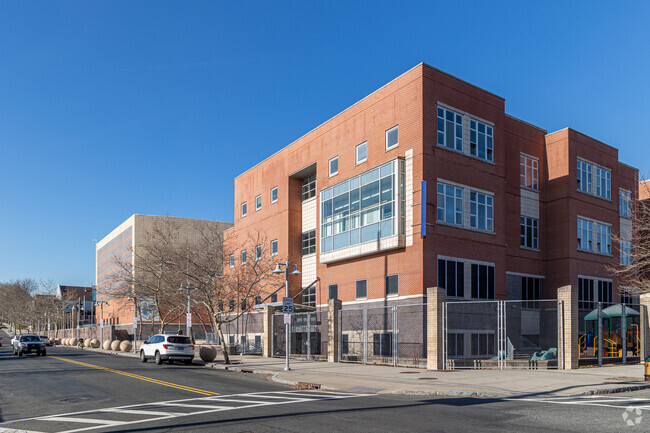
The second phase would work through a longer list of safety and code compliance, electrical and technology upgrades, mechanical and plumbing work, exterior masonry repairs, accessibility improvements, and student space improvements at the elementary schools. It would also add a new playground at Lincoln School and upgrade the high school pool filtration and mechanical equipment.
Benjamin Wemesfelder, project manager for Gordon W. Jones Associates, Architects, P.C., laid out the reasoning behind the scope in a succinct PowerPoint presentation at an Oct. 15 informational meeting. The “why” came down to three goals: preserving the existing buildings so they can serve students and the community for years to come, repairing and modernizing aging systems to keep operations uninterrupted, and continually improving safety, accessibility, and comfort for every student.
“We want to ensure each school remains safe, reliable, and ready to support the students, teachers and staff who use them every day,” Wemesfelder said. “This is an investment in the long-term reliability of Newark’s schools and the students and staff who depend on them. We want these buildings to serve the community, not just today, but for the next generation of students who will learn in them.”
The Enrollment Question Hanging Over the Vote
Not every resident at the October meeting was convinced the timing was right. Newark resident Barbara J. Meeks questioned the timeliness of the proposed project in the face of declining enrollment in some Wayne County schools, noting that some districts are considering mergers or studying how to share services and facilities.

School district Superintendent Susan Hasenauer answered directly: NCSD’s enrollment is “very stable in comparison to the other districts around us and is hovering about 1,800 pupils.” She added that the district has been and continues to be very interested in sharing services where applicable, such as sharing staff where shortages exist, and emphasized that Newark is proposing this “high-quality, maintenance program so we can keep our buildings operating at the most optimal level.”
Why Officials Call These Items Necessities, Not Options
Newark resident Dave Howard pushed back on the framing that the project was discretionary, telling fellow residents that the items to be addressed are not optional but maintenance necessities that would largely be borne by state aid dollars.
“This is maintenance, and we need to do this,” Howard said emphatically, adding it would not only make the buildings safer, but also ADA compliant.
The district has been working with its administrators, architects, financial consultants, and community members to explain the purpose and benefits of the proposed improvements, using the Oct. 15 meeting as a chance for attendees to learn about the facilities’ needs, the proposed work, and the financial considerations before the December vote.
What remains unresolved is simply what happens if voters say no: the buildings still need the repairs, the 2024 condition surveys still stand, and the money would shift from mostly state aid to entirely local pockets. Whether the district’s stable enrollment of roughly 1,800 students and its reserve-fund strategy are enough to carry the measure on Dec. 17 is the question residents will settle at the polls.
Worth a look

New Orleans Saints and Pelicans Announce New Partnerships Leadership Team
In a LinkedIn post signaling a major push to grow corporate revenue, Erica Bernadas announced that the partnerships...

Kansas Weather Forecast Predicts Rain and Weekend Warm-Up
Wake-up temperatures across Kansas dipped into the 30s and lower 40s this morning, and when the breeze is...

Democrats flip four Des Moines metro House seats in Iowa on Nov. 3, 2026
Republicans entered Tuesday's midterm elections with a 66-seat majority in the 100-member Iowa House and a winning streak...

Utilization Review Manager – Medical & Behavioral Healthcare Jobs
NeuroPsychiatric Hospitals reported that its two Indianapolis facilities — Medical Behavioral Hospital of Indianapolis and NeuroPsychiatric Hospitals of...