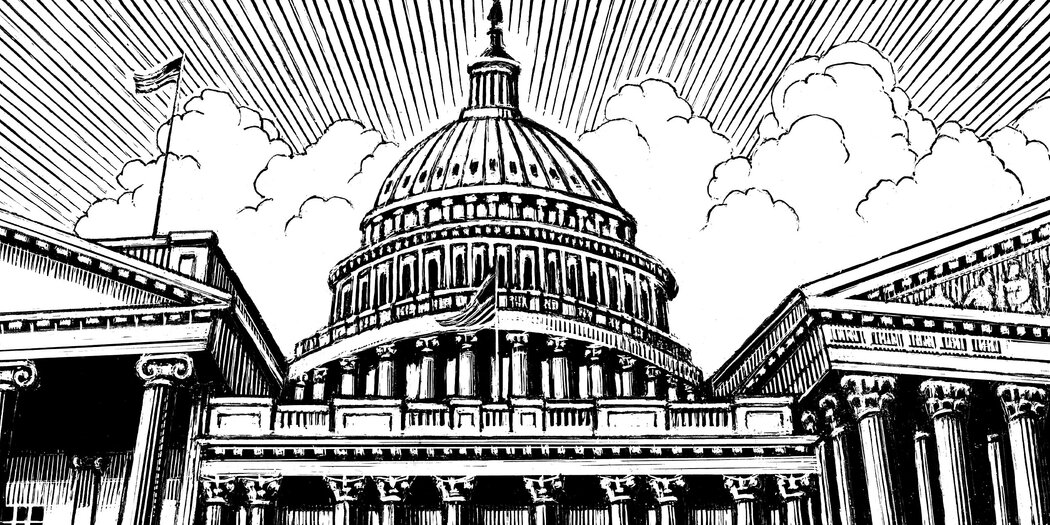
The Oklahoma Constitution, forged in 1907 during the state’s transition from territory to the 46th member of the Union, remains one of the longest and most complex state charters in the nation.
With more than 200 amendments to its name, it serves as a living, breathing testament to a foundational, deep-seated distrust of public officials. This suspicion of centralized power was not born in a vacuum; it emerged from a volatile mix of labor movements, women’s suffrage advocacy, and the lingering echoes of the failed Sequoyah Convention, where Native leaders had attempted to secure Indigenous statehood just two years prior.
The document’s structure reveals a clear, intentional hierarchy. Article II, the Bill of Rights, contains 37 enumerated sections, placing religious liberty in Article I—ahead of even the right to bear arms or free speech.
This placement signals the priorities of the 1906 convention, where delegates from farm, labor, and women’s rights groups pushed the Shawnee Demands, calling for an eight-hour workday and protections for injured workers. It was a remarkably progressive vision for the era, yet one inextricably stained by the racial segregationist policies championed by Alfalfa Bill Murray, the convention’s presiding officer.
Direct Democracy and the Oregon System
At the heart of Oklahoma’s governance is a commitment to direct democracy that remains rare among states.
By adopting what is known as the Oregon System, the state’s founders ensured that the people reserved the power to propose laws and constitutional amendments independently of the legislature, as explicitly stated in Article V. This mechanism serves as a permanent check on legislative authority, allowing voters to bypass the statehouse entirely when they believe their representatives have failed them.
This structural distrust is further evidenced by the state’s executive branch. Unlike the federal model, Oklahoma utilizes a plural executive, where the lieutenant governor and attorney general are elected independently rather than appointed by the governor. This setup ensures that the executive branch is rarely a monolith, forcing a level of institutional friction that the drafters viewed as a necessary safeguard against autocracy.
A Judicial Battleground for State Values
The tension between the legislature and the courts has intensified in recent years, particularly regarding the interpretation of the state’s constitution. While the U.S. Supreme Court’s landmark 2022 reversal of federal abortion protections shifted the landscape nationwide, the Oklahoma Supreme Court took a different path.
In the 2023 case Oklahoma Call for Reproductive Justice v. Drummond, the court ruled that the state constitution’s Due Process Clause provides a limited right to an abortion to save the life of the pregnant person, grounding its decision in the inherent right to life and liberty defined in Article II.
“The drafters must therefore have contemplated and included a limited right to an abortion, concluded the Oklahoma Supreme Court in its 2023 ruling.”
This judicial independence is balanced by a retention process where appellate judges must face the voters every six years. While the governor appoints judges from a pool of candidates vetted by a judicial nominating committee, the ultimate authority rests with the public.
There are no term limits for these positions, a rarity that allows for long-term legal continuity in a state otherwise defined by strict term limits for its legislative and executive officials.
The Ongoing Struggle for Sovereignty and Reform
The state’s constitutional machinery is currently being tested by a dispute between the governor and state lawmakers over the infrequent use of the constitutional convention process. While Article 24 allows for such a convention, one has not been held since 1970.
This reluctance to rewrite the document highlights a paradox: the state possesses the tools to fundamentally overhaul its government, yet the political cost of triggering such a process remains prohibitively high.
The legacy of the 1906 convention is thus a document of contradictions. It is a charter that granted women the right to vote in 1918—two years ahead of the federal amendment—while simultaneously enshrining discriminatory practices that would take decades of litigation to dismantle.
Today, the constitution remains a battleground where the populist impulses of the early 20th century meet the legal realities of the 21st, proving that in Oklahoma, the power to rewrite the rules is, and has always been, the ultimate form of political currency.
Related reading

Mike Myers Discusses Shrek 5 and Potential Donkey Spinoff
Mike Myers might return to the swamp as Shrek for a standalone Donkey movie, according to recent comments...
NY Fed President John Williams Visits Bronx to Assess Local Economy
New York Fed President John Williams will visit the Bronx on Monday, November 23, to engage with local...
Stockton University Launches Program to Practice Mentorship Initiative
Stockton University launched a mentorship initiative on Nov. 11 to connect aspiring educators with New Jersey's most distinguished...

Seattle University Redhawks Men’s Basketball Game Play-by-Play Highlights
Cal State Fullerton’s men’s basketball team faced Lincoln University on Thursday in a high-intensity matchup that saw multiple...