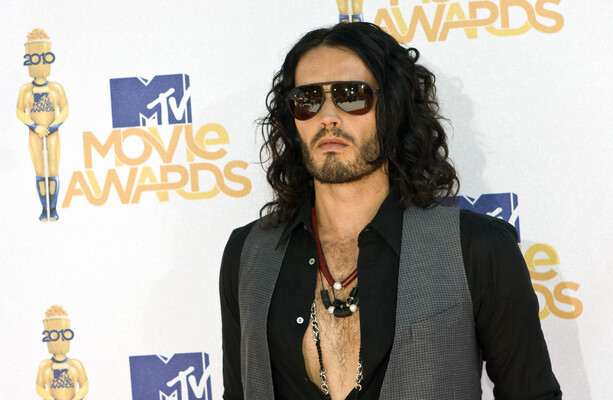
There’s a certain sense of weariness that many of us share right now, a heavy unease that settles in the gut as we see the headlines about Russell Brand being found guilty of rape and multiple sexual assaults. The question isn’t just how many more men of his ilk will see justice, but how we could have lived through an era where this happened at all, how it was all right in front of us. This is the central, galling truth when examining the Brand phenomenon: we were fooled.
It’s a story that illuminates the combustive combination of fame and a toxic form of masculine ego, where women’s bodies are the inevitable collateral damage. For years, Brand wielded a noxious sort of power, a celebrity hierarchy that places men at the top. The verdict against him shows how the culture had to change for accountability to be possible, revealing corruption in the entertainment industry where he worked.
The Anatomy of a Performance
In the early 2000s, Brand’s public persona was a masterclass in branding. He billed himself as an edgy, over-sexualized comic, carrying on the grand tradition of famous men seeing women as conquests. But he served this manic hypersexuality with a side of vulnerability. He was open about his difficult childhood, his bad relationship with his father, his heroin addiction, and his eating disorder. In an era when few high-profile men talked about mental health, Brand was a different kind of star. He wasn’t just a laddish comic; he seemed to be pushing against the boundaries of what a male celebrity could be.
He had a somewhat androgynous, eccentric style, willing to endure narrow-minded taunts about his appearance on chat shows. Donning tight trousers and eyeliner isn’t a qualification for feminism, yet for a brief period, Brand attracted people of all genders by appearing unconventional and transgressive. He acknowledged his own imperfections. He aspired to be a better man, yet he was also skilled at enjoying a bit of craic. He loved women, didn’t he? This meticulously crafted persona enabled his fame to grow because he seemed radically unlike the typical macho comic in a suit. He was the self-described “Dickensian gent, or S&M Willy Wonka,” a man who could be forgiven for outré behaviour because he was entertaining, a flirty, well-spoken cheeky chappy who swung between self-deprecation and self-aggrandizement.
In showbiz, a man with a huge following will be forgiven for a lot of things. The tolerance for ‘edgy’ behavior is high when that behavior drives audience engagement and, more importantly, box office. Brand was a walking, talking media property, and the system was designed to protect its assets.
We are the ones who bought the tickets, streamed the specials, and created the cultural moment that granted him so much power.
Brand's Behaviour Grew More Sinister
As Brand leapt from the UK to Hollywood, his behaviour grew more outrageous. The initial charm curdled into something more sinister. By the depths of the pandemic, he had become fully absorbed in the world of conspiracies, bombastic videos about the ‘great reset’ sucking in fans on YouTube. And how ironic that, as the claims about him emerged in the 2023 joint investigation by The Times, The Sunday Times and Channel 4’s Dispatches, he found Jesus. He was baptised in the Thames by Bear Grylls. He and his wife Laura spent the last weeks of the trial making live videos of them reading the Bible together in their pyjamas. All you can do to that sort of hubristic behaviour is laugh. But it’s not funny, is it?
This evolution from counter-culture darling to conspiracy theorist is a well-trodden path for celebrities who lose their tether to reality. While Brand’s YouTube channel may have found a new audience, the mainstream entertainment industry had already turned its back on him.
| Timeline of a Downfall |
|---|
| 2000s – Brand rises as an “edgy” comic with a progressive-seeming vulnerability. |
| 2010 – Brand at the MTV Movie Awards. |
| 2014 – Brand at an anti-austerity march. |
| 2023 – Joint investigation by The Times, The Sunday Times, and Channel 4 Dispatches begins. |
A Systemic Failure Protected Brand
The sorry tale of Russell Brand is a systemic failure. A famous man still wields a noxious sort of power. There is a long history of women being positioned as muses and groupies, their own work ignored or diminished. Unlike women or minorities, white men in the public eye typically do not have to be perfect. They are afforded leeway. Brand was forgiven for his outré behaviour because he was entertaining, a button-pusher whose job was to push buttons. And how easy is it to speak out about a famous man known for being edgy?

Things may have moved on. The MeToo movement forced society to acknowledge that men in positions of power had abused and damaged people. The women who took the cases against Brand did so because the power of multiple voices created a moment where justice was possible. Undoubtedly there are other people who have suffered at the hands of celebrities. But the path towards justice for those silent victims is likely to be long and arduous.
The verdict is a landmark, but it doesn’t erase the years of impunity. It highlights the crucial shift where accountability has become more valuable to a studio’s brand than protecting a toxic star. That’s the new commercial reality.
The cultural complicity that allowed Brand to thrive for so long is being dismantled, one verdict at a time. The heavy feeling of sadness and rage that many of us feel over what happened? The questions about cultural complicity, about how easy it is to be fooled? That’s a burden that’s hard to shake off. It’s a reminder that the story we are sold is often just a performance, and the real cost is paid by those the performance is built upon.
Disclaimer: The cultural analyses and financial data presented in this article are based on available public records and industry metrics at the time of publication.
More on Russell Brand
Keep reading

Rise of the Rockstar Chef Review: Gordon Ramsay and Marco Pierre White’s Culinary Rivalry
The Michelin-Starred Rivalry Behind Rise of the Rockstar Chef The culinary world is witnessing a high-stakes collision of...

NewJeans contracts with Hybe omitted rights to sleep and free choice
The $30m Contract That Waived a Teenager's Right to Sleep The billion-dollar machinery of K-pop just had its...

Prix Goncourt Winner Philippe Jaenada Admits Using AI in Award-Winning Novel
The winner of France’s most prestigious literary prize has admitted using artificial intelligence while writing his award-winning novel,...
Habiba Nosheen on Her New Documentary The Gymnasts of Fisherman Colony
A New Documentary Finds Joy in a Pakistani Gymnastics Revolution For Emmy- and Peabody-award winning filmmaker Habiba Nosheen,...