
Three Delaware Court of Chancery rulings since August have denied Safe Harbor protection under the 2025 amendments to DGCL §144, showing that statutory compliance alone may not shield conflicted transactions from judicial review. The Delaware Supreme Court will hear accelerated appeal in the Cloudflare case on Dec. 22, 2026.
The 2025 amendments to Delaware General Corporation Law Section 144 were designed to bring predictability to conflicted and controlled transactions by defining controllers and creating statutory safe harbors. Instead, a trio of decisions — In re Cloudflare, Inc. Stockholder Litigation, Dodiya v. Franklin, and In re R1 RCM Inc. Merger Litigation — shows courts reverting to pre-amendment case law to police the “good faith and without gross negligence” standard, paulhastings.com reported.
Cloudflare: Good faith undone by process failures
Vice Chancellor J. Travis Laster enjoined a recapitalization that would have preserved founder voting control, finding a reasonable probability the special committee acted with a “controlled mindset” and the result was “pre-ordained.” The committee held 18 meetings over six months, produced hundreds of pages of minutes, and retained financial and other experts.
Yet the court catalogued extraordinary facts: a committee member held unauthorized talks with a founder; that founder allegedly threatened members and sent a “text message tirade”; non-committee directors attended meetings after the threats; the “gives” from founders were engineered to build a “narrative”; committee members shortened Signal retention settings despite litigation warnings; and AI prompts used to select an expert were not controlled for sycophancy, introducing bias.
Deposition testimony also diverged from contemporaneous communications, and junior banker notes differed from official minutes.
Dodiya: Gross negligence at the pleading stage
In Dodiya v. Franklin, the court refused Safe Harbor protection for a going-private transaction at the motion-to-dismiss stage. Interim CEO Michael Franklin shared preliminary results, draft SEC filings, and confidential projections with his father’s investment firm, which then offered to buy Whole Earth Brands. The board formed a special committee and asked Franklin to recuse; he refused, was placed on leave, but remained on the board, received committee materials, and attended a board meeting with a committee update. The committee ultimately recommended a higher bid from Franklin’s father, which the board approved and shareholders overwhelmingly ratified.
The court found it “reasonably conceivable” the board’s actions crossed “the exacting threshold to gross negligence” because restoring Franklin’s access to confidential information without safeguards was not “rational.” That “reckless indifference” compromised the sale process.
A material misstatement in the proxy — describing Franklin’s leaks as unrelated to the merger and affirmatively stating he did not participate after recusal — meant stockholder approval was not informed and did not cleanse the transaction. All but two directors were dismissed under the company’s exculpatory charter provision.
R1 RCM: Controller status without the statutory threshold
In In re R1 RCM Inc. Merger Litigation, Vice Chancellor Laster held that TA, a joint venture between TowerBrook Capital Partners and Ascension Health Alliance, could be a controller despite owning only 29.4% of outstanding common stock — below the one-third statutory threshold. TA held warrants bringing fully diluted ownership to ~35.7%, but the court ruled unexercised warrants do not constitute voting power under §144(e). Controller status is assessed when the alleged breach occurs — during negotiation and approval — not after warrant exercise near closing.
However, under §144(e)(2)(b), a stockholder is controlling if it “has the right, by contract or otherwise, to cause the election of nominees who are selected at the discretion of such person” and who hold majority board voting power. TA’s investor rights agreement entitled it to nominate a majority of the board, and R1 agreed to use commercially reasonable efforts to elect them.
Those governance powers alone, even if unexercised or constrained by Nasdaq independence rules, sufficed to make TA a controller at the pleading stage. Lexology.com noted the court also confirmed that approval or blocking rights previously considered in control analyses are no longer relevant under the amended statute.
What boards should watch
The decisions yield practical guidance for committees seeking Safe Harbor protection. Boards must identify potential controllers through a holistic assessment of contractual rights and ownership — not just percentage thresholds. Committees should set guardrails on communications with conflicted stockholders, limit non-member involvement, and address deviations from the planned process on the record.
The official record must reflect material developments; a thin record invites scrutiny of unofficial channels. Advisor selection matters: AI prompts used to identify experts can become evidence, and failure to control for sycophancy may signal broader process failures. If litigation is anticipated, document retention policies must cover ephemeral channels such as Signal.
Vice Chancellor J. Travis Laster, a former partner at Richards, Layton & Finger who founded Abrams & Laster (2005) before joining the Court of Chancery in 2009, has built a reputation for piercing formal compliance to examine the substance of conflicted transactions.
His rulings consistently treat statutory safe harbors as insufficient where the process bears what he has called a “controlled mindset” or “pre-ordained” result, as seen in the Cloudflare and R1 RCM decisions where he denied protection despite committees’ procedural efforts.
Delaware Supreme Court to hear Cloudflare appeal Dec. 22
The Delaware Supreme Court will hear interlocutory appeal in Cloudflare on Dec. 22, 2026. A preliminary injunction hearing in the stockholder challenge to Meta Platforms’ nonvoting share plan is scheduled for Jan. 19, 2027.
- Amtrak Cascades Launches New Airo Trainsets on Seattle-Portland Route
- Portland Signs MOU With FIFA as 2031 Women’s World Cup Host Candidate
- North Texas Edges Arkansas State 74-71 on Late Three in Hoopfest Opener (world-today-news.com)
- RBA's Fifth Hike Adds About A$94 a Month on A$600,000; Three Voted to Hold (daybreakwire.com)

Amtrak Cascades Launches New Airo Trainsets on Seattle-Portland Route
Amtrak Cascades debuted its new Airo trainsets on the Seattle-to-Portland corridor on September 30, 2026, with train 503...
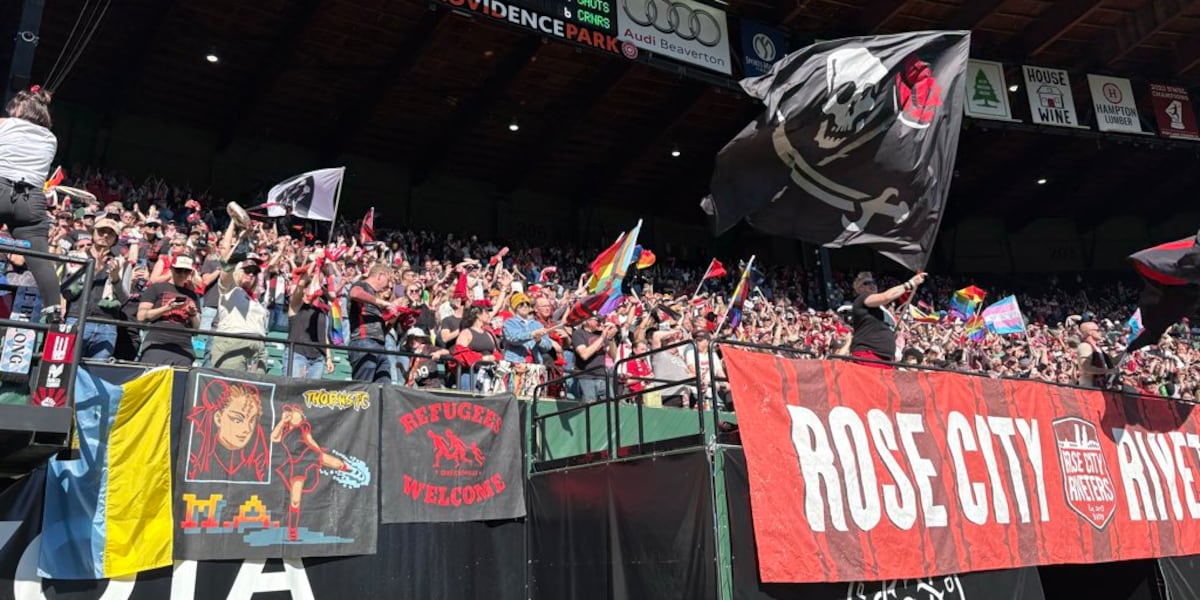
Portland Signs MOU With FIFA as 2031 Women’s World Cup Host Candidate
“Portland is the global epicenter of women’s sports. Our fans showed that in previously hosted women's world cup...

15-Year-old Girl Stabbed Outside Port Richmond High School
A 15-year-old girl was stabbed in the torso outside Port Richmond High School on Monday at 8:55 a.m.,...

Svi Mykhailiuk Scores Career-High 39 Points in Jazz Loss to Mavericks
Former Kansas guard Svi Mykhailiuk scored a career-high 39 points and hit 10 three-pointers off the bench Sunday...