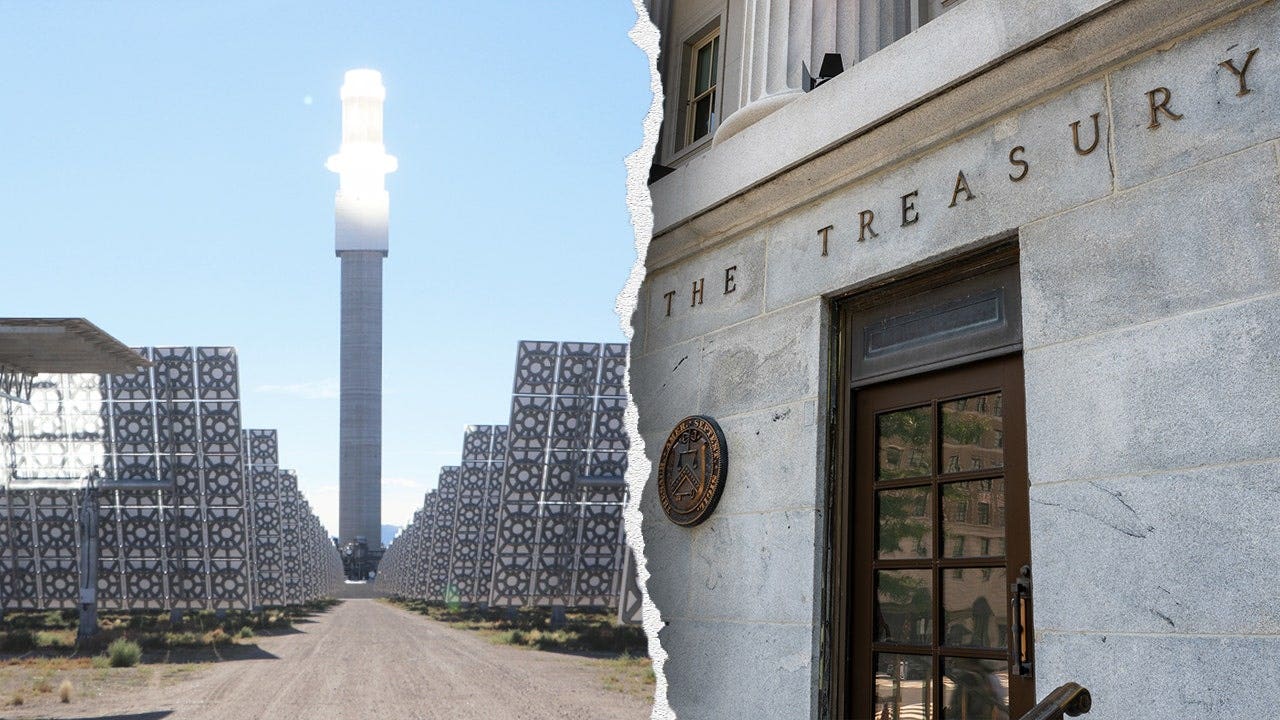
Financial backers of an unsuccessful solar facility in Nevada are expressing bewilderment over the decision of President Donald Trump’s Justice Department to uphold a Biden-era choice to drop a fraud complaint concerning a $275 million federal award a case they say could recover up to $1 billion for taxpayers.
According to the whistleblower complaint, Spanish infrastructure conglomerate ACS along with affiliated entities of its past subsidiary Cobra deceived government representatives into greenlighting the funding by asserting that the troubled Crescent Dunes solar facility was operational and prepared for deployment, despite having undergone significant structural difficulties and remaining inactive for months following a failure in its molten-salt reservoir.
The billion-dollar, government-backed project began operating in Nevada in 2015, utilizing an emerging solar technology with thousands of mirrors concentrating sunlight onto a central tower to heat molten salt for electricity generation after sunset. The facility later encountered severe engineering setbacks, recurring shutdowns, and dual bankruptcy filings before ultimately being auctioned off for a mere $7 million during the month of July.
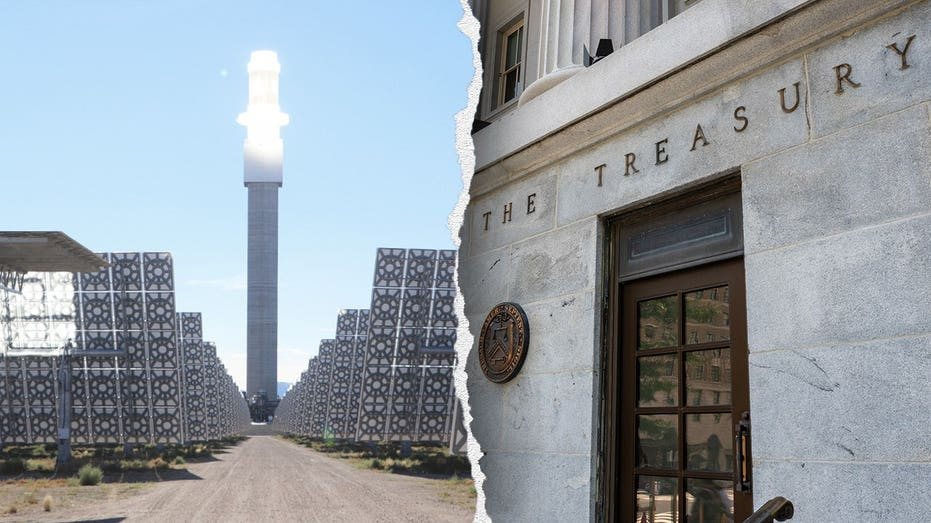
In 2020, private investors who had put $90 million into the project and suffered substantial losses filed their whistleblower lawsuit under the False Claims Act. Just forty-eight hours following Donald Trump’s successful re-election bid in November 2024, the Department of Justice under the Biden administration took steps to terminate the legal action, asserting that pursuing the matter would place an undue burden on federal authorities.
Even though the incoming Trump administration possessed the authority to reverse that stance, its Justice Department backed the previous administration’s termination via an April 2026 submission to a federal appeals court, maintaining that pursuing the litigation would deplete state assets and that statutory guidelines granted the agency extensive authority to conclude the proceedings.
Court filings reviewed by Fox News Digital indicate that neither administration put a dollar figure on the cost of continuing the litigation.
CMB, an investment group headed by Pat Hogan, is appealing the dismissal and urging the Trump Justice Department to ask the court to reopen the case. Hogan stated in a video interview that he contacted the department seeking help reviving the matter but received no commitment.
“It makes no sense,” Hogan told Fox News Digital in a video interview.”
“The real problem here is, why isn’t the government asking for this? All in all, I would say this has just been a fleecing of the federal government by a foreign entity. And we have the opportunity to fix it, and they’re doing nothing,” he said.”
Violations of the False Claims Act expose liable corporations to financial liabilities reaching three times the verified losses incurred by the state, alongside supplementary monetary penalties.
“This could be a billion dollars,” Hogan said.”
Tonopah Solar Energy, the plant’s former owner and one of the defendants, has dismissed the accusations as groundless within judicial documentation. Other companies named in the suit have also supported the Justice Department’s effort to dismiss it.
ACS, Actividades de Construcción y Servicios S.A., stands as one of the world’s leading construction companies, listed on the Bolsa de Madrid and forming part of the IBEX 35 index with a presence spanning the United States, Germany, India, Brazil, Chile, Morocco and Australia.
The group entered the U.S. market in 2005 through the establishment of Dragados USA, a wholly owned subsidiary of Dragados S.A., which secured an initial $428 million contract for New York City’s MTA East Side Access Manhattan Tunnels project and a subsequent $506 million MTA award in April 2008.
The central controversy revolves around whether Crescent Dunes achieved proper finalization and if Tonopah Solar Energy legally qualified to receive the $275 million Treasury award.
The funding originated from Section 1603 of a program launched under the 2009 economic stimulus package, part of the Obama administration’s green-energy push, which paid developers about 30% of qualifying construction costs once facilities were placed in service and ready for their intended use. Treasury weighed factors including whether a plant had passed critical tests and begun generating electricity.
Related reading

Michigan Blanks Northern Colorado for Third Shutout in Four Duals
The win marked the third shutout in four duals this season for the Wolverines. Michigan has outscored its...

Pistons at Hawks: Cunningham Probable, Duren Out for Sunday Matinee
Playing on a Sunday matinee at State Farm Arena, the Detroit Pistons visit the Atlanta Hawks following a...

No. 6 Texas Tops Southern Indiana 97-61 Behind Vokietaitis Double-Double
No. 6 Texas secured a 97-61 victory against Southern Indiana on Sunday at Moody Center, powered by a...

Dodgers Lose Skubal Pursuit as Walter’s Alleged Financial Probe Raises Spending Questions
"Free agent Tarik Skubal plans to sign with the Mets, agreeing to a nine-year, $450-million contract. It is...