
Washington and Beijing face off in China next month as artificial intelligence cements its status as the defining economic and geopolitical flashpoint between the world’s two largest economies, operating against the backdrop of an ongoing trade war.
Trump Stakes Claim on “Super Intelligence”
President Donald Trump insists the United States holds the decisive upper hand in this high-tech race. Branding the technology as “super intelligence,” the administration maintains that American dominance is non-negotiable.
Speaking in Ireland on September 13, Trump laid out the administration’s baseline stance.
The U.S. remains ahead of China, he argued, framing the contest in stark winner-take-all terms.
“We’re leading China in AI, we’re the most sophisticated country in the world, and frankly, I want to keep it that way because whoever wins AI, wins,” Trump said during his remarks.
Balancing State Visits and Diplomatic Friction
That posture of competitive urgency runs parallel to active diplomatic engagement. During a state visit to Beijing in May, Trump struck a notably cooperative tone regarding Chinese President Xi Jinping, pointing to a functional working relationship despite underlying friction.
The two leaders subsequently convened at the White House in September for another state visit. There, Trump highlighted progress across trade, national security, and technology sectors.
Unresolved Safeguards and the Trade Truce Gap
Yet that summit yielded a distinct policy divide. While Washington and Beijing agreed to extend an existing trade truce through January, negotiators failed to secure any binding bilateral agreements on implementing shared safeguards for artificial intelligence.
The absence of guardrails for advanced technology leaves a notable policy gap as trade negotiations continue. Tariffs remain the primary lever in the broader economic relationship, a dynamic that defined both of Trump’s terms in office.
Semiconductors and Next Month’s Beijing Summit
With another high-level meeting scheduled in China next month, the focus turns to whether bilateral talks can bridge the gap between commercial competition and technical safety standards.
As supply chains, semiconductor manufacturing, and advanced computing capacity remain heavily scrutinized by regulators on both sides of the Pacific, the upcoming visit offers the next major benchmark for the bilateral trade truce.
Keep reading

Keeping an eye on the polls – KOB 4
As the 2026 midterms approach, a non-partisan effort is unfolding across New Mexico to bridge the widening gap...

Building for Tomorrow is Better for Business Today – New York YIMBY
New York State is doubling down on a simple premise: building multifamily housing that barely touches the planet...
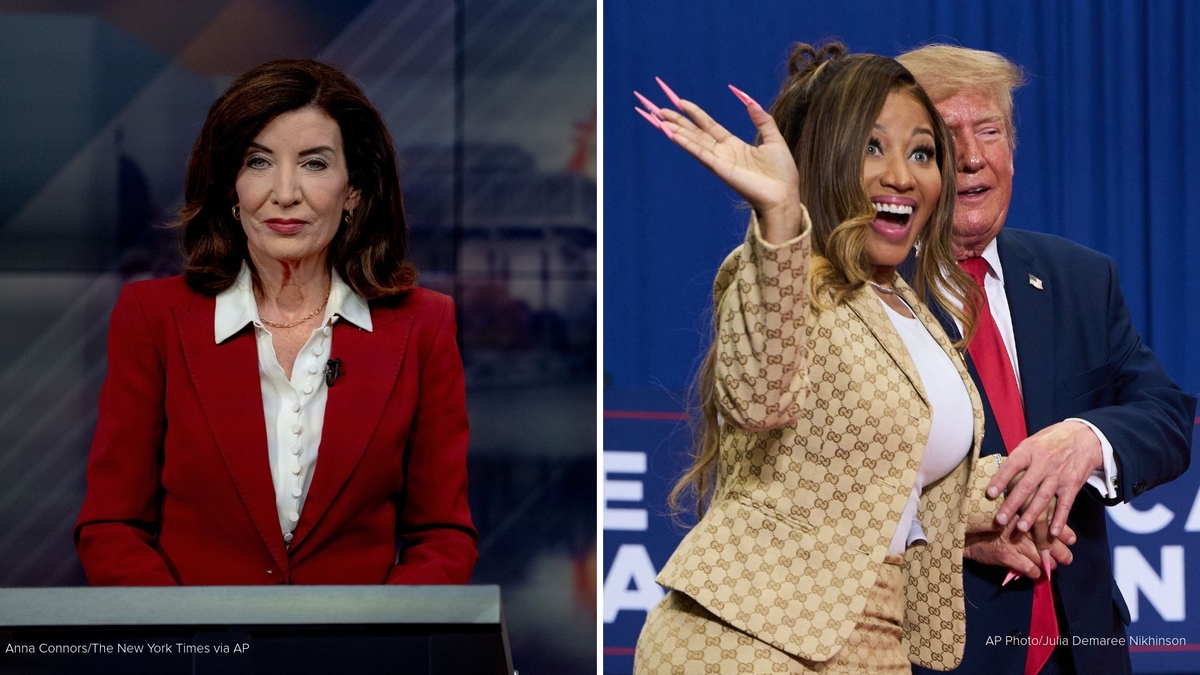
New York Governor Kathy Hochul responds after rapper Nicki Minaj calls her ‘evil
Rapper Nicki Minaj and New York Governor Kathy Hochul Trade Sharp Words in Final Days of Campaign New...

As Above, So Below Distillery | Santa Fe Spirits – New Mexico Magazine
Magic, Botanicals, and High-Rye Bourbon in Santa Fe Caley Shoemaker never expected a surplus of neighborhood fruit to...