“From Stettin in the Baltic, to Trieste in the Adriatic, an iron curtain has descended across the continent,” Winston Churchill famously declared in Fulton, Missouri, in 1946.
President Donald Trump has signed legislation into law that officially designates America’s National Churchill Museum as a National Historic Landmark. The museum, situated on the Westminster College campus in Fulton, Missouri, now holds the highest rank a historic site can receive in the United States.
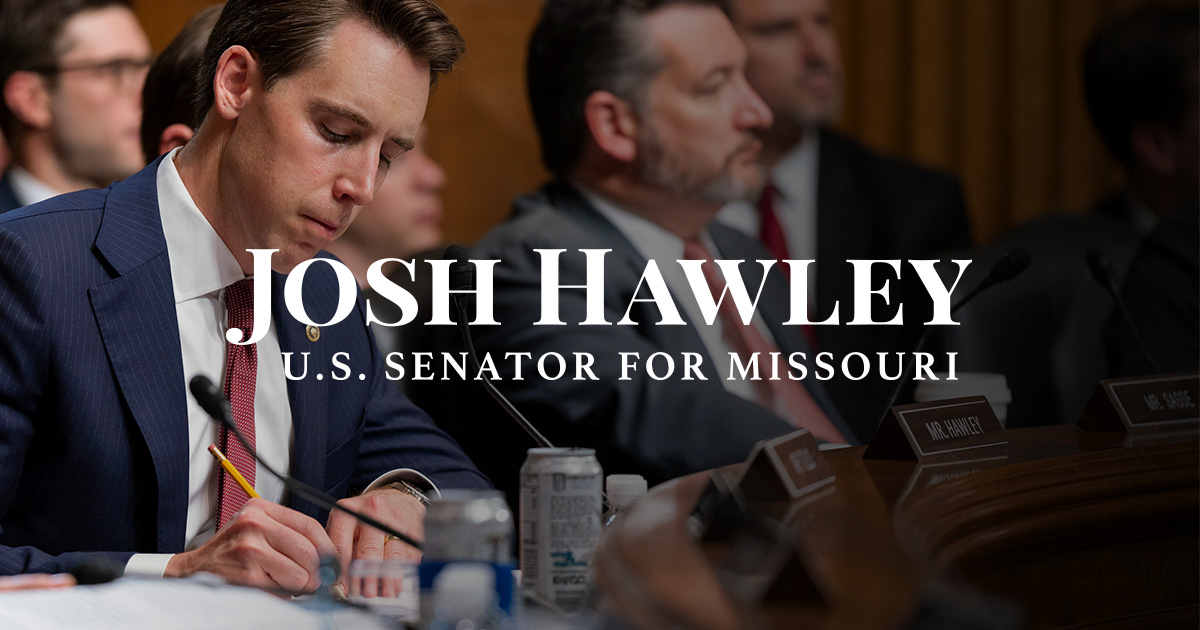
The bipartisan bill, which Senator Josh Hawley (R-Mo.) has been sponsoring since 2024, aims to cement the site’s role as a guardian of mid-20th-century history. According to Senator Hawley, the designation recognizes the museum as a symbol of the principles at the heart of the American experiment.
The legislation directs the Secretary of the Interior to establish the museum as a National Historic Landmark and mandates that the National Park Service conduct a Special Resource Study to evaluate the site for potential future designations. Timothy Riley, the director and chief curator of America’s National Churchill Museum, told 939 the Eagle that the unanimous congressional support confirms the site’s importance.
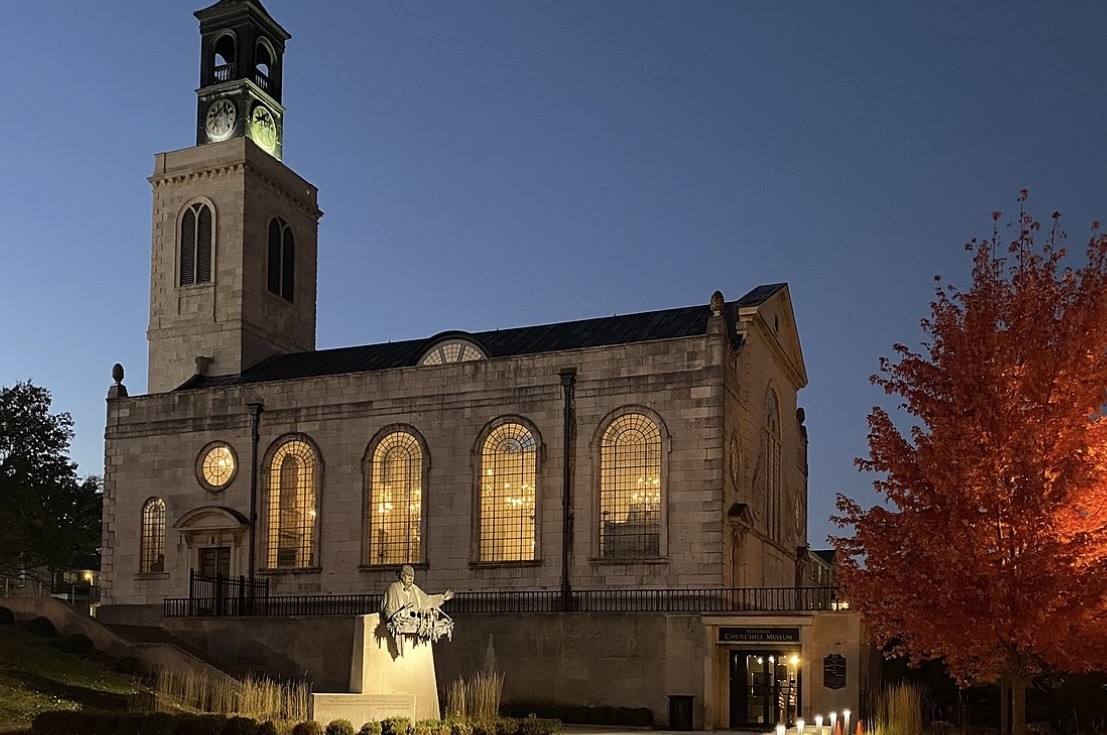
A legacy built stone by stone
The museum’s physical presence is itself a piece of historical reconstruction. During the 1960s, to mark the 20th anniversary of Churchill’s visit, Westminster College imported the 17th-century church of St. Mary Aldermanbury from London. The structure was moved to the Fulton campus stone-by-stone, with reconstruction reaching completion in 1969.
Beyond the architecture, the site serves as a crossroads for American political history. While Churchill’s 1946 speech alongside President Harry S. Truman remains the most prominent event, the campus has hosted a long list of leaders.
As 939 the Eagle reported, President Gerald Ford spoke at the college in 1977, and the site has seen visits from Vice Presidents Hubert Humphrey (D) and George H.W. Bush (R), as well as former President Ronald Reagan (R).
“It will put us on par with the St. Louis Arch, Liberty Hall, so many other national landmarks. It’s the highest rank that historic sites can receive in our country,” Timothy Riley told 939 the Eagle.
The designation provides more than just prestige; it places the museum in a specific tier of federal recognition reserved for sites of “outstanding historical significance.” This distinction often serves as a precursor to broader federal involvement or expanded preservation efforts through the National Park Service.
The weight of the designation
For the community in mid-Missouri, the move validates local heritage. The bill was a collaborative effort, with U.S. Representative Bob Onder (R) serving as the House sponsor to complement Senator Hawley’s work in the Senate.
While the designation is largely symbolic and celebratory, it also functions as a formal acknowledgement of the site’s connection to global shifts in diplomacy. The “Iron Curtain” speech remains one of the most consequential rhetorical moments of the Cold War era, and by enshrining the location, the federal government is effectively codifying the site as a permanent classroom for the history of Western democracy.
The political dimension of the bill reflects a rare moment of bipartisan consensus on a piece of cultural preservation. By moving the legislation through both chambers of Congress, supporters ensured that the museum’s status would not be subject to the usual partisan friction found in modern legislative cycles.
“But I would suggest even something more: as a commemoration and mark of what we hold dearest together, what we most cherish as Americans, because that church symbolizes, really, the cradle of our civilization; the values that underlie who we are as a people; the sanctity of the individual; the rights of individual conscience; the right to worship; the liberties that flow to us not from a government, not from a bureaucrat, but from almighty God,” Senator Hawley said during a floor speech regarding the passage of the legislation.
Four-Unit Multi-Family Property Listed for Sale in Manchester
A four-unit multi-family property at 352 Laurel Street in Manchester, New Hampshire, was listed for sale on Friday...

Minnesota State Baseball Secures Six New Recruits
Minnesota State baseball head coach Matt Magers has secured six new recruits to bolster the roster for upcoming...

Detroit Lions CEO Rich Haddad Announces Munich Community Initiatives
The Detroit Lions are building two playgrounds in Munich to support local youth development, Detroit Lions team president...

Michigan Townships Reject Road Closures for Ironman 70.3 Event
Crystal Lake, Lake, and Platte townships have all voted to reject road-use agreements for the Ironman 70.3 Michigan,...