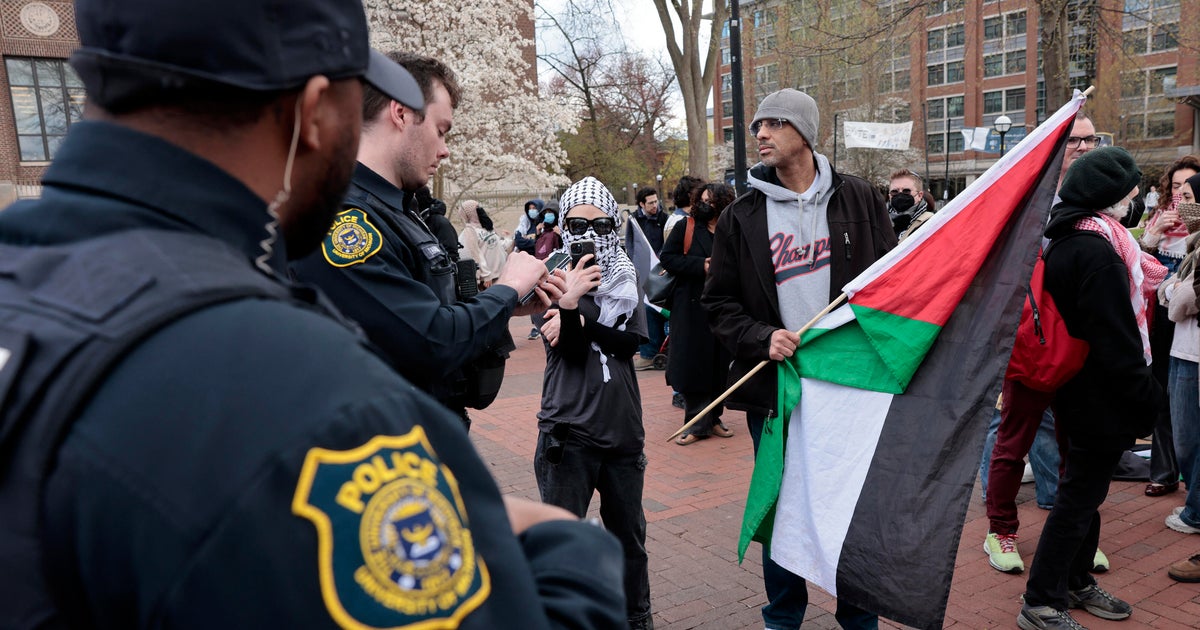
The University of Michigan Faculty Senate passed a resolution last Thursday pledging individual financial support to the legal defense fund of twelve activists currently facing federal conspiracy and vandalism charges.
The motion, which passed with 1,042 votes in favor to 747 against. The resolution passed Thursday with 1,042 votes (58.2%) in favor and 747 (41.8%) against. Another 636 abstained.
The resolution centers on the group known as the “Michigan 8,” though the number of defendants grew to 12 after federal prosecutors added four more individuals to the case in October.
These activists face allegations ranging from conspiring to threaten university officials and law enforcement to acts of vandalism against private businesses and the Jewish Federation of Metropolitan Detroit. Federal prosecutors allege the group utilized encrypted communications to coordinate late-night actions, including throwing glass jars filled with butyric acid through windows.
The faculty resolution, introduced by Adi Saleem, an assistant professor of Romance languages and literatures and Judaic studies, explicitly rejects the government’s characterization of the group’s actions. Instead, the Senate describes the federal charges as “wildly exaggerated” and argues that the prosecution serves as a tool for political repression against pro-Palestinian activism and labor organizers.
The document further declares a lack of confidence in the university administration’s handling of negotiations with the Graduate Employees’ Organization (GEO) and in the University of Michigan Police Department.

The intensity of the divide over these events is reflected in the following voting breakdown:
| Outcome | Votes | Percentage |
|---|---|---|
| In Favor | 1,042 | 58.2% |
| Against | 747 | 41.8% |
| Abstained | 636 | N/A |
“We are appalled by the University of Michigan Faculty Senate's vote to approve a resolution in support of students accused of participating in a coordinated campaign of threats, vandalism, witness intimidation and attacks against homes, businesses, and Jewish institutions, including our own,” the Jewish Federation of Detroit said in a statement.
“We are appalled by the University of Michigan Faculty Senate’s vote to approve a resolution in support of students accused of participating in a coordinated campaign of threats, vandalism, witness intimidation and attacks against homes, businesses and Jewish institutions, including our own,” the organization said in a statement.
Prosecutors have linked the defendants to the use of specific symbols to target community institutions. The group allegedly spray-painted red inverted triangles—a symbol used in Hamas military propaganda to designate targets—on the Jewish Federation’s Max M. Fisher building. The incident reportedly occurred on October 7, 2024, the one-year anniversary of the Hamas-led attacks.
For the university administration, the situation presents a difficult balance between maintaining campus safety and upholding academic freedom. A university spokesman said that while the institution is committed to freedom of expression, “threats, violence, discrimination and harassment have no place on our campus.” The spokesman further emphasized that the university unequivocally condemns antisemitism in all its forms.

The faculty resolution also draws parallels to broader federal investigations, citing subpoenas served to the GEO and past felony charges against the union’s president, Hiab Teshome, which were ultimately dismissed in district court.
By framing these legal challenges as part of a systemic effort to repress speech, the Faculty Senate has positioned itself at the center of a national debate regarding the limits of protest on American campuses. As the federal case against the 12 defendants proceeds, the legal defense fund associated with the group has reportedly raised more than $150,000.
Keep reading

Ohio House Advances Bill to Lower Concealed Carry Age to 18
The Ohio House passed legislation on November 18 that would lower the minimum age for carrying a concealed...

Colorado State Rallies Past North Dakota State 71-64 Behind Jorgensen’s 17 Points
Colorado State secured a 71-64 victory over North Dakota State on Wednesday in Fort Collins, rallying from a...

NY Senate Democrats Re-elect Stewart-Cousins as Majority Leader, Lift Term Limits for Supermajority
Senator Andrea Stewart-Cousins secured another two-year term as New York State Senate majority leader on Monday, emerging at...

Newark Holiday Calendar: Turkey Trot, 40th Thanksgiving Breakfast, Winterfest Changes, Menorah Lighting
As the holiday season approaches, Newark prepares for several traditions, including the 40th anniversary of the community breakfast...