
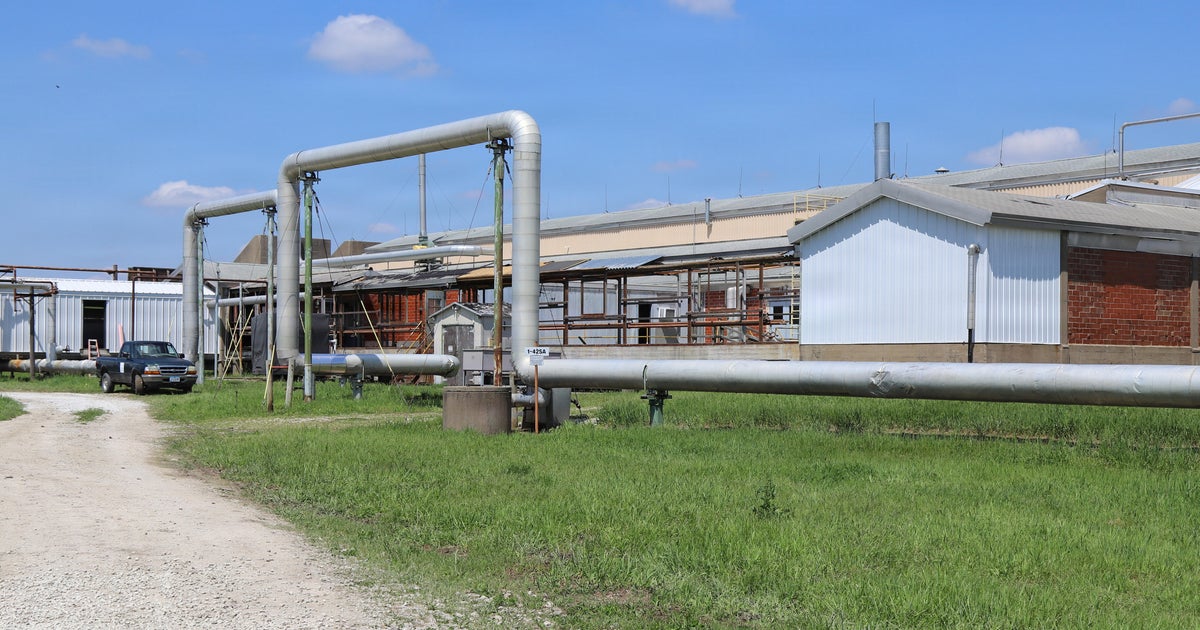
The U.S. Army delayed the controlled detonation of degraded lead azide explosives at the Iowa Army Ammunition Plant from Friday, Nov. 20, to Wednesday, Nov. 25, after elected leaders and environmental groups warned that a toxic dust plume could spread across eastern Iowa and northwest Illinois, News Bureau and CBS News reported.
Acting Secretary of the Army Adam Telle announced the postponement Thursday evening, writing on X that the delay would move the operation to “the latest possible moment prior to a forecasted temperature drop, which would risk further destabilization of the material.”
The plan calls for two controlled detonations of 68 barrels totaling about 10,000 pounds — roughly 5 tons — of lead azide, a World War I-era explosive that has recrystallized in storage and become increasingly sensitive to friction and shock, according to the Environmental Protection Agency.
Three main factors drive plume modeling
Scientists model contaminant plumes using three main factors: source strength, weather, and surface geography, Vishal Verma, professor of civil and environmental engineering at the University of Illinois Urbana-Champaign, told News Bureau. Source strength covers the amount of lead released, the fraction that becomes airborne, particle size distribution, and the height the explosion lofts the plume.
Meteorological inputs include wind speed and direction, atmospheric stability, vertical mixing, mixing-layer height, and precipitation. Surface roughness — fields, forests, buildings — and terrain features such as hills, valleys, and river corridors also shape transport and dispersion.
When the atmosphere is stable, such as during a temperature inversion, vertical mixing is limited and the plume stays closer to the ground, concentrated, and can travel farther before diluting, Verma said. Wind direction determines where the plume goes; wind speed affects how far fine particles travel and how quickly they spread. Precipitation scavenges particles from the air and deposits them onto surfaces, accelerating removal.
Particle size governs settling. Larger particles — tens of micrometers or greater — fall rapidly near the source. Finer particles remain airborne for hours or longer, travel farther at progressively lower concentrations, and penetrate deeply into the respiratory system. Lead-containing particles are 2–4 times denser than ordinary soil dust, so they generally settle faster than soil particles of comparable size, Verma told News Bureau.
Water contamination and exposure pathways
Surface water contamination is expected to be more localized, particularly near the source and in smaller water bodies, Verma said. Large rivers such as the Mississippi provide substantial dilution. Smaller, relatively stagnant water bodies — farm ponds, livestock watering tanks, rain barrels, and cisterns that collect roof runoff — may be more vulnerable.
Rainfall or snowmelt can transport settled particles into ditches and streams. Most lead compounds have low solubility and bind strongly to soil, tending to remain close to where they were deposited rather than traveling long distances downstream. The immediate public health concern is likely inhalation of airborne particles or exposure to contaminated soil and dust, especially for young children.
Public protective measures
Individuals cannot control the source or atmospheric transport of the plume; actions are most effective at reducing personal exposure, Verma said. Official advisories recommend staying indoors when advised, keeping windows closed, and setting HVAC systems to recirculation mode. Portable air cleaners with HEPA filtration can help.
Exposed surfaces should be cleaned using wet methods — damp wiping and mopping — while dry sweeping, dusting, or leaf blowers should be avoided because they re-suspend particles. Removing shoes before entering the home minimizes tracking contaminated dust indoors. A properly fitted N95 respirator captures 95% of airborne particles in the expected size range; a 100-series filter such as P100, N100, or R100 captures 99.97%.
Political and legal response
U.S. Sen. Tammy Duckworth (D-Ill.) called the operation “poorly planned and poorly communicated,” writing on X that “families were abruptly told to avoid the area, unsure if they would return to broken homes and whether their air and water could be at risk due to toxic lead exposure.” U.S. Sen. Dick Durbin (D-Ill.) called for a community town hall before the detonation.
Earthjustice filed a lawsuit in the 8th U.S. Circuit Court of Appeals on behalf of the Iowa Environmental Council and the Sierra Club Iowa Chapter, challenging the emergency permit granted by the EPA.
“We were very concerned about the very short notice that people in Iowa had to prepare,” said Kerri Johannsen, senior director of policy and programs with the Iowa Environmental Council. Michael Schmidt, general counsel at the Iowa Environmental Council, noted in a news release that the EPA itself says there is no safe level of exposure to lead.
The detonation is now scheduled for Wednesday, Nov. 25.
More on Iowa Environmental Council
Worth a look
New York Historical Marks Marilyn Monroe Centennial With Lawrence Schiller Photographs
The New York Historical opened “Marilyn Monroe Centennial: Photographs by Lawrence Schiller” on Nov. 20, marking the 100th...

Jeffrey Lee Klick, 71, Woodward Banker and Farmer, Dies
Jeffrey Lee Klick, a longtime banker and farmer in Woodward, Oklahoma, died Nov. 17, 2026, at age 71...

Miami Women’s Basketball Opens 6-0 for First Time, Travels to Cancun Challenge
Miami women's basketball opened a season 6-0 for the first time in program history, Miami University RedHawks reported....

Clark Hall Arranges Lully Passacaille for Modern Wind Band
Oboist Clark Hall arranged a Passacaille by Jean-Baptiste Lully for modern wind band, and the Grand Forks City...