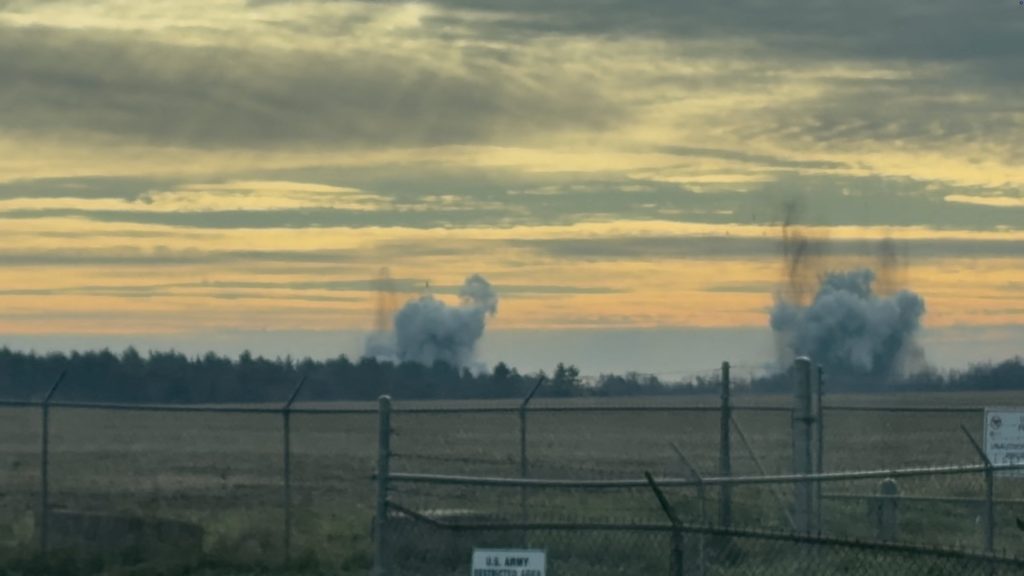
The U.S. Army detonated roughly 10,000 pounds of unstable lead azide at the Iowa Army Ammunition Plant near Middletown on November 25 after a federal court authorized the operation. Officials declared the controlled blasts a success and said air monitoring detected no lead release, though environmental groups and some residents remain unconvinced.
Two controlled detonations destroyed the nation’s entire stockpile of the bomb‑making compound, which had become prone to spontaneous explosion as temperatures dropped, PBS News Hour reported. Maj. Gen. Eric Shirley said “every indication is that all of the munitions that were employed absolutely reduced the lead azide threat.”
How was the blast contained?
The Army lined the site with earthen berms, spray foam and canisters holding 100,000 gallons of water to drive the explosion downward and trap airborne particles. FEMA Administrator Cameron Hamilton stated, “We’re finding a 0.0 detection level of lead in the atmosphere.”
An Army spokesperson added that the mitigation plan “ensured that the blasts drove the explosion into the ground and followed a blast channel that was designed to go down the right path to minimize any sort of dispersion of lead into the atmosphere, 100 percent as planned.”
What was the predicted risk area?
Pre‑blast modeling showed a potential lead plume drifting up to 100 miles southwest into Missouri. Missouri’s governor said mitigation efforts appeared successful. Iowa, Illinois and Missouri all said they were monitoring the blast’s effects.
How did residents react?
Lucy Giehl of Burlington said officials told people to “just hose everything down and it’ll go away… or just wipe it down with a baby wipe, no problem. And there was nothing said about PPE. So, yes, people are completely unprepared.”
Daren Morris of Middletown, closer to the plant, said, “It was a big deal. It ain’t now… I think they contained pretty much all — I mean, a lot of it.”
Independent universities conduct air sampling
Eliza Billingham of Iowa Public Radio told PBS that the University of Iowa and the University of Illinois are conducting independent air sampling, with results expected in several days. “Some people have really lost trust in the Army, the EPA, with the back‑and‑forth that’s been going on for this past — these past 10 days,” she said.
Did people evacuate?
The Army recommended voluntary evacuation within a five‑mile radius. Billingham observed that “someone passing through probably wouldn’t have known that this detonation was happening today,” noting residents returned by late morning and normal activity continued in Burlington, about 10 miles away.
Environmental groups demand full blast accounting
Environmental groups that sought to block the detonation in court are demanding a full accounting of the blasts’ effects. Independent university monitoring results are due within days.
Keep reading
- North Dakota loses 73-72 to Southeastern Louisiana in Mayan Division Championship
- 14-Year-old Girl Dies in Montpelier Apartment Fire, Over a Dozen Displaced
- Luke Ferraris Set for South African Racing Return in 2027 After Hong Kong Success (archyde.com)
- US Army detonates five tons of unstable explosives in Iowa (newsarchyuk.com)

North Dakota loses 73-72 to Southeastern Louisiana in Mayan Division Championship
North Dakota lost to Southeastern Louisiana 73-72 in the Mayan Division championship of the Cancun Challenge on Wednesday...

14-Year-old Girl Dies in Montpelier Apartment Fire, Over a Dozen Displaced
A 14-year-old girl died in an apartment fire that displaced more than a dozen residents on Cummings Street...
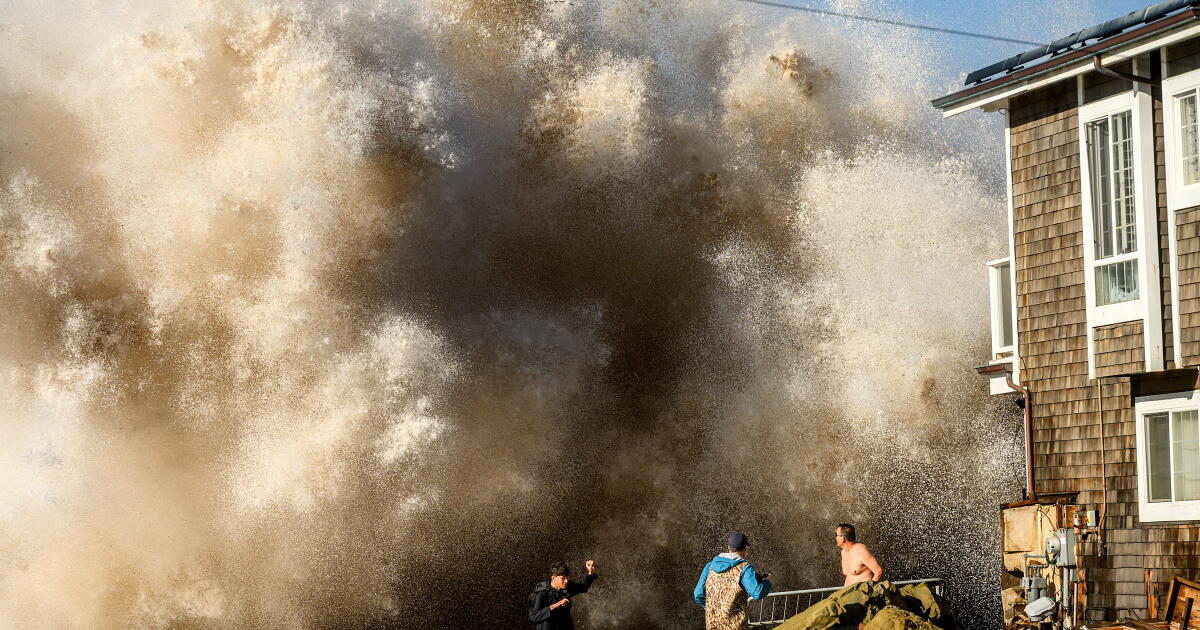
King Tides, Monster Waves Collapse Pacifica Pier, Flood California Coast
King tides and 20- to 30-foot waves breached seawalls, flooded homes and collapsed a section of the Pacifica...

Wyoming Left Tackle Rex Johnsen Plays Final Home Game Saturday
Wyoming left tackle Rex Johnsen will play his final home game Saturday against UConn at War Memorial Stadium,...