
Japanese Prime Minister Sanae Takaichi arrived at the APEC summit in Shenzhen on November 18 to a reception Japanese officials and media called a deliberate diplomatic snub: no tarmac ceremony, no serving official to greet her, and mobile stairs that stopped 40 centimeters below her aircraft door, forcing her to hold the frame while stepping down. Beijing denied any breach of protocol, but the contrast with the full honors given other leaders — including South Korean President Lee Jae-myung — was immediate and visible.
The Tarmac Incident
At the welcome dinner, Takaichi tried to speak with Xi Jinping. The exchange was brief and, in one observer’s words, “his reaction was cold.” The two shook hands twice; during the second handshake on November 19 they spoke for about 10 seconds. Takaichi stood in the back row of the official group photo, second from the right. No formal bilateral meeting was held.
Why the Freeze Began
The rupture traces to November 7, 2025, when Takaichi answered a parliamentary question about a hypothetical Chinese blockade of Taiwan. She said that if warships were deployed and force used, some cases could amount to a “survival-threatening situation” under Japan’s security legislation — a threshold that can trigger the right of collective self-defense.
Beijing interpreted the remark as a sign that Japan would intervene militarily over Taiwan and demanded she withdraw it. Tokyo has not done so.
Takaichi’s stance is consistent with her long-held positions. In March 1995, as a lower-house lawmaker, she told the Foreign Affairs Committee she felt no personal remorse over the war and saw no reason to be asked to express it.
She has visited Yasukuni Shrine, which honors Japan’s war dead including convicted Class-A war criminals — a recurring flashpoint with Beijing. At the previous APEC summit in Gyeongju on October 31, 2025, she and Xi had agreed to work toward stable ties. A week later, her parliamentary answer undid that momentum.
Chinese President Xi Jinping shook hands with Japanese Prime Minister Sanae Takaichi on Wednesday, the first official interaction between the two since ties deteriorated late last year in the wake of comments made by Takaichi about Taiwan https://t.co/3S8dTO5EWe
What the 1972 Communique Says
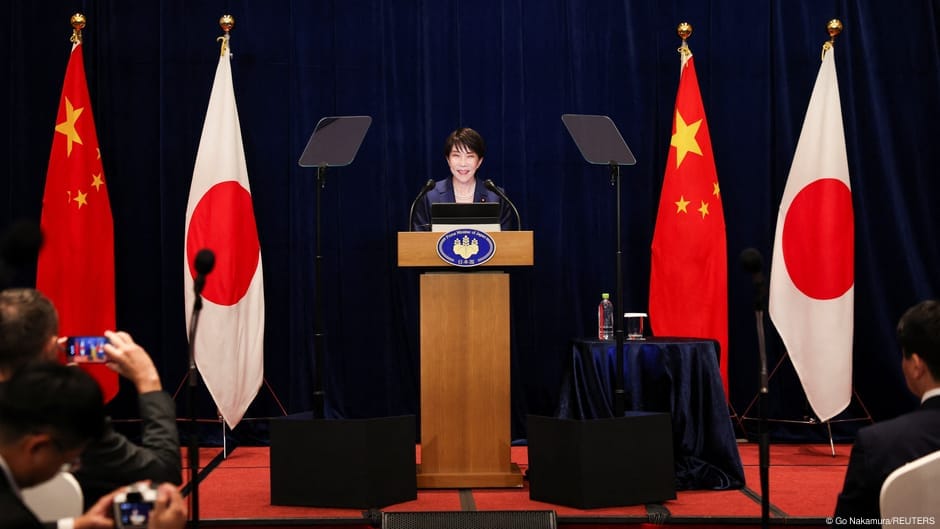
At her November 19 press conference in Shenzhen, Takaichi declined to answer hypothetical questions about Taiwan and said Japan’s basic position follows the 1972 Japan-China Joint Communique. Article 2 of that document recognizes the government of the People’s Republic of China as the sole legal government of China.
Article 3 records Beijing’s position that Taiwan is an inalienable part of its territory, and Japan states it “fully understands and respects” that stand while firmly maintaining its position under Article 8 of the Potsdam Proclamation. Beijing has pressed Tokyo to spell out that position in full rather than simply cite the document, and has kept demanding Takaichi withdraw her 2025 parliamentary answer.
Japan’s Strategic Pivot to Southeast Asia
Rather than retreat, Tokyo has accelerated a strategic shift toward Southeast Asia. In May, Takaichi launched her version of the Free and Open Indo-Pacific strategy in Vietnam — a deliberate move eastward from the India launch of the Kishida version in 2023 and the Kenya launch of Abe’s original in 2016.
Chinese scholar Wang Guangtao of Fudan University said the change in location reflects an eastward shift in Japan’s Indo-Pacific strategy, with ASEAN’s centrality becoming increasingly prominent.
In April, Tokyo unveiled POWERR Asia, a $10 billion financing initiative to help Asian countries secure energy supplies and diversify critical-mineral access. Japan also relaxed longstanding arms-export restrictions in April, allowing lethal-weapon exports to 17 eligible countries, including several in Southeast Asia.

At the same time, the U.S. factor has grown more uncertain. At the Shenzhen summit, President Trump held his own talks with Xi and joined a first-ever U.S.-China-Russia trilateral meeting. Trump later briefed Takaichi by phone, but Tokyo still lacks a direct channel to make its own case to Beijing.
Analyst David Adebahr of Kobe University said Beijing now believes it holds more cards: Japan’s dependence on Chinese rare earths, a growing Chinese military presence around Japan sometimes in coordination with Russia, and a U.S. administration that has urged Tokyo to de-escalate rather than firmly back it.
Media Split over Takaichi as Polls Show China Policy Support
Japanese media coverage split sharply. Outlets including Asahi Shimbun and Mainichi Shimbun criticized Takaichi for achieving little diplomatically and deepening her isolation. But Kyodo News polls showed 54.7% of respondents supported her China policy, and Cabinet approval ratings across eight major outlets ranged from 42.4% to 62.6%.
Emeritus professor Noriyuki Kawamura of Nagoya University of Foreign Studies said the image of Takaichi refusing to back down despite the insult could rally her conservative base. “From their perspective, Prime Minister Takaichi did not give in to the cold shoulder and calmly shook hands with Mr. Xi Jinping twice,” he said.

Commentator William Yang described the scene: “The level of frostiness from the Chinese side was on full display from the moment Takaichi’s plane landed,” and the ice did not break when she tried to speak to Xi at the dinner.
Another observer said “I cannot think that the issue with the plane steps was anything other than deliberate and there was a huge contrast between the welcome she received and virtually everyone else.”
As long as Takaichi and Xi remain in office, a lasting thaw looks remote, according to multiple analysts. Beijing has little incentive to offer a face-saving compromise, Adebahr said, though its reliance on coercion could backfire by prompting Japan to increase defense spending and seek closer ties with other partners.
Japan’s next moves will likely include deepening bilateral defense ties with Southeast Asian nations, expanding the Official Security Assistance framework launched in 2023, and maintaining its public position on Taiwan without offering the retraction Beijing demands. The next scheduled high-level contact is unclear; former Foreign Minister Iwaya’s September meeting with Wang Yi produced no breakthrough, and no new bilateral summit has been announced.

Russia’s State Duma Approves $609B Three-Year Defense Budget, Cuts to Health and Education
Russia's State Duma approved a three-year federal budget on Tuesday that directs more than $600 billion toward defense...
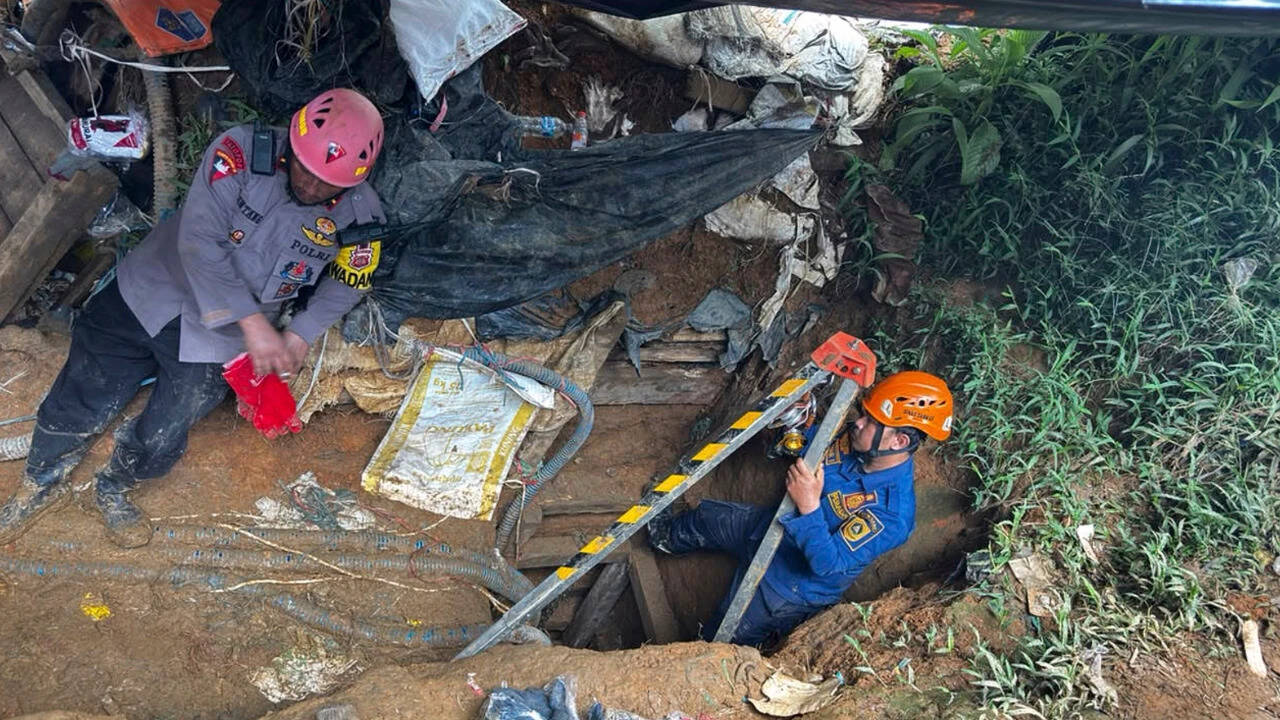
Rescuers Recover Three Bodies, Search for 23 Trapped in Indonesian Mine
Rescuers recovered three bodies on Wednesday and continued searching for 23 miners trapped in a flooded illegal gold...

Somalia Cabinet Approves Electoral Law Changes With Closed List
Somalia's cabinet approved sweeping electoral law changes on Tuesday, adopting a closed-list system and a 10 percent national...

Russia’s Lower House Approves Tax Hikes to Fund War Spending
Russia's lower house of parliament approved a three-year federal budget Tuesday that directs 17.15 trillion rubles — roughly...