Jungle terrain across Oahu now serves as the testing ground for autonomous ground vehicles that the Army could deploy to haul supplies, ammunition, and wounded fighters from the front lines.
Six companies are competing for cash awards and possible Army contracts under the Army Pathway for Innovation and Technology program, Stars and Stripes reported. The Global Tactical Edge Acquisition Directorate oversees the testing at Marine Corps Training Area Bellows, guiding technologies quickly into the hands of soldiers through an accelerated capability event.
U.S. Army Pacific set the priorities for the evaluation, focusing on logistical resupply, movement of weapons, and front-line medical evacuations, according to Col. Chris Hill, head of the directorate. Soldiers provide the critical on-the-ground feedback for the commercial vendors.
“They are the ones giving the on-the-ground feedback,” Hill said. “It’s not an engineer back in Huntsville. It’s not an engineer, you know, back in D.C. It’s the soldier that’s giving it directly to the company.”
This marks the first accelerated capability event held with U.S. Army Pacific, with quarterly exercises planned moving forward. The ground drones navigate paths through dense jungle growth, swamp, and mud to test their endurance, ease of use, adaptability, and vulnerability to electronic warfare.
Operating vendors trained the participating soldiers quickly. Spc. Cory Johnson of the 25th Infantry Division’s 3rd Mobile Brigade tested the battery-powered Siderunner Pro, built by Denver-based Stridar Inc.

“I picked it up quickly — 30 minutes is all it took,” Johnson said after testing the vehicle. “I don’t play video games or have any background of that. I mean, anybody of any age can pick it up easily.”
The Siderunner carries up to 500 pounds over off-road terrain and operates for about 15 hours on a single charge, according to Adithya Narayanan, a Stridar software engineer. The modular vehicle has already seen use in Ukraine and costs $45,000 equipped with software and an operating computer, Narayanan stated.
BlueSky Innovations brought a heavier tracked vehicle named jEKYLL. The electric-powered machine can tow up to 22,000 pounds and carry nearly 2,000 pounds at a top speed of 10 mph. Measuring only 31 inches wide, Mark Weathersby, the company’s director of robotics, said that operators could drive it right through a front door.
For high-speed transport, Detroit-based Dataspeed Inc. entered the Tweedle. Powered by a gasoline engine, the lawnmower-sized vehicle reaches top speeds of 60 mph with a range of 125 miles on a single tank, carrying 500 pounds and towing an additional 1,300 pounds, software engineer Olivia Herbert explained. Its fully autonomous model costs approximately $30,000.
Winning companies from the competition will be announced on Friday.

ICE Agents Arrest Minnesota Man Seeking Legal Status After Video Shows Force
Federal agents arrested a 45-year-old Minnesota man named Jose Ruelas Viorato in Robbinsdale on Wednesday, an incident captured...

Comedian and Yes, Dear Actor Anthony Clark Dies at 62
Anthony Clark, the sharp-witted stand-up comedian and actor best known for his role as Greg Warner on the...
Michigan 84, Marquette 70 – MGoBlog
Michigan men’s basketball secured an 84-70 victory over Marquette in Ann Arbor, marking a rebound following a road...
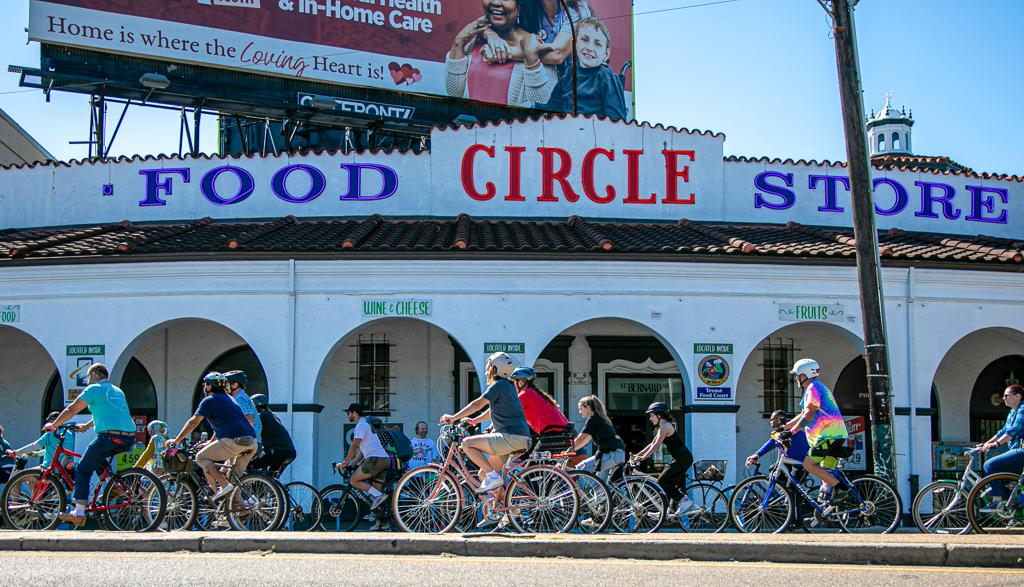
New Orleans Cyclists Build Community Through Social Riding Groups
Bicycle riders across New Orleans are increasingly using two wheels to build social connections despite narrow lanes and...