Federal investigation targets New Mexico school gender policies
The U.S. Department of Education is investigating Albuquerque and Santa Fe Public Schools over policies that allow students to use different names and pronouns without notifying their parents, KOAT reported.
The federal inquiry focuses on whether these district practices violate parental rights by withholding sensitive information regarding a student’s identity. While the investigation proceeds, school officials and advocates remain divided on whether these policies serve as essential safety measures or a breach of family transparency.
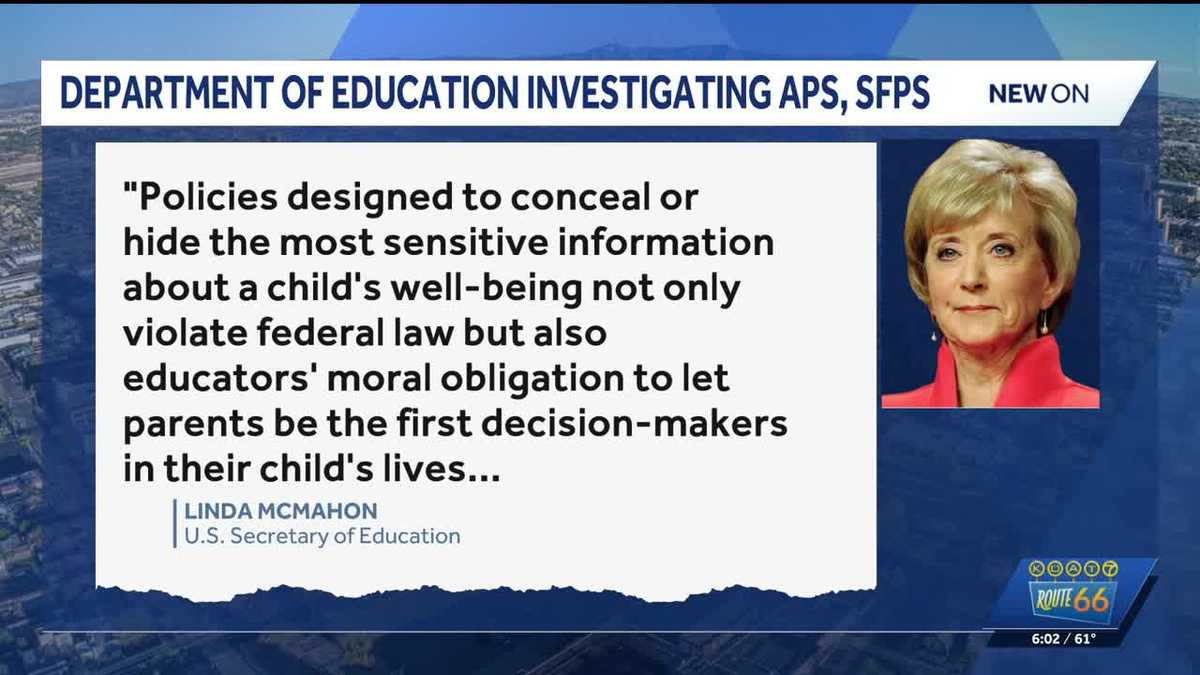
U.S. Secretary of Education Linda McMahon addressed the situation directly, stating the federal government will take a firm stance. She argued that keeping parents unaware of such changes undermines their role in their children’s lives.
“Policies designed to conceal or hide the most sensitive information about a child’s well-being not only violate federal law but also educators’ moral obligation to let parents be the first decision-makers in their child’s lives,” McMahon said in a statement.
McMahon added that the Department of Education intends to “vigorously investigate these allegations and hold districts accountable to bring parents out of the dark.”
Albuquerque and Santa Fe respond differently to federal scrutiny
The two districts involved have taken different public positions regarding the scope of the investigation and their current administrative procedures.
Albuquerque Public Schools (APS) confirmed they are aware of the federal scrutiny. The district maintained that its current practices are legally compliant, stating that APS policies and procedures adhere to FERPA guidelines.
APS noted they have been notified of the investigation and plan to respond through appropriate legal and administrative channels.
Santa Fe Public Schools, however, reported that they have not yet been officially contacted by the U.S. Department of Education regarding the announced probe. The district stated it will cooperate and respond appropriately should an official inquiry arrive.
Unlike the focus on FERPA by APS, Santa Fe Public Schools highlighted its specific requirements for parental involvement. The district noted that its policies require parental involvement and consent for changes to a student’s name or gender marker within the official student information system.
A spokesperson for Santa Fe Public Schools emphasized the district’s goal of maintaining a “safe, welcoming, and respectful learning environment where every student feels valued and supported.”
The conflict between safety and transparency
The investigation highlights a growing tension in American education between student privacy and parental rights. For many advocates, the ability to use preferred pronouns and names in a school setting is a matter of psychological safety.
Proponents of these policies argue that students who are not out to their families may face risks at home. In these views, schools act as a necessary sanctuary where students can explore their identities without immediate domestic repercussions.
Conversely, the federal investigation is built on the premise that parents have a fundamental right to be informed about significant changes in their child’s social or emotional life. This perspective suggests that school districts may be overstepping their authority by creating a separate identity for a child that is hidden from their legal guardians.
The outcome of this investigation could set a precedent for how federal education oversight is applied to local district policies across the country. If the Department of Education finds that these policies violate federal law, it could force school districts nationwide to overhaul their privacy protocols and parental notification requirements.
For families in New Mexico, the stakes involve the balance of authority between the state, the local school board, and the household. For students, the stakes involve whether the school remains a space where they can express themselves without fear of immediate disclosure.
As the investigation moves forward, it remains unclear how many specific instances of non-disclosure the federal government will examine, or how the districts will defend their specific implementation of privacy laws.
Worth a look

Four Arrested in Murder of 15-Year-Old Austin Payne in Albany
Four charged in shooting of 15-year-old Austin Payne Austin Payne called his mother on Halloween night to tell...
Nashville Woman Files $150 Million Lawsuit Against Ascension
Linda Gilbert seeks $150 million in lawsuit against Ascension Saint Thomas A Nashville woman is suing Ascension Saint...

RIDOT to Begin Kingston Station Railroad Bridge Replacement
RIDOT to replace Kingston Station bridge The Rhode Island Department of Transportation (RIDOT) will begin a major replacement...

Art Fabrication and Resource Directory: Oregon and Washington
Regional arts resources expand in the Pacific Northwest The Regional Arts & Culture Council (RACC) has released a...