“President Trump’s actions to secure the border, get criminal illegals off our streets, and restore safety to our communities drove a historic decrease in homelessness,” said Housing and Urban Development Secretary Scott Turner.
The U.S. homeless population dropped by more than 6% in 2025. This decline represents roughly 49,000 fewer people without housing. It marks the second year in a row that homelessness has declined, following a smaller decrease in 2024.
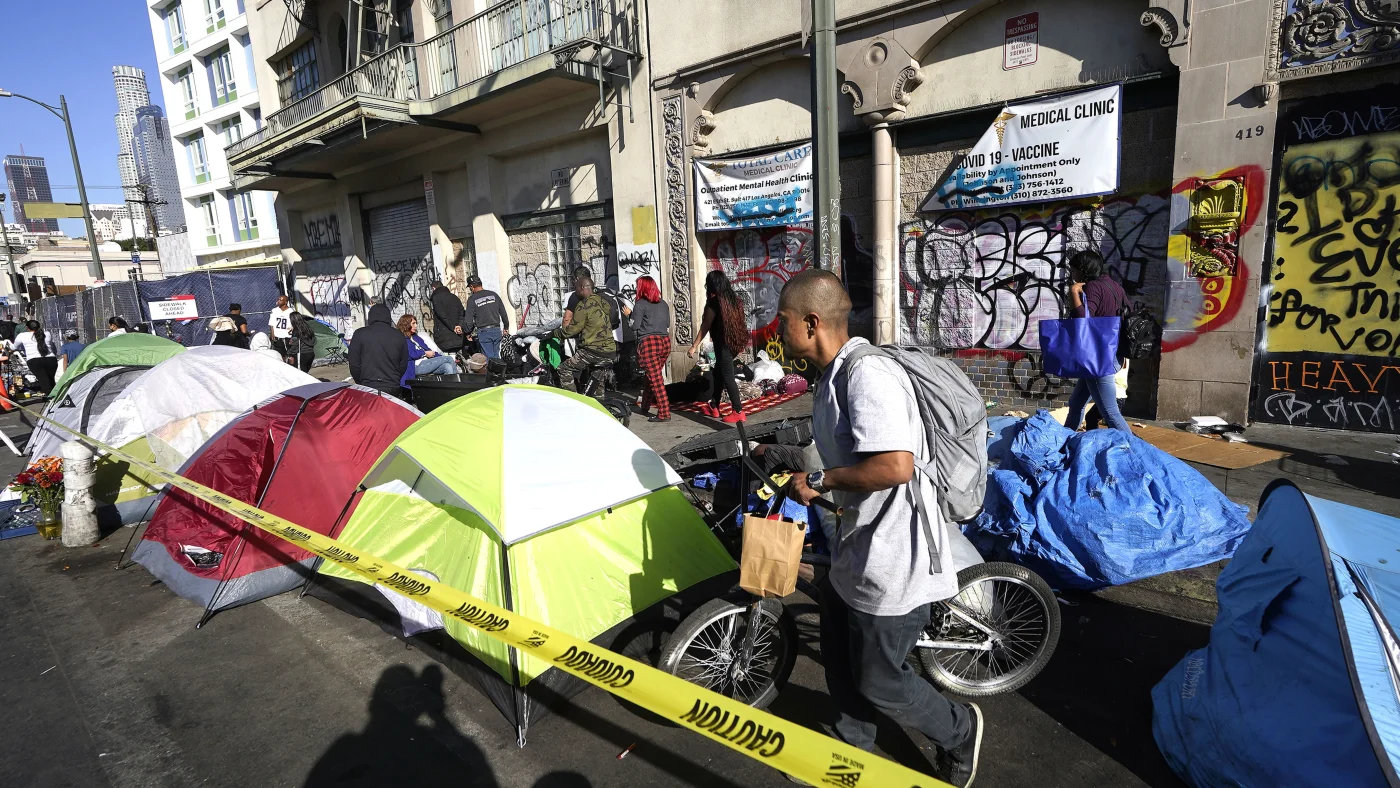
While the downward trend offers a reprieve from the record-high levels seen in previous years, the scale of the crisis remains substantial. Nearly 700,000 people in the United States continue to live in shelters or on the streets, a figure that remains significantly higher than pre-pandemic levels.
Conflicting views on the drivers of change
The administration and independent advocates disagree on why these numbers are shifting. HUD officials have pointed to changes in immigration policy as a key factor in the decline. During the Biden administration, cities such as New York, Chicago, Boston, and Denver experienced a surge of asylum seekers utilizing homeless shelters.
Devon Kurtz, the Public Safety Policy Director at the Cicero Institute, noted that these four specific cities accounted for half of the recent decline. The administration is also looking toward cities like San Francisco, which has moved toward supporting more sober-living options that prohibit drugs and alcohol.
Critics of the sober-living model argue that such requirements can inadvertently increase homelessness. They suggest that if individuals relapse, they may be forced back onto the streets. Conversely, the Trump administration argues that drug-free requirements are essential for achieving long-term recovery and intends to expand these types of programs.
The federal government is currently seeking to overhaul billions of dollars in homelessness spending. The goal is to shift resources toward short-term housing that mandates addiction and mental health treatment, though such efforts have faced blocks in court.
Ann Oliva, CEO of the National Alliance to End Homelessness, said it is good news that more people are getting housed and that the programs funded by Congress are working.
An independent analysis commissioned by the National Alliance to End Homelessness found a similar decline to the HUD data but attributed the progress to different factors. Oliva noted that programs that get people off the street without preconditions were a big part of the latest declines, particularly for veterans.
The data regarding veterans shows a distinct trend compared to the general population. Homelessness among U.S. veterans fell by more than 7% last year, contributing to a nearly 60% total decline since 2010.
The persistence of chronic homelessness
Despite the overall drop, the composition of the unhoused population is shifting. While many groups saw a decline, there was a small uptick in the number of people experiencing long-term, chronic homelessness. This demographic is more likely to struggle with mental health challenges and addiction.
| Demographic Group | Trend in 2025 |
|---|---|
| Total U.S. Homeless Population | Decreased >6% |
| U.S. Veterans | Decreased >7% |
| Chronically Homeless | Small uptick |
The administration also credited a crackdown on encampments following a 2024 Supreme Court decision that allows cities to ban camping and sleeping in public places. However, Oliva noted that her group’s analysis showed cities implementing these bans actually performed worse than the national average.
Economic shifts may also be playing a role. While rental prices remain high, they have retreated from the record peaks seen during the pandemic. This softening of the rental market may be stemming the flow of newly unhoused individuals.
Additional factors include localized assistance following major weather disasters in regions like western North Carolina and Hawaii. In these instances, government intervention provided unhoused individuals with assistance they previously lacked.
“Investments in programs like that are much closer to the scale of need for veterans than for any other population experiencing homelessness,” Oliva said.
Worth a look

Is Iowa a Purple State Again? Analyzing the 2026 Midterm Election Results
Iowa’s Political Pendulum Swings Back For years, Iowa has been framed by national observers as a state that...

Two Boys Injured in West Indianapolis Drive-By Shooting
Two boys were shot on the west side of Indianapolis late Saturday night, leaving the community grappling with...

Augustana Women’s Basketball Falls to Illinois State in Exhibition
The Augustana Vikings women’s basketball team opened their 2026-27 campaign on Saturday with a challenging exhibition matchup, falling...

Butler Bulldogs to face Boise State Broncos in Basketball Matchup
The Butler Bulldogs travel to Boise, Idaho, this Sunday to face the Boise State Broncos in a non-conference...