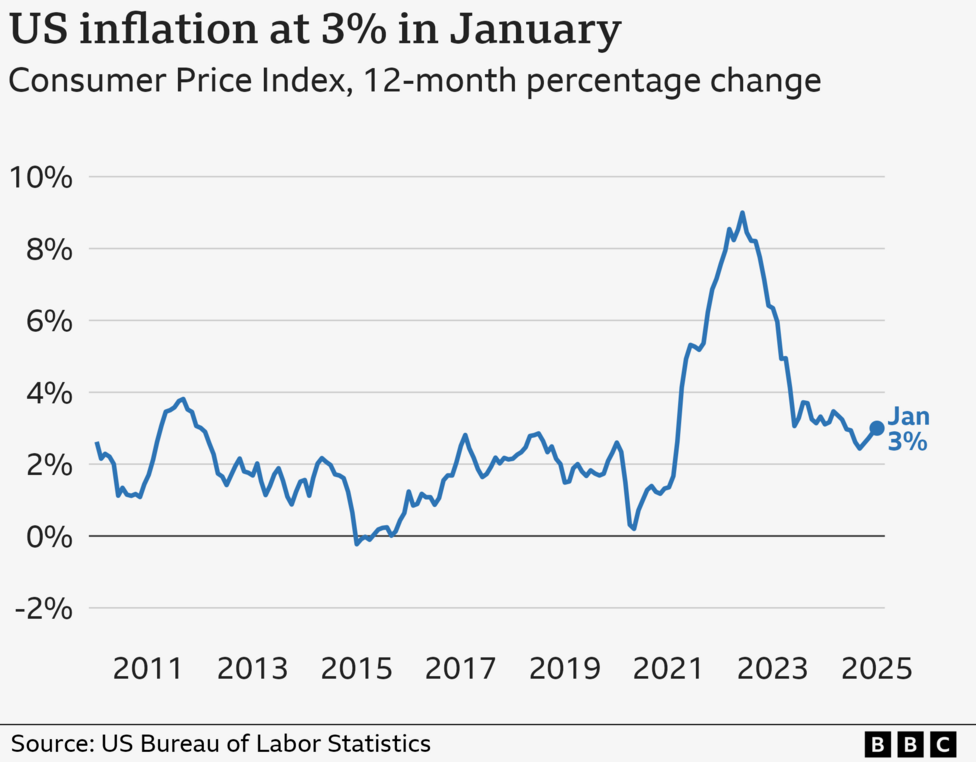
U.S. inflation rose 0.4% in October, driven by persistent price hikes in food, energy, and consumer goods that are challenging the Federal Reserve’s efforts to cool the economy.
The Labor Department reported Tuesday that while the monthly increase slowed from the 0.6% recorded in September, the figure remained higher than the 0.3% forecast by economists. Because of a federal government shutdown in October 2025, no yearly inflation rate is available for comparison. Excluding volatile food and energy costs, core prices rose 0.3%, matching the previous month’s increase.
“It’s uncomfortably high,” said Mark Zandi, chief economist at Moody’s, who said that the Federal Reserve is unlikely to be satisfied with the current data.
The persistence of inflation, fueled by strong consumer spending and supply chain disruptions, has heightened expectations that the Federal Reserve will raise interest rates at its December meeting.
“It would have taken exceptional evidence of disinflation to dissuade the Fed from raising rates in December, and this report delivered the opposite,” Jason Pride, chief of investment strategy and research at Glenmede, a wealth management firm, wrote in an e-mail Tuesday.
Energy costs continue to permeate the broader economy. Although gas prices rose only 1% from September to October—a smaller increase than in previous months—they remain 37% higher than a year ago. These costs are now rippling into public transportation, delivery services, and airfares. Electricity prices saw their largest jump since April, rising 0.9%.
Artificial intelligence investments are also contributing to price volatility. Higher demand for computer chips has lifted costs for consumer electronics, with computer prices jumping 0.5% in October. This marks a shift from previous years, when chip efficiency had caused computer prices to retreat.
Despite the inflationary environment, the broader economy shows signs of resilience, with the unemployment rate at 4.1%. However, for many Americans, the cost of living remains a primary concern.
Worth a look
- Dr. Chris Owens Discusses Strengthening Idaho Rural Healthcare
- Chicago Cubs Projected to Sign Freddy Peralta to $130 Million Deal
- Credit Card Debt Hits Record $1.29 Trillion but Trails 2008 After Inflation (daybreakwire.com)
- Cyprus borrowers warn of growing pressure from loans, inflation and energy bills (newsarchyuk.com)

Dr. Chris Owens Discusses Strengthening Idaho Rural Healthcare
Idaho State University leaders discussed strategies for strengthening healthcare access across rural communities on a recent episode of...

Chicago Cubs Projected to Sign Freddy Peralta to $130 Million Deal
The Chicago Cubs are projected to sign starting pitcher Freddy Peralta to a six-year, $130 million contract this...

City Crews Harvest Honolulu City Lights Tree From Kahala Resident | News
"This is going to be the center point of our Honolulu City Lights for this year," KITV Island...

Universal Orlando Travel Agents Face New Hurdles After Epic Universe Opening
Universal Orlando travel agents face new logistical hurdles as families manage complex ticketing structures following the opening of...